

Traditional Farmhouse Dining Table
A traditional farmhouse dining table anchors a room with timber built for decades of daily service and family gatherings.
Traditional Farmhouse Dining Table
A traditional farmhouse dining table serves as the central hub for meals and daily work in domestic spaces, built to handle heavy use. Buyers searching for a traditional farmhouse dining table encounter sturdy pieces designed for utility and gatherings.
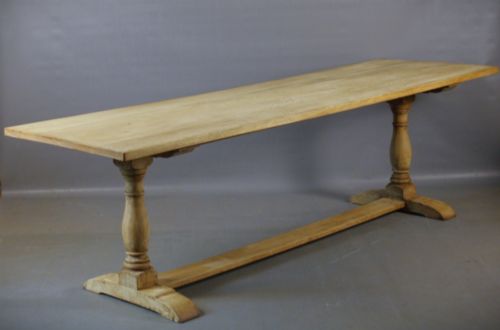
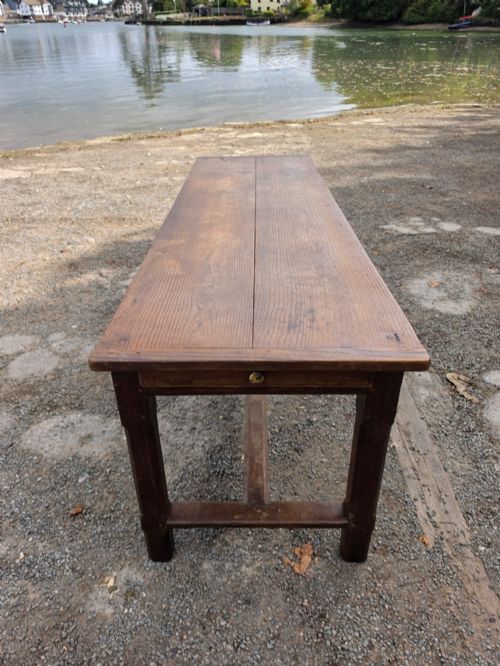
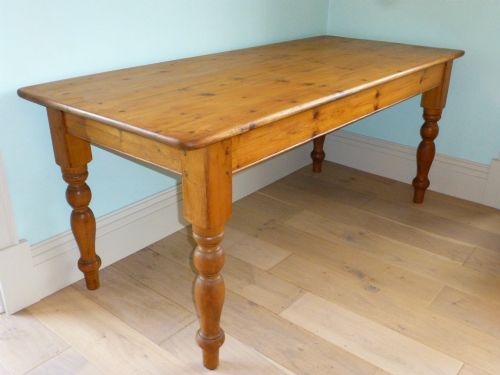
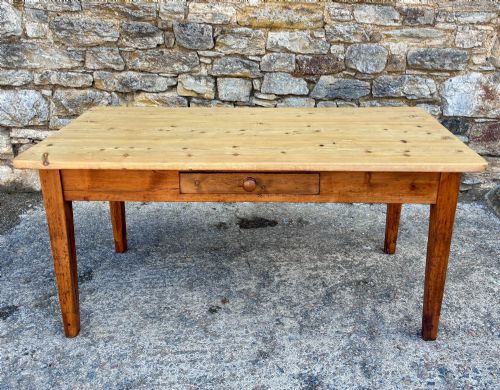
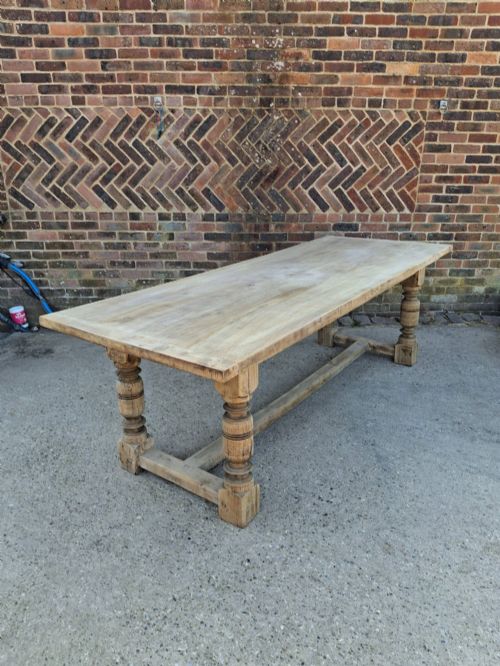
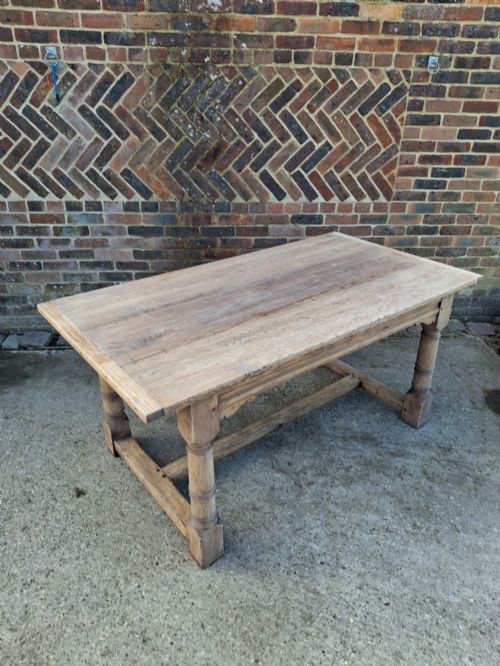
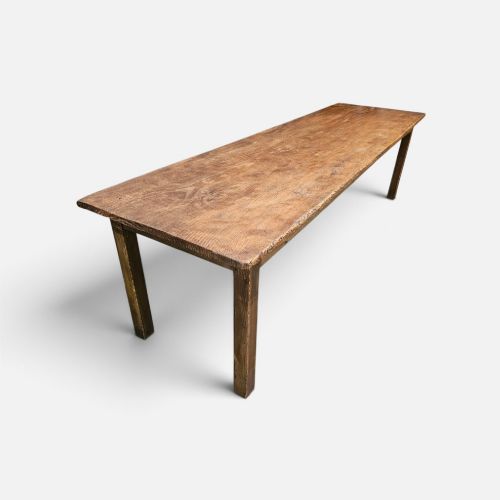
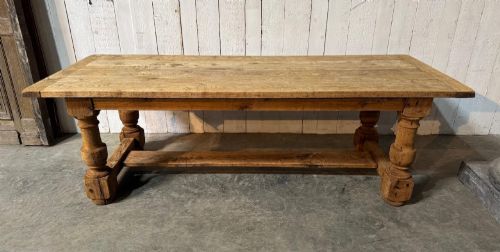
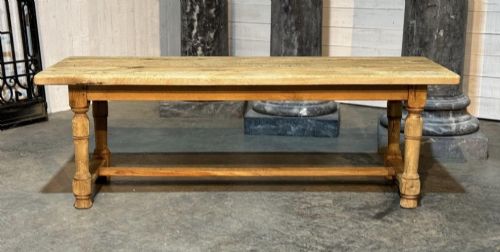
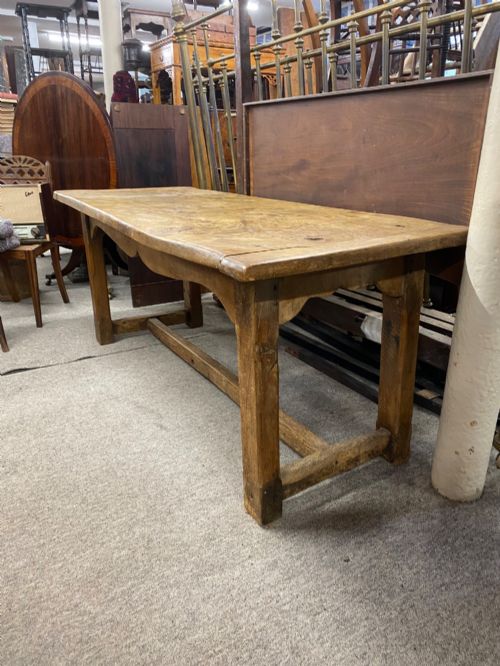
The selections on this page span the eighteenth, nineteenth, and early twentieth centuries, drawing on rustic country, French provincial, and Georgian styles. Most examples take the form of substantial dining tables, kitchen tables, or large refectory formats.
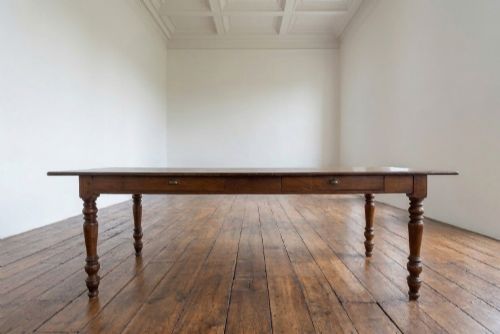
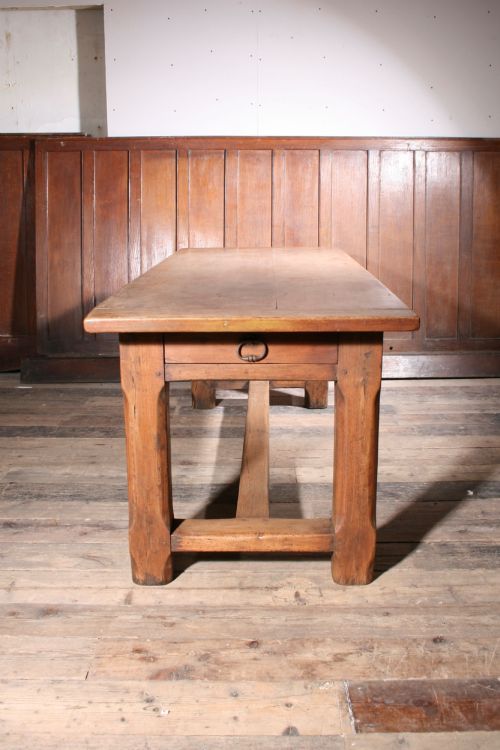
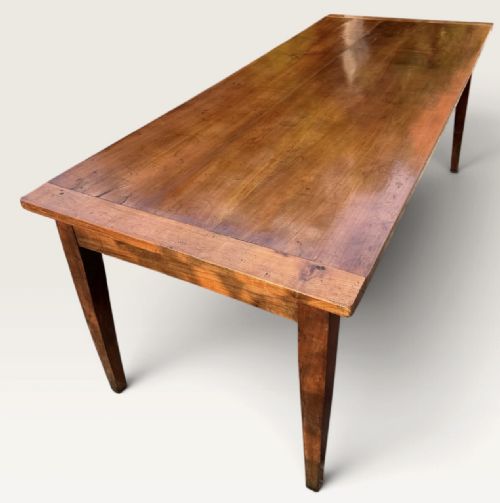
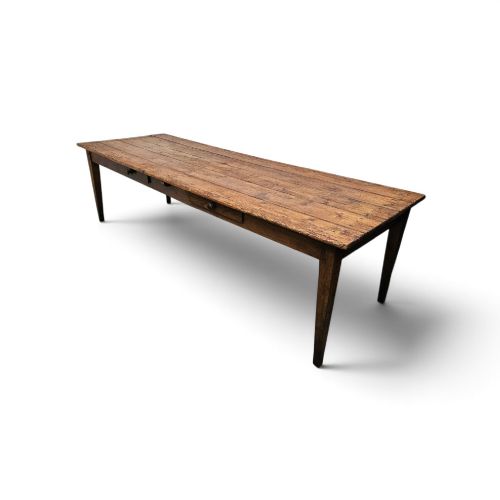
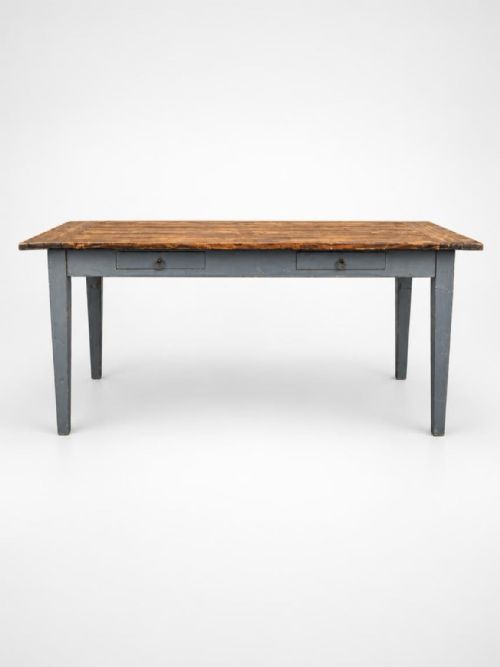
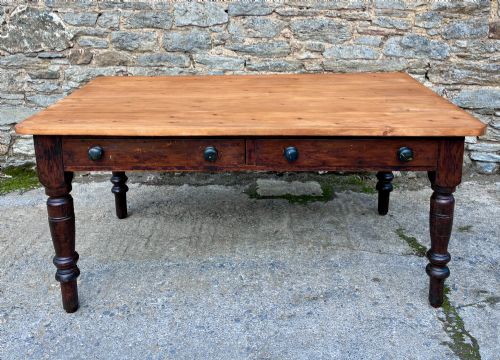
Timbers like oak, pine, and fruitwood dominate the construction, often showing the honest wear of past kitchens and dining rooms. Form follows function directly, with rectangular tops set on sturdy legs or trestle bases.
What varies in quality
The substance of the timber dictates much of the character, ranging from dense seventeenth and eighteenth-century oak to lighter nineteenth-century pine. Thicker planks and substantial base frames indicate a higher degree of structural ambition and original purpose.
Proportion and execution distinguish standard utilitarian pieces from finer country workshop outputs. The integration of functional additions, such as drawers or extending leaves, demonstrates the skill of the original maker.
Traditional Farmhouse Dining Table Retail Price Guide 2026
Typical asking prices for traditional farmhouse dining table among the pieces listed under this phrase on Sellingantiques today, from the lower quarter to the upper quarter. They describe what is for sale here now, not the wider market.
Several tables retain deep ink stains and minor chop marks, serving as silent witnesses to generations of homework and hearty pie preparation.
The Traditional Farmhouse Dining Table Glossary
- Refectory table
- A long, narrow dining table traditionally used in communal dining halls and adopted for domestic farmhouse use. These pieces often feature stretcher bases for added stability.
- Fruitwood
- Timber sourced from fruit-bearing trees such as pear or cherry, valued for a tight grain and warm tone. Cabinetmakers utilised it for regional furniture construction.
- Pitch pine
- A durable, resinous pine variety common in nineteenth-century joinery. It provides a robust surface suitable for heavy kitchen duties.
- Bobbin leg
- A turned furniture leg shaped to resemble a string of wooden bobbins or spools. This decorative turning appears frequently on seventeenth and eighteenth-century seating and tables.
- French provincial
- A regional style of domestic furniture originating in the French countryside. It combines sturdy utility with restrained decorative carving.
Traditional Farmhouse Dining Table: Frequently Asked Questions
How do I clean a wooden farmhouse table?
Wipe surfaces down with a damp cloth and mild soap, avoiding harsh chemical sprays that strip historic finishes. Apply a clear beeswax periodically to nourish the grain and protect against moisture.
Allow spills to dry naturally rather than scrubbing aggressively. Gentle upkeep preserves the patina built up over decades of use.
Can I seat eight people comfortably?
Many larger examples measure upwards of eight feet, accommodating eight or more diners with ease. Check the clearance beneath the apron and between the legs to ensure chairs slide in fully.
Refectory formats with recessed stretcher bases often offer more flexible seating arrangements along the sides. Measure your dining space carefully before committing to a longer format.
What is the difference between oak and pine?
Oak is a hard, dense timber offering superior weight and resistance to heavy daily impacts. Pine provides a lighter, softer alternative that absorbs the marks of everyday use with a casual charm.
Tables built from oak generally command attention through grand proportions and dark, rich patinas. Pine versions lean toward a lighter aesthetic suited to bright country kitchens.
How do I date an antique table?
Examine the construction methods, tool marks on the underside of the top boards, and the type of timber utilised. Eighteenth-century examples often display hand-sawn boards and pegged mortise and tenon joints.
Later nineteenth-century pieces may incorporate machine-cut elements or simpler fasteners. Comparing the leg style and timber grain against known period pieces helps narrow down the decade of manufacture.