
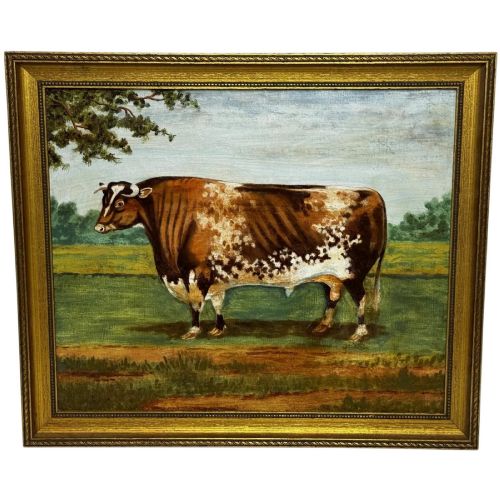


Traditional Farm Landscape
When you search for traditional farm landscape, you are looking at oil and watercolour paintings capturing rural work, animals, and farmsteads from the nineteenth and early twentieth centuries.
Traditional Farm Landscape
A traditional farm landscape depicts rural life, featuring working animals, farmyards, livestock, and agricultural workers set within pastoral scenery. The pieces gathered here span the nineteenth century through the mid-twentieth century, including works associated with British Impressionism, Victorian Rural Realism, and Edwardian Pastoral styles.
You will encounter oil paintings on canvas alongside watercolour paintings on paper, capturing scenes from Yorkshire, Wales, and various countryside locations. Common subjects range from shire horses ploughing and shorthorn bulls to farmstead cottages and harvest scenes.
The creators of these works include named artists such as John Frederick Herring Jnr, Herbert Royle, and Owen Bowen, as well as pieces originating from the wider British School.
How They Were Made
The majority of these works employ oil paint applied to canvas, capturing texture in animal coats, fields, and skies through layered brushwork. Watercolour paint on paper is also utilised for lighter, more fluid depictions of farmworkers and cottages.
Canvases are typically stretched over wood frames, and many pieces retain their period gilt frames that complement the painting style of the nineteenth and early twentieth centuries.
Several canvases feature sharp-eyed ducks and inquisitive pigs joining the horses and cattle in the farmyard.
What Varies in Quality
The success of a traditional farm landscape rests upon the artist's ability to render animal anatomy correctly and integrate human figures naturally into the rural setting. Works by established nineteenth and twentieth-century painters demonstrate a stronger command of light, atmosphere, and composition compared to anonymous school pieces.
Materials and preservation also distinguish the range, as original oil paint layers on stable canvas and well-kept watercolours on paper retain their intended depth and palette more effectively than compromised examples.
Herbert Royle·John Frederick Herring Jnr·Samuel Joseph Clark·Charles Vickers·Percival Glenfern·Arthur Winter Shaw·Owen Bowen·Claude Cardon·Henry Birtles·Ernest Higgins Rigg·George Cole·Georgina Lara·William Greaves·Nora Munro Summers·Fred C Jones·Robert Gallon·Kershaw Schofield
The Traditional Farm Landscape Glossary
- Canvas
- A heavy woven fabric stretched across a wooden frame to serve as a support for oil painting. It provides a durable surface that holds layered pigments well.
- Watercolour
- A paint consisting of pigment suspended in a water-based solution, typically applied to paper. It allows for transparent washes of colour.
- Gilt frame
- A wooden picture frame coated with gold leaf or metallic paint. These frames often accompany nineteenth-century oil paintings to enhance their presentation.
- British Impressionism
- An art movement of the late nineteenth and early twentieth centuries focusing on light and everyday subjects. It influences several pastoral landscapes of this era.
- Pastoral
- Pertaining to country life, agriculture, and farm animals. This genre forms the primary subject matter of the works listed.
Traditional Farm Landscape: Frequently Asked Questions
What subjects appear in traditional farm landscape paintings?
These works feature rural subjects including shire horses, shorthorn bulls, sheep, poultry, farmworkers, barns, and cottages.
The settings reflect nineteenth and early twentieth-century British countryside and farmyard scenes.
Which materials were used for these rural paintings?
Artists utilised oil paint on canvas and watercolour paint on paper as the primary mediums.
Support structures involve wood stretchers for canvases and gilt frames for presentation.
How do I date a traditional farm landscape?
Dating relies on recorded artist life spans, stylistic indicators from periods like the Victorian era or Edwardian pastoral, and material evidence.
Signatures, framing styles, and canvas construction also offer clues to the approximate decade of creation.
How should I care for an oil painting on canvas?
Keep the canvas away from direct sunlight and extreme temperature fluctuations to prevent cracking in the oil paint.
Dust the surface gently with a soft, dry cloth and avoid using liquid cleaners on the paint or gilt frame.