

English Pastoral Painting
When you search for english pastoral painting, you find works celebrating rural life, agricultural scenes, and countryside idylls.
English Pastoral Painting
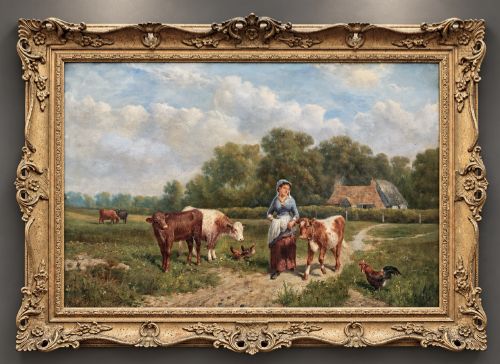
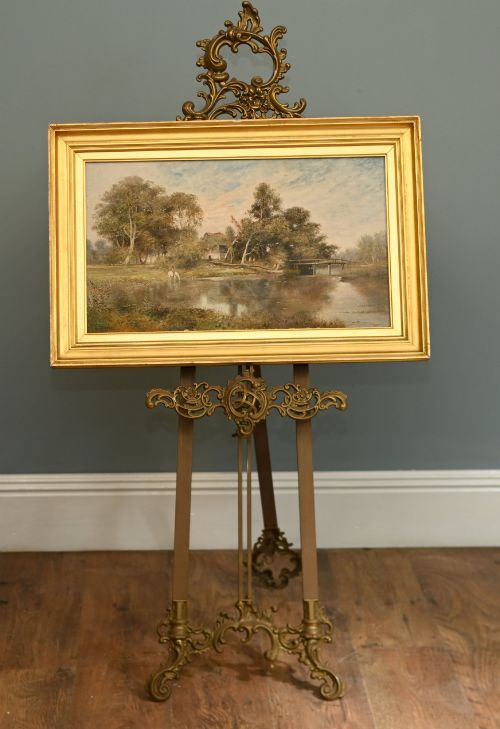
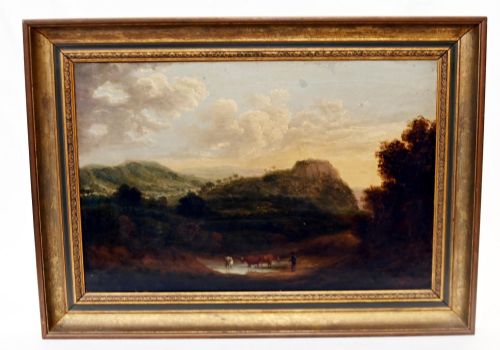
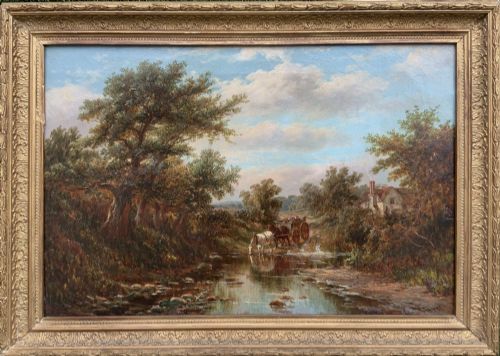
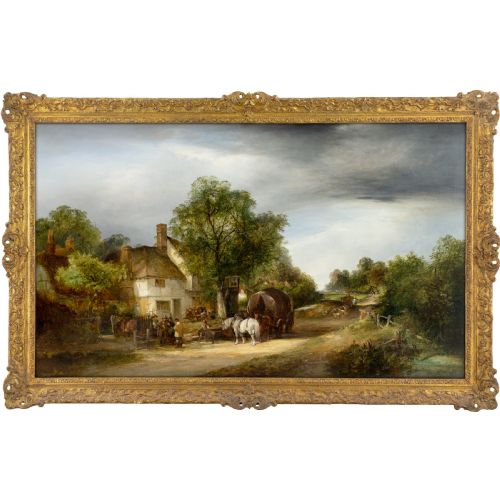
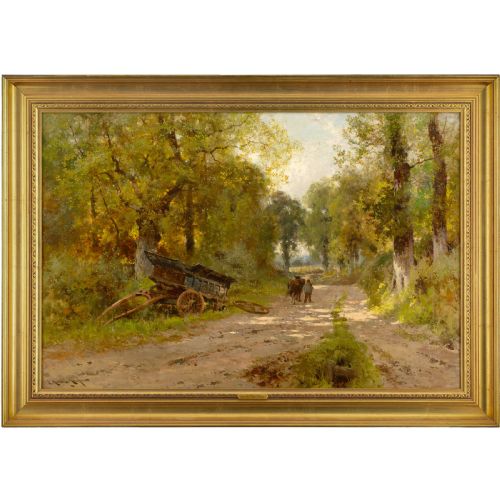
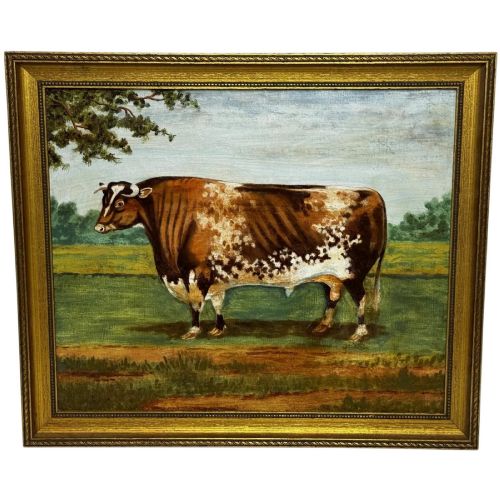
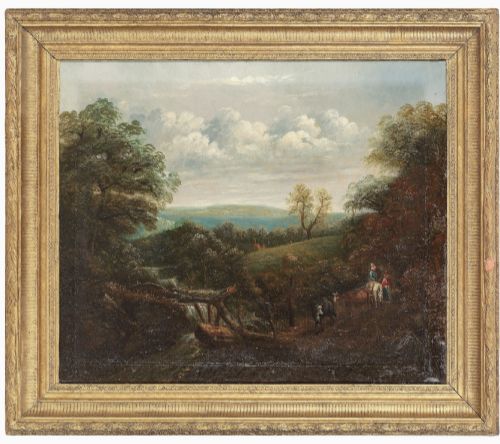
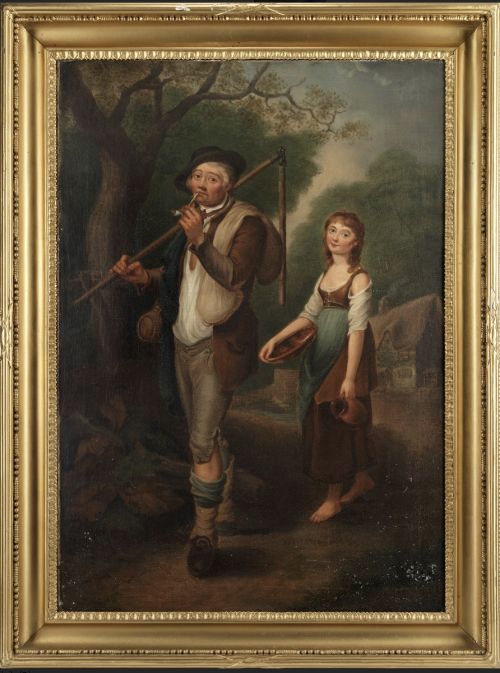
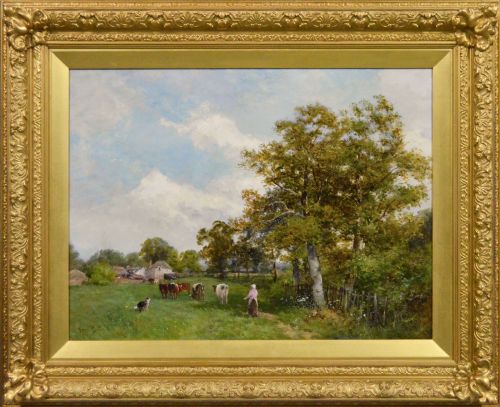
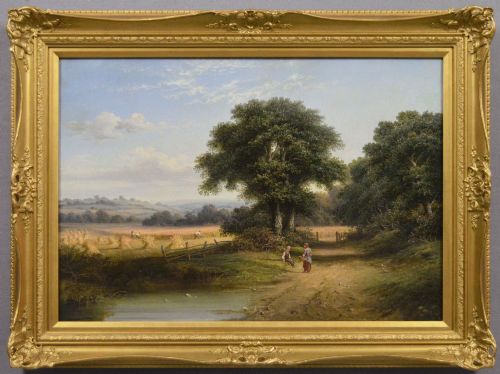
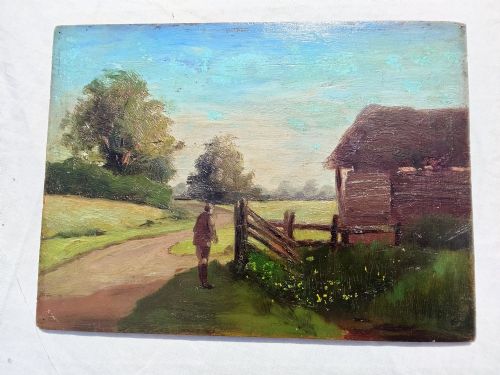
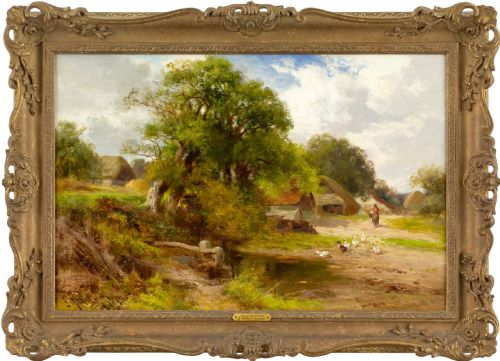
An english pastoral painting depicts rural scenes, agricultural labour, quiet rivers, and agrarian life across the British countryside. These works capture harvest fields, cottages, herds of cattle, and shepherds tending flocks in various rural settings.
The pieces available on this page span from the eighteenth century through the Victorian period and into the early twentieth century. You will encounter works produced by regional schools as well as named artists working within traditional British landscape genres.
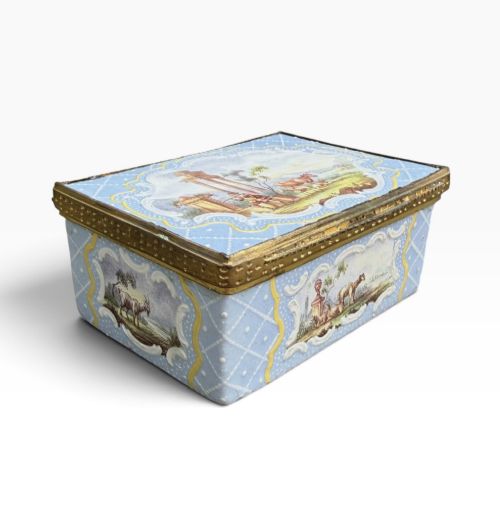
While most examples are fine art paintings on canvas, board, or paper, the wider tradition also touches upon decorative forms like enamel snuff boxes and porcelain figures. These smaller objects share the same rural iconography and pastoral focus as the framed works.
Materials and Techniques in the Tradition
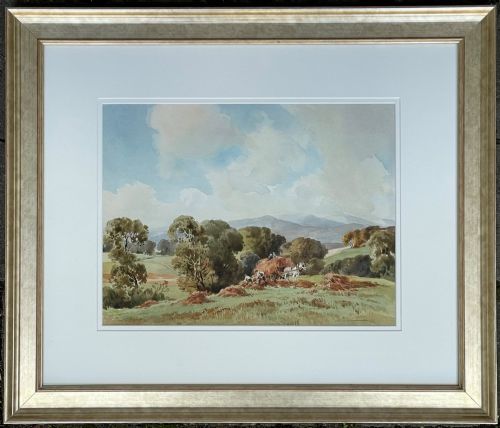
Artists working in this genre relied primarily on oil paint applied to canvas, wooden panels, or board, creating rich textures and durable surfaces. Watercolour on paper offered a lighter medium well suited to capturing atmospheric skies and river views.
Support materials typically included stretched canvas secured to wooden frames or heavyweight paper for watercolours. Gilt wood frames were frequently utilised to finish and protect these landscape works.
Listings include works executed in oil on canvas, oil on board, and watercolour on paper, spanning the 18th, 19th, and early 20th centuries.
Factors That Distinguish Individual Works
Quality in these rural scenes rests upon the artist's handling of light, shadow, and atmospheric depth within the landscape. Superior works demonstrate careful observation of human figures and animals integrated naturally into the countryside.
The treatment of the support and framing also marks the standard of the piece, with period frames and well-preserved painted surfaces commanding greater attention from collectors.
George Graham·Percy Lancaster·John Horace Hooper·Thomas Barker of Bath·David Bates·Walter Heath Williams·Thomas Sidney Cooper·Frederick Walker·Richard Redgrave·George Oyston·Russell Sidney Reeves·T C Hofland·Henry H Parker·Miles Birkett Foster·Charles Henry Slater·George Morland·Philip Richard Morris·Margaret Maitland Howard·Henry Charles Fox·George Oyston·Thomas Baker of Leamington·Ernest Higgins Rigg·John Sanderson Wells·Henry John Kinnaird·James William Booth
The English Pastoral Painting Glossary
- English School
- A designation applied to artists trained or working within the British artistic tradition rather than continental European academies. It helps classify regional landscape works of the eighteenth and nineteenth centuries.
- Pastoral Idyll
- A genre of art depicting a peaceful, idealized rural existence, often featuring shepherds, farmworkers, and livestock in harmonious natural landscapes. These scenes emphasise tranquility over the harsher realities of agricultural labour.
- Gilt Wood
- Wood that has been coated with a thin layer of gold leaf or metallic paint, commonly used for traditional picture frames during the Georgian and Victorian periods. It adds decorative warmth to the border of a painting.
- Watercolour Painting
- A technique where water-soluble pigments are applied to paper supports, valued for its translucency and immediacy. It was widely utilised by British artists for sketching and finished landscape works alike.
English Pastoral Painting: Frequently Asked Questions
What defines an english pastoral painting?
These works focus on rural scenery, including agricultural labour, rivers, cottages, and livestock grazing in the countryside. They reflect a traditional view of British rural life spanning several centuries.
The style emphasises peaceful interaction between people and the natural landscape, often capturing specific regional topography across England.
How should I display these watercolours?
Watercolours require careful placement away from direct sunlight to prevent the pigments and paper from fading over time. Professional framing with acid-free mounts helps protect the delicate paper support.
Maintaining stable indoor humidity levels also preserves both the paper and the original frame.
How can I identify the period of a piece?
Dating often relies on stylistic clues, framing materials, and artist signatures recorded in historical records. Victorian works frequently feature distinct brushwork and subject matter compared to earlier Georgian or later Edwardian examples.
Examining the back of the canvas or board may reveal inscriptions, labels, or stamps from previous owners and framers.
Were these works created outdoors?
Many artists produced initial sketches and watercolours directly in the landscape, observing light and weather conditions firsthand. Studio work often followed, where artists transformed field studies into finished oil paintings on canvas.
This combination of plein air observation and studio refinement characterised much of British landscape painting.