


Farmhouse Oil Artwork
These farmhouse oil artwork pieces bring rustic charm and pastoral quiet into a room through oil paint on canvas or wood.
Farmhouse Oil Artwork
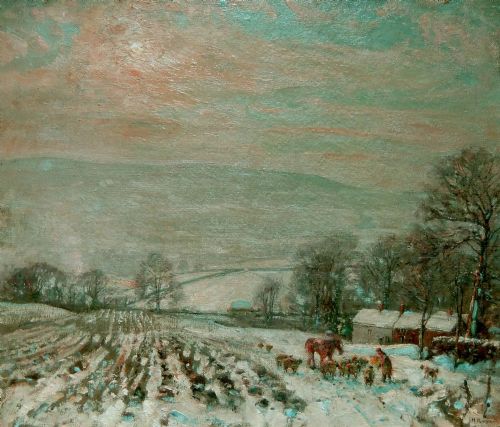
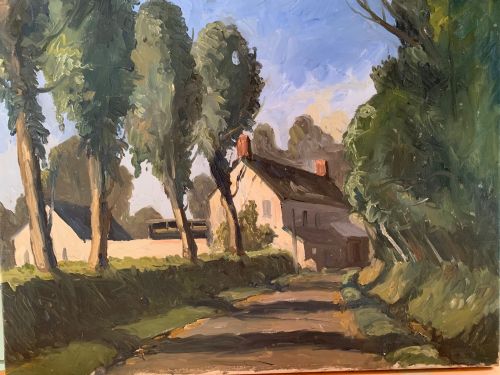
When you search for farmhouse oil artwork, you are looking at painted depictions of rural life, barns, and countryside cottages spanning from the Victorian era through the mid-twentieth century. The selection includes British Impressionism, Victorian genre scenes, and French Provincial views rendered in oil.
You are most likely to meet canvases from the early twentieth century and the nineteenth century showing working horses, farm yards, and quiet courtyards. These works capture agricultural scenes using oil paint on canvas, board, and wood supports.
The styles range from academic Victorian pastoral compositions to freer Post-Impressionist and modernist interpretations of French farmhouses. Each piece offers a window into rural history, shaped by the brushwork of British and continental painters.
How they were made
These works rely on oil paint applied to stretched canvas, wooden panels, or board supports using traditional brushes and palette knives. Painters built up layers of pigment to capture the light on stone walls, haystacks, and pasture land.
Many of these paintings retain their original gilt wood, gilded wood, or giltwood frames, which complement the warmth of the oil pigments. The combination of textured paintwork and heavy wooden framing defines the physical presence of each piece.
Listings feature works spanning from the Victorian era through the 1960s, employing canvas, wood, and oil paint.
What varies in quality
The upper tier of these works demonstrates a confident handling of light and atmospheric perspective, where brushstrokes describe form rather than merely outlining it. Lesser examples rely on rigid perspective and flat application of colour without capturing the specific weather or mood of the scene.
Quality also rests in the fidelity of the composition and the strength of the artist's eye when recording rural architecture and working animals. A well-observed French Provincial courtyard or a textured British pasture scene holds the viewer's attention through balanced proportions and subtle tonal shifts.
Herbert Royle·Raimond Louis Lecourt·James Kyd·Owen Bowen·Georgina Lara
The Farmhouse Oil Artwork Glossary
- Oil Paint
- A slow-drying paint made by mixing pigments with oils such as linseed. This medium allows artists to blend colours smoothly and build thick, textured impasto layers.
- Giltwood
- Wood that has been coated with a thin layer of gold leaf or gold paint. It frequently frames nineteenth and twentieth-century pastoral paintings to enhance their visual depth.
- Post-Impressionism
- An art movement that developed from Impressionism, focusing on symbolic content, heavier brushwork, and vivid colours rather than strict naturalism.
- Provenance
- The chronological history of the ownership of a work of art. It helps establish the authenticity and background of a regional painting.
Farmhouse Oil Artwork: Frequently Asked Questions
How do I date a farmhouse oil painting?
You date these works by examining the canvas preparation, stretcher frames, and stylistic clues within the brushwork. Victorian pieces often feature tighter academic realism, while later twentieth-century works lean towards looser Post-Impressionist or modernist techniques.
Examining the framing materials and any inscriptions on the reverse of the canvas or wood panel also helps narrow down the period of production.
Where should I hang these artworks?
These pastoral scenes suit traditional dining rooms, studies, or living spaces where rural subjects complement natural wood furniture and textiles. Keep them away from direct sunlight and damp environments to protect the oil paint and wooden frames.
Proper placement ensures the canvas remains stable and the pigments retain their depth over time.
What is the difference between canvas and board?
Canvas is a flexible woven fabric stretched over a wooden frame, providing a slightly springy surface that absorbs brush pressure. Board is a rigid wooden or composite support that offers a firm, unyielding surface for the paint.
Both materials appear across different periods in these listings, with board often favoured for smaller plein air sketches.
How do I care for giltwood frames?
Giltwood frames require gentle dusting with a soft, dry brush to prevent the accumulation of dirt in the carved details. Avoid using liquid cleaners, water, or chemical polishes, which can strip away the delicate gold leaf.
Maintaining stable room humidity prevents the wood beneath the gilding from expanding and cracking.