


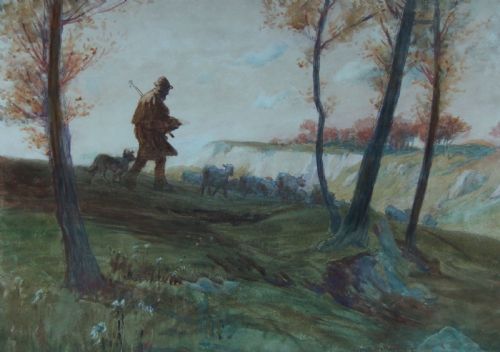


Shepherd and Sheep Painting
A shepherd and sheep painting captures pastoral quiet, depicting herdsmen and flocks across nineteenth and twentieth-century landscapes.
Shepherd and Sheep Painting
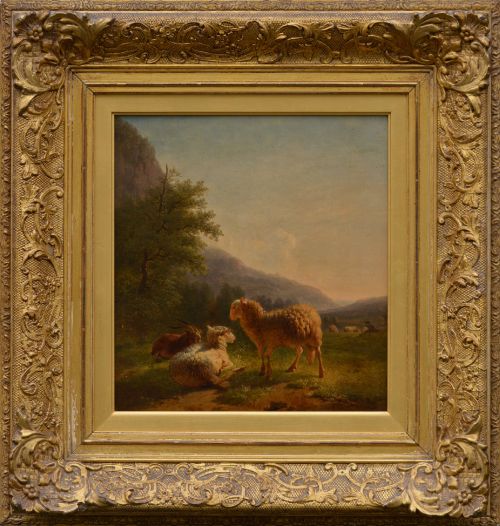
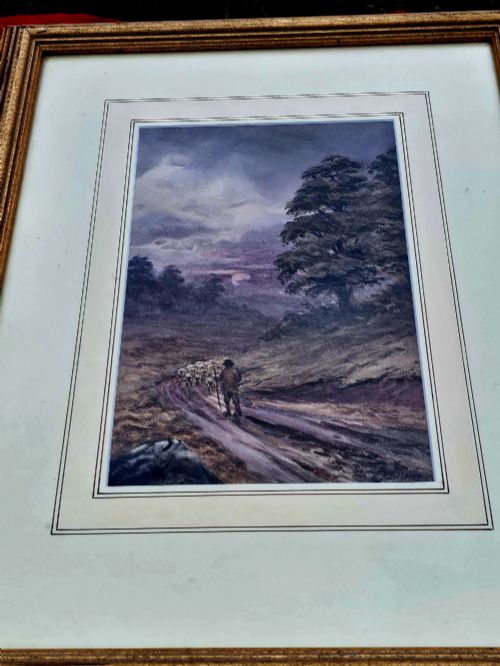
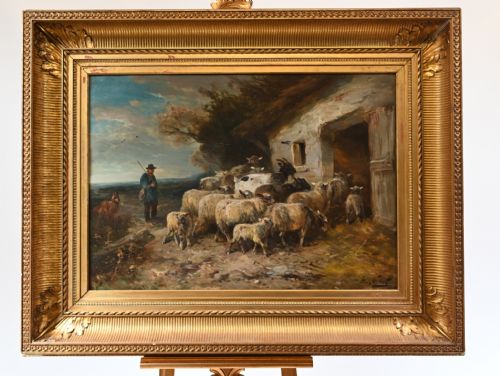
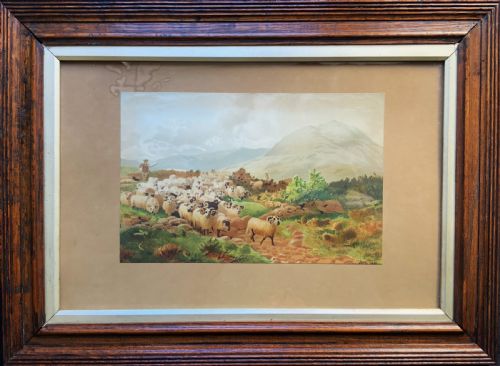
When you search for a shepherd and sheep painting, you encounter pastoral scenes dominated by nineteenth-century works and early twentieth-century examples up to the mid-century period. These artworks range from detailed oil on canvas compositions to delicate watercolours on paper, capturing rural life, droving lanes and Highland vistas.
The most common pieces on this page are nineteenth-century oils and watercolours framed in wood and giltwood, often reflecting Victorian pastoral or realist traditions. You also find Edwardian pastoral pieces and British Impressionism, showing flocks at rest or driven to market across various regional landscapes.
Materials and Techniques
Artists painted these pastoral scenes primarily using oil on canvas, oil on panel or watercolour on paper, applying pigments to capture light across open fields and country lanes. Canvases and papers are housed in traditional frames made from wood, often finished with gesso and giltwood details.
Techniques span nineteenth-century realism and romanticism through to impressionistic brushwork, relying on the handling of oil and watercolour to define the figures of shepherds, sheep and atmospheric weather conditions.
Listings feature works spanning the nineteenth century, 1890, 1900, 1910, 1920, and mid-century 1950.
Judging Quality in Pastoral Art
Quality rests upon the artist's command of light, composition and anatomical accuracy in rendering both the animals and the landscape. Stronger pieces demonstrate confident brushwork and balanced tonality, whereas weaker examples rely on formulaic repetition.
The integration of the frame also influences the piece, with original gesso and giltwood mouldings enhancing the artwork compared to later or plain replacements.
Eugène Verboeckhoven·EJ Letheren·Henry Schouten·Henry Charles Fox·Herbert Royle·George Turner·A. Winter Shaw·Owen Bowen·Henry Birtles·George Faulkner Wetherbee·William Greaves·Anthonij Anton Mauve·John Carlisle·William Bielby·Baxter Morgan·Fedor Van Kregten·John Grey·James Stark
The Shepherd and Sheep Painting Glossary
- Watercolour painting
- A work created using water-soluble pigments on paper, valued for its translucent washes and delicate handling of light. This medium often appears in nineteenth and early twentieth-century pastoral works.
- Giltwood
- Wood carved and covered with a thin layer of gold leaf or metal powder, frequently forming the decorative frames of period oil paintings. These frames add significant visual weight to the artwork.
- Gesso
- A plaster-like mixture applied to wooden frames before gilding or painting, allowing for intricate moulded ornamentation. It provides the smooth base needed for traditional frame decoration.
- Pastoral style
- An artistic genre celebrating rural life, shepherds and flocks in idealized or realistic countryside settings. It forms the defining subject matter of the works listed here.
Shepherd and Sheep Painting: Frequently Asked Questions
What periods do these paintings cover?
The selection spans from the nineteenth century through the Edwardian era and up to mid-century, capturing shifting styles in pastoral art.
You will find Victorian realism, British Impressionism and early twentieth-century watercolours represented across the collection.
How were these artworks framed?
Many pieces retain their original wood frames, frequently finished with gesso and giltwood embellishments suited to the period.
These decorative surrounds complement the traditional subject matter and protect the edges of the canvas or paper.
Are these works signed by the artists?
Several pieces feature signatures or attributions to named painters from Britain, Belgium and the wider European school.
Documentation in the titles notes specific creators such as Henry Charles Fox, Owen Bowen and Eugène Verboeckhoven.
What mediums are used in these pastoral scenes?
Artists employed oil on canvas, oil on panel and watercolour on paper to render landscapes, sheep flocks and shepherds.
Each medium creates a distinct atmosphere, from the rich textures of oil paint to the light transparency of watercolour.