


Traditional European Landscape Art
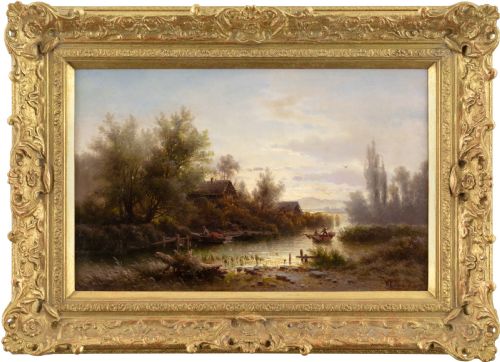
Traditional european landscape art captures scenes of mountains, rivers and rural villages in oil and watercolour across several centuries.

Traditional European Landscape Art
Traditional european landscape art spans from the seventeenth century through to the mid-twentieth century, encompassing oil paintings and watercolours. Buyers encountering this search phrase find works executed on canvas, wood and paper, depicting urban views, alpine peaks and quiet country lanes.
Materials and techniques
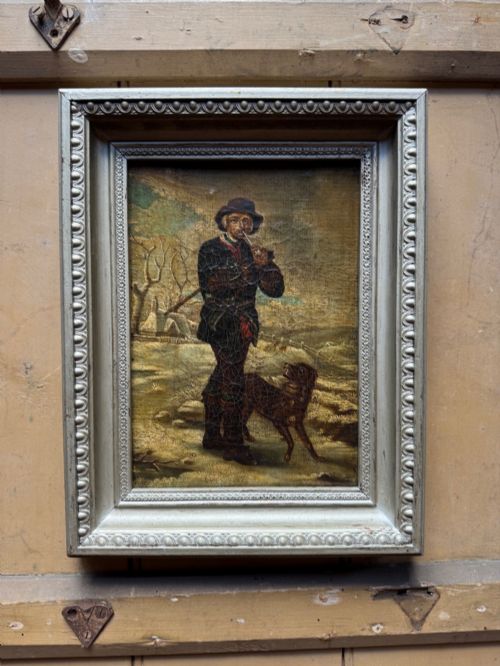
Artists painted primarily with oil paint on stretched canvas or prepared wooden boards, building up layers to render light and shadow across rural vistas and architectural facades. Watercolours on paper capture lighter, more translucent atmospheric effects in mountain streams and provincial street scenes.
Frames play a structural and aesthetic role, frequently constructed from wood finished with gesso and gold leaf. These giltwood surrounds complement the palette of the painted canvas within.
Several artists preferred painting peasants at country marriages rather than royalty.
Evaluating quality and execution
Quality rests in the handling of perspective, the subtlety of the colour palette and the confidence of the brushwork. Masterly works establish spatial depth naturally and render atmospheric conditions with conviction.
The preservation of the original paint surface and the condition of the supporting canvas or wood panel dictate the integrity of the piece. Period frames that match the age of the artwork also contribute to the overall standard of the object.
Albert Rieger·Frederick Tully Lott·William George Meadows·Hendricus Joseph Dillens·Jan Evert Morel·Noel Harry Leaver·Karel Frans Philippeau·A. Michaelis·Louis Smets·Laurens Plas·Christiaan Pieter Snyders
The Traditional European Landscape Art Glossary
- Oil paint
- A slow-drying paint made by combining pigments with drying oils such as linseed. It allows for rich colour blending and textured impasto application.
- Giltwood
- Wood carved and coated with gold leaf or gold paint, frequently utilised for ornate picture frames from the seventeenth century onwards.
- Gesso
- A plaster-like mixture applied to wood panels or canvases to prepare a smooth surface for painting or to build up relief decoration on frames.
- Canvas
- A heavy woven fabric stretched across a wooden stretcher frame to provide a firm yet flexible support for oil paintings.
- Watercolour
- A paint consisting of colorants suspended in a water-soluble binder, traditionally applied to paper to achieve translucent washes of colour.
Traditional European Landscape Art: Frequently Asked Questions
How do I care for an oil painting?
Keep paintings away from direct sunlight and sudden shifts in temperature or humidity. Dust the surface gently with a dry, soft brush.
Avoid using liquid cleaners or damp cloths on the paint layer or the giltwood frame. Consult a professional conservator for any deeper cleaning.
Are these works signed by the artist?
Many of the listed pieces bear signatures or inscriptions by the painter, while others are attributed to specific regional schools of art. Signatures typically appear in the lower corners of the canvas or paper.
Attributions to schools such as the Dutch Golden Age rely on stylistic analysis and historical documentation when an individual signature is absent.
What is the difference between oil and watercolour?
Oil paint utilises a slow-drying oil binder that permits thick impasto applications and rich colour depth on canvas or wood boards. Watercolour employs a water-soluble binder on paper to create lighter, translucent effects.
Oils are generally displayed beneath a frame without glass protection, whereas watercolours require glazing to shield the paper from moisture and dust.
How do I hang a heavy framed painting safely?
Ensure the wall fixings match the weight of the canvas and its substantial wood or giltwood frame. Utilise picture wire or heavy-duty D-rings rated for the specific load.
Mount the frame to wall studs or use appropriate cavity anchors to prevent shifting over time.