

Traditional English Carver
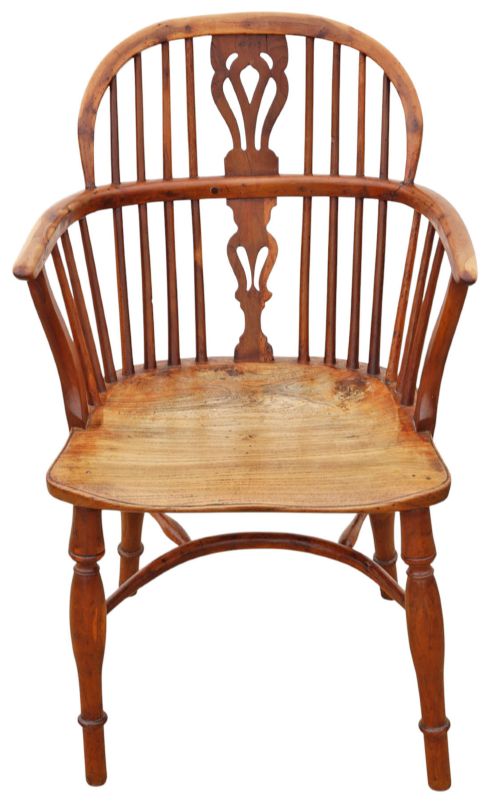
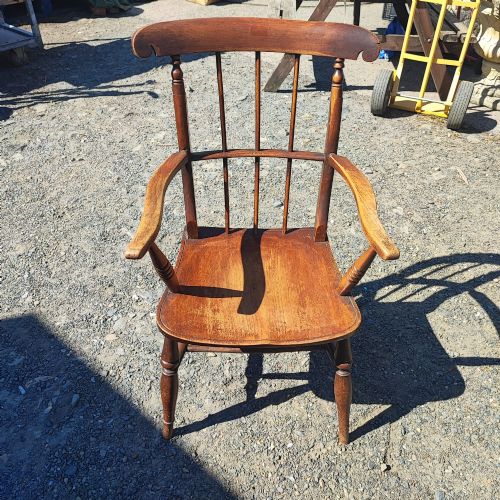
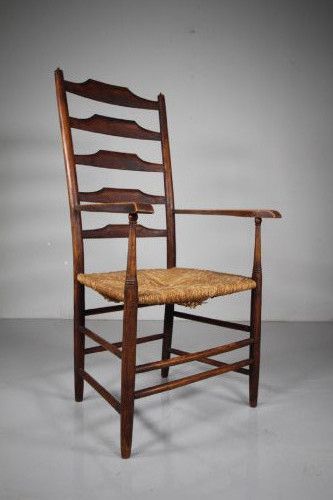
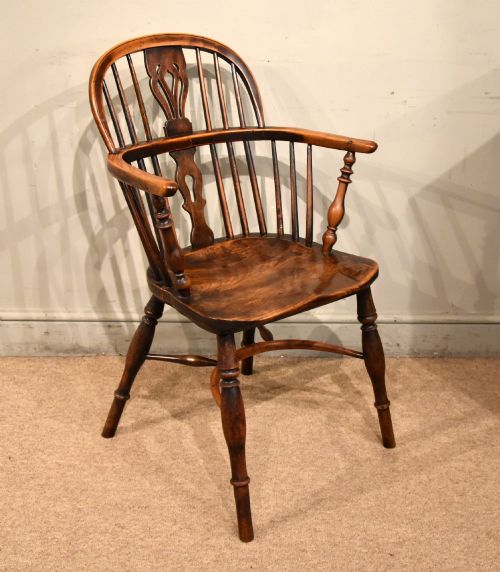
A traditional english carver offers the commanding presence of an antique armchair, built for comfort at the dining table or fireside.
Traditional English Carver
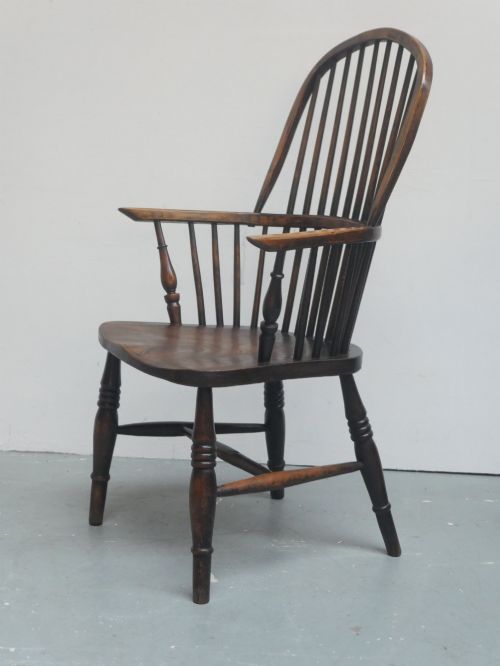
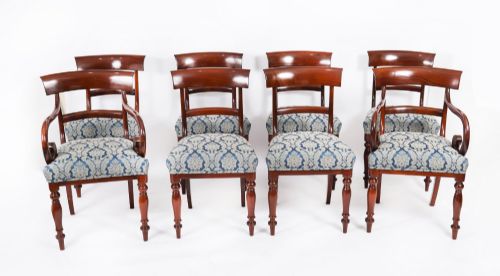
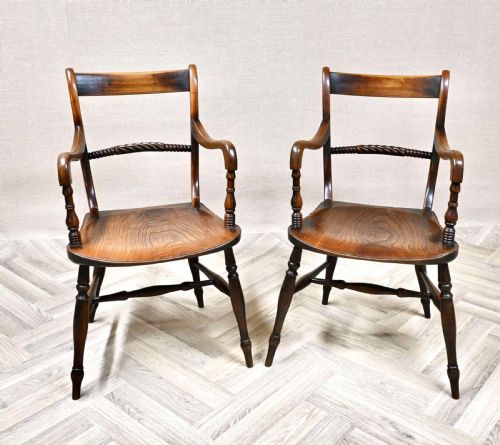
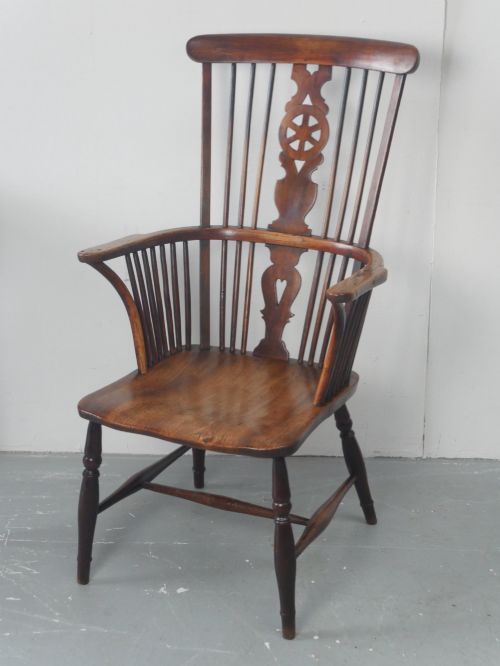
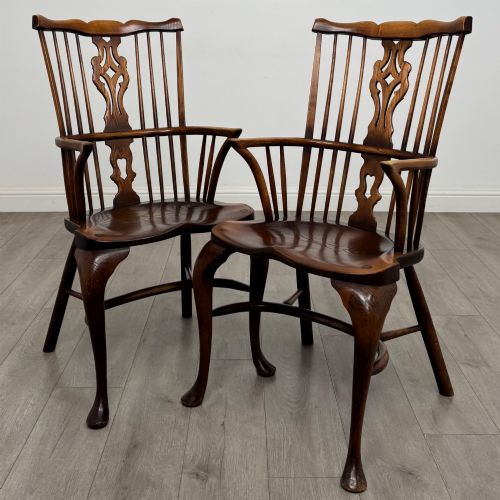
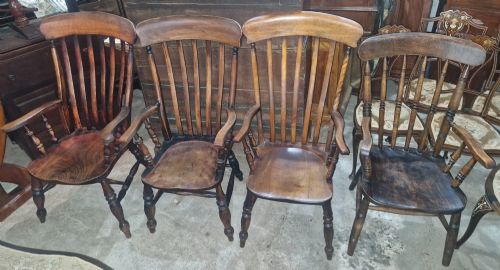
A traditional english carver brings together a variety of seating forms designed for the dining room, morning room, and farmhouse kitchen. Buyers searching this phrase will find a strong representation of Windsor armchairs, alongside formal dining carvers in mahogany and oak.
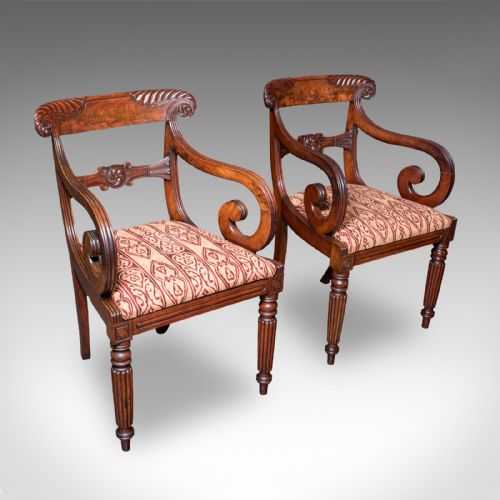
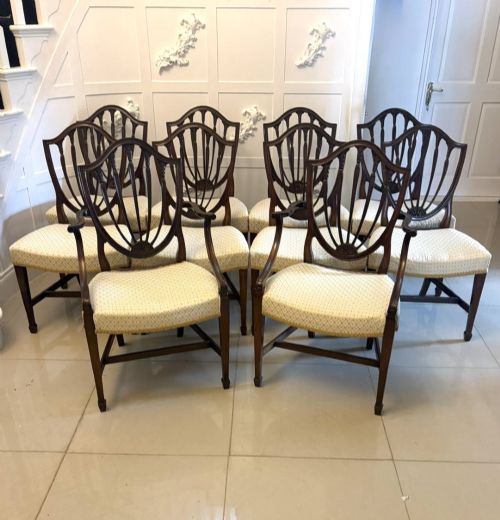
The periods span from the Georgian era through the Regency and Victorian periods into the early twentieth century. Country vernacular pieces in yew, elm, and ash sit alongside formal mahogany styles featuring shield backs, ropebacks, and scroll arms.
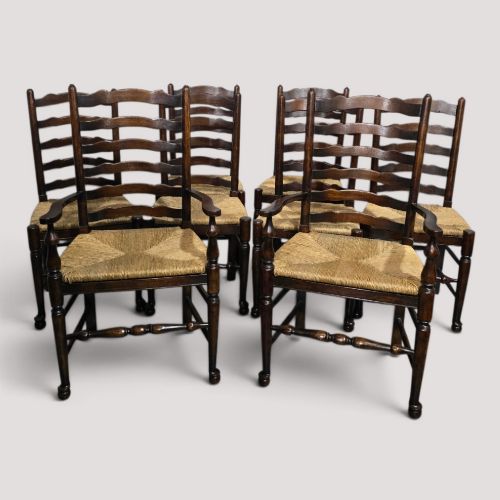
Armchairs and elbow chairs dominate the selection, often appearing as singles, pairs, or matched sets suitable for the ends of a dining table. The origins stretch from rural workshops in Lincolnshire and the English countryside to city cabinet makers.
Materials and Construction
Makers utilised a combination of native timbers such as elm, ash, yew, beech, and oak, frequently pairing a solid elm seat with bent ash or yew for the bows and spindles. Mahogany appeared in more formal urban workshops for dining carvers with carved splats and scroll arms.
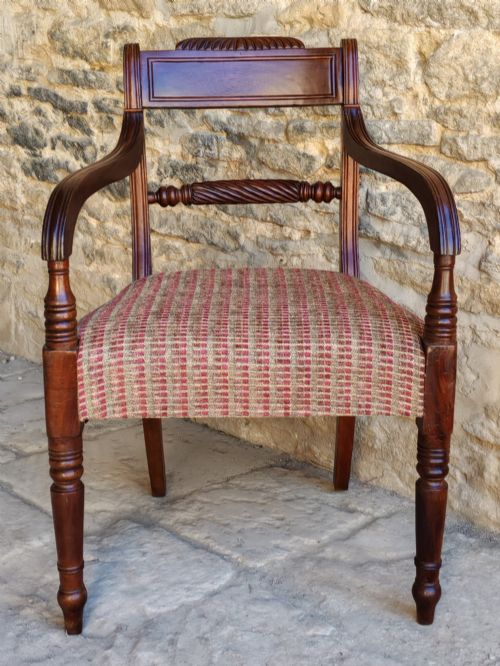
Construction methods relied on traditional joinery, including turned legs fitted into thick saddle seats and steam-bent wood for the characteristic hoop backs and comb backs of country chairs. Rush and fabric seating provide the support on ladderback and upholstered frames.
Many country Windsor chairs show the authentic depressions of past owners in their solid elm saddle seats.
Judging Quality
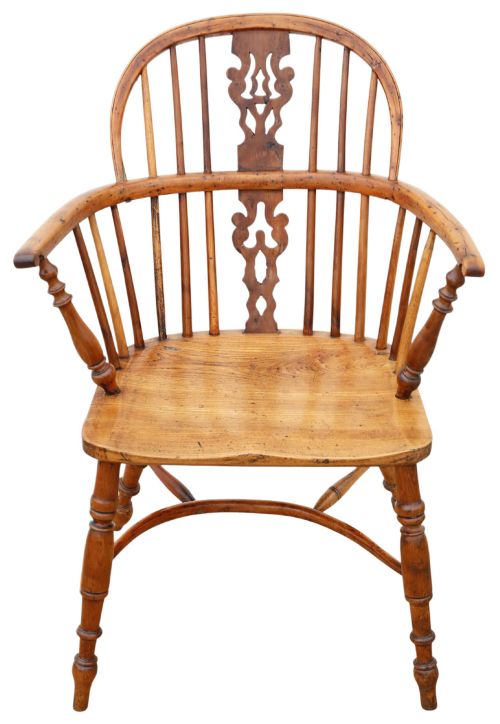
The distinction between ordinary seating and the finest examples rests on the selection of timber and the harmony of the proportions. Yew wood grain and well-figured elm command attention, particularly when combined with crinoline stretchers and substantial arm bow turnings.
Originality of surface finish and the integrity of the structural joints dictate the standing of a piece. Retaining the authentic patination built up over centuries separates a well-preserved survivor from a heavily restored chair.
Philip Clissett·Maple and Co·E W Godwin
The Traditional English Carver Glossary
- Carver
- An armchair designed to match a set of dining chairs, typically placed at the head of the table. These seats feature supportive armrests for added comfort.
- Windsor
- A wooden chair constructed with a solid saddle-shaped seat into which the legs and back spindles are direct-tenoned. Regional variations include hoop backs, wheel backs, and comb backs.
- Crinoline stretcher
- A bent metal or wooden stretcher linking the legs of a chair in a continuous curve, often found on mid-nineteenth-century Windsor designs to provide extra rigidity.
- Vernacular
- An object made by local rural craftsmen using regional traditions and native materials rather than following academic urban pattern books.
- Rush seat
- A seating surface woven from dried marsh rushes twisted into cords, creating a durable and slightly springy pad within a wooden frame.
Traditional English Carver: Frequently Asked Questions
How do I tell a Windsor chair apart?
Windsor chairs are defined by their solid wood seats where the legs and back spindles are inserted directly into bored holes.
Key variations include the shape of the backrest, such as comb backs, barbacks, and hoop backs, as well as the choice of yew, elm, or ash timber.
Are these chairs suitable for daily use?
Most antique carvers are constructed from durable hardwoods like oak, elm, and beech, making them sturdy enough for everyday seating.
Placing them at a dining table or in a hallway allows them to be used regularly while maintaining their structural integrity.
How do I date an antique carver?
Dating relies on observing the combination of timber species, construction tool marks, and stylistic details such as Regency scroll arms or Georgian splats.
Comparing the turning style of the legs and the wear patterns on the seat helps place the chair within its historical period.