




Traditional Dutch Windmill Painting
These traditional dutch windmill painting works capture low horizons and wide skies, offering a quiet focal point for a period interior.
Traditional Dutch Windmill Painting
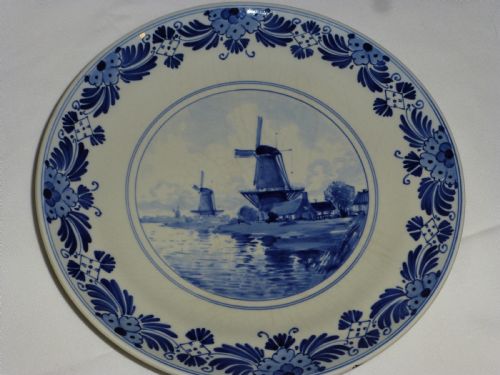
A traditional dutch windmill painting depicts the flat agricultural lands, canals, and mills of the Low Countries during the nineteenth and twentieth centuries. Buyers looking at this selection encounter works executed in oil on canvas and watercolour, alongside related decorative items like blue and white faience inkstands and chargers from the same regional tradition.
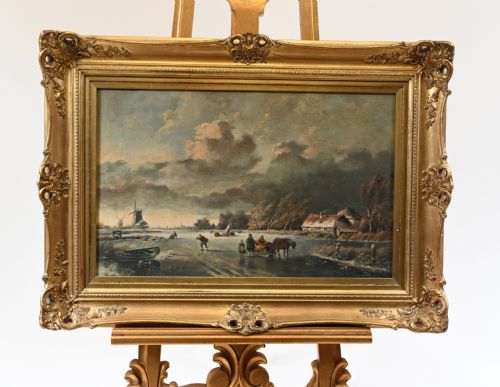
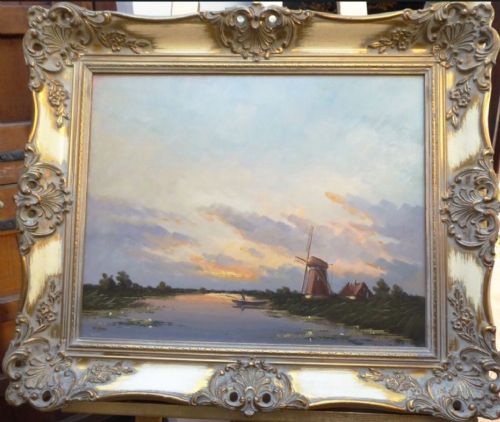
The objects span several decades, stretching from nineteenth-century realism and British marine watercolours through to mid-century traditional interpretations. Formats range from intimate frozen winter landscapes with figures on ice to large river scenes set at sunset.
How they were made
These works rely on traditional application methods, primarily oil paint laid upon stretched canvas or watercolour pigments applied to paper. Brushwork varies from the tight control of nineteenth-century realism to the looser application seen in later impressionist and mid-century examples.
Framing often involves wood with gilt moulding or gilded wood finishes that complement the tonal palette of the painted surface. Ceramic pieces within this sphere utilise tin-glazed earthenware techniques to achieve classic blue and white motifs.
Several artists apparently found local windmills so compelling they painted them repeatedly as the sun went down.
What varies in quality
Quality rests upon the handling of light and atmospheric perspective, particularly how the artist manages the expansive skies characteristic of the region. Works that capture subtle shifts in evening or winter light distinguish themselves from more formulaic topographical records.
The handling of the medium itself marks the division between competent output and superior artistry. Confident, deliberate brushwork in oils or transparent washes in watercolour show an assured understanding of form and space.
Thomas Bush Hardy·John D Walker·Kershaw Schofield
The Traditional Dutch Windmill Painting Glossary
- Dutch School
- A broad term describing artists working within the artistic traditions of the Netherlands. It encompasses various movements from realism to impressionism across multiple centuries.
- Oil on Canvas
- A painting medium where pigments are suspended in a drying oil, applied to a woven fabric support. This combination allows for rich colour blending and textured impasto application.
- Faience
- Tin-glazed earthenware decorated with opaque metal oxides, often featuring blue designs on a white background. It represents a European response to imported Asian ceramics.
- Watercolour
- A painting method where water-soluble pigments are used with water on paper supports. It produces translucent washes that rely on the white of the paper for luminosity.
Traditional Dutch Windmill Painting: Frequently Asked Questions
What periods do these paintings cover?
The available selection spans from the late nineteenth century through to the mid-twentieth century. These dates reflect various revivals of traditional landscape subjects.
Earlier nineteenth-century pieces often share stylistic traits with Dutch Realism, while later mid-century works adopt a broader decorative approach.
Are all these items actually paintings?
While the majority consist of oil paintings and watercolours on canvas or paper, the grouping also includes related decorative objects. Items such as blue and white faience inkstands and chargers share the same cultural and geographic provenance.
Buyers should examine the material details of each individual listing to confirm the exact medium.
How should I frame an older canvas?
Many nineteenth and twentieth-century works arrive in period frames, often featuring gilded wood or gilt moulding. Maintaining these original surrounds preserves the historical integrity of the piece.
If framing a bare canvas, select a moulding profile that matches the aesthetic weight and period of the artwork.
What subjects appear alongside windmills?
Common accompanying motifs include frozen canals with figures, river landscapes at sunset, and expansive polder fields. These elements reflect the distinct topography and rural life of the Netherlands.
Coastal and marine themes also feature, particularly in works influenced by British marine traditions of the nineteenth century.