




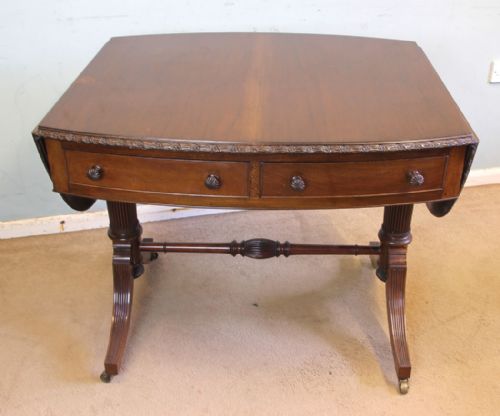
Traditional Drop Leaf Sofa Table
Traditional drop leaf sofa table designs offer ingenious folding leaves and rich timber surfaces, making them essential space-saving companions for period interiors.
Traditional Drop Leaf Sofa Table
A traditional drop leaf sofa table brings together versatile folding leaves and sturdy timber construction across various historical periods, including Victorian, Georgian, and Edwardian eras. Buyers searching for these pieces encounter forms designed to sit comfortably beside seating or function independently as compact side tables.
Originating largely from the nineteenth and eighteenth centuries, these tables span formal Sheraton Revival influences through to robust English country interpretations. Each format provides practical surface area that expands or contracts according to daily domestic requirements.
Materials and construction methods
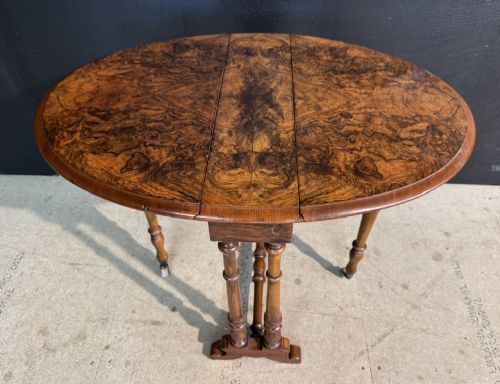
Cabinet makers relied predominantly on solid mahogany and walnut, frequently selecting figured timber such as burr walnut or Cuban mahogany for visible surfaces. These dense hardwoods were shaped into cabriole legs, turned supports, and hinged drop leaves.
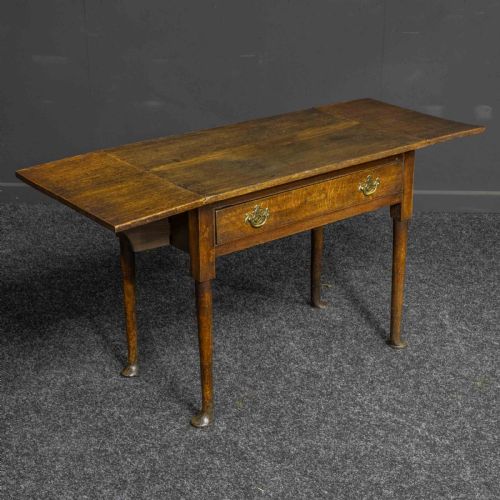
Joinery techniques incorporated clever hinging mechanisms and drawer constructions, allowing leaves to drop smoothly while supporting frames remained stable. Secondary timbers like pine appeared in painted rustic pieces, whilst brass fittings added functional detail to castors and drawer pulls.
Assessing quality in traditional drop leaf sofa tables
Quality rests upon the selection of timber grain, particularly where figured mahogany or burr walnut graces the top surfaces. Finer examples display meticulous attention to timber matching across the folding leaves and main carcase.
Structural integrity reveals itself in the smoothness of the drop leaf action and the stability of turned or cabriole legs. Superior pieces maintain crispness in mouldings and drawer dovetails without excessive past intervention.
The Traditional Drop Leaf Sofa Table Glossary
- Pembroke table
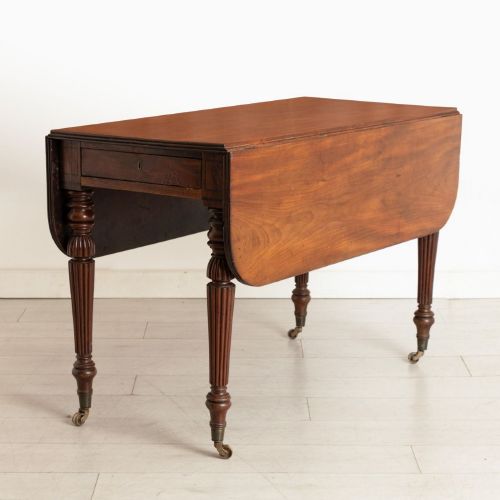
- A small rectangular table featuring two hinged drop leaves on opposing sides, often equipped with one or two small drawers. This form became popular during the eighteenth century for breakfast or light writing tasks.
- Sutherland table
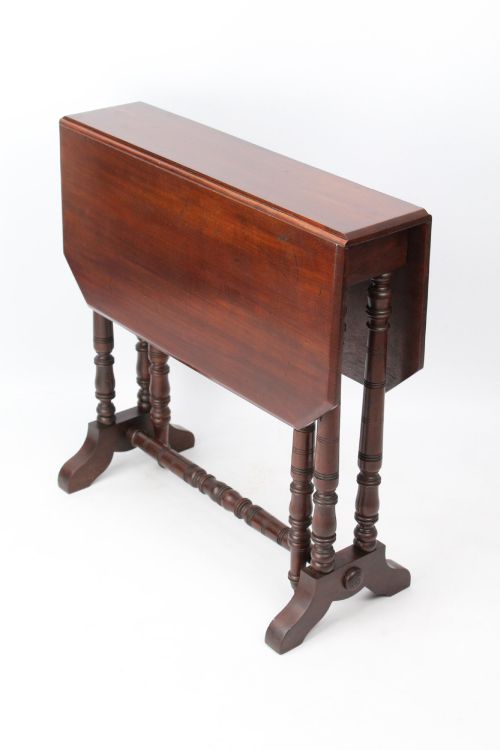
- A narrow drop leaf table variant where the leaves fold down almost vertically and the supporting gate legs swing out extensively. The design maximises floor space when closed.
- Cabriole leg
- A furniture leg that curves out in a convex arc at the top and dips inward in a concave arc below, terminating in a pad or foot. This stylistic element appears frequently on mid-Victorian examples.
- Bobbin leg
- A turned wooden furniture leg resembling a succession of reels or bobbins threaded together. It provides a distinctive textured silhouette on nineteenth-century side tables.
- Cuban mahogany
- A dense, dark timber harvested in the Caribbean, prized for deep rich colour and fine grain. Cabinet makers utilised this material extensively for high-status Georgian and Victorian furniture.
Traditional Drop Leaf Sofa Table: Frequently Asked Questions
What is a traditional drop leaf sofa table?
A traditional drop leaf sofa table is a versatile piece of antique furniture featuring hinged flaps on the sides that lift to expand the surface area. These tables were historically positioned near seating or used as compact side desks.
They span periods from the eighteenth century to the early twentieth century, incorporating forms like Pembroke and Sutherland tables constructed primarily from mahogany, walnut, and oak.
How were these tables used originally?
These tables served flexible domestic roles in period drawing rooms and parlours, holding reading materials, tea sets, or sewing equipment. The folding leaves allowed occupants to adjust the footprint depending on the activity.
When positioned beside a sofa or settee, the extended leaves provided convenient access without blocking walkways or dominating the room.
How do I care for antique timber surfaces?
Antique timber surfaces require consistent maintenance using natural beeswax to nourish the wood and protect the polish. Avoid placing these tables in direct sunlight or near heat sources to prevent timber splitting.
Lifting rather than dragging the table preserves the stability of the legs and joints, particularly on pieces with delicate drop leaf hinges.
How can I tell a Victorian table from a Georgian one?
Georgian tables often display restrained classical proportions, straight or tapered legs, and dense Cuban mahogany with sharp joinery details. They reflect eighteenth-century ideals of symmetry and proportion.
Victorian examples frequently introduce bolder turning, curved cabriole legs, or alternative formats like bobbin gate legs and walnut Sutherland tables, reflecting nineteenth-century industrial and stylistic shifts.