



Traditional Dinner Gong
A traditional dinner gong brings resonant acoustic theatre to a hallway or dining room, hung in timber or iron frames designed to command attention.
Traditional Dinner Gong
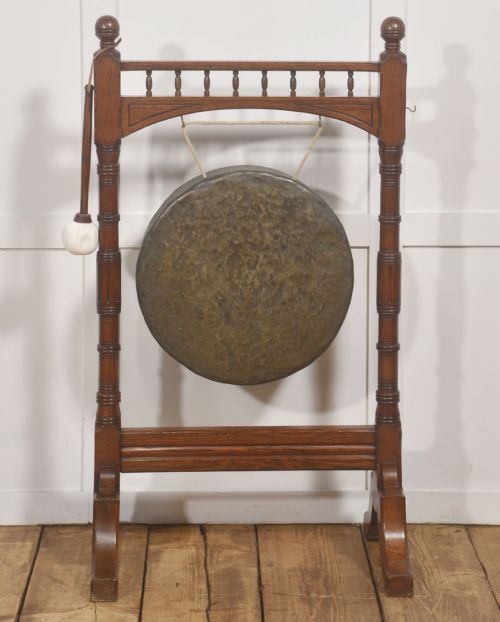
A traditional dinner gong is a percussion instrument mounted in a supportive framework, originally sounded to summon household members and guests to meals. These pieces span the nineteenth century and the early twentieth century, carrying the domestic rituals of country houses and urban villas into modern interiors.
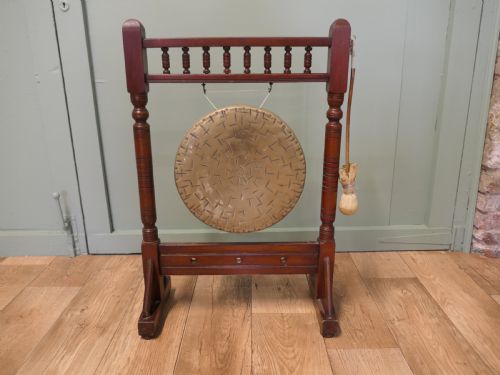
The versions most commonly met on this page are table gongs and dinner gongs set within freestanding or hanging frames. They appear in materials like oak, brass, copper, and iron, reflecting periods from the Victorian era through to the 1930s.
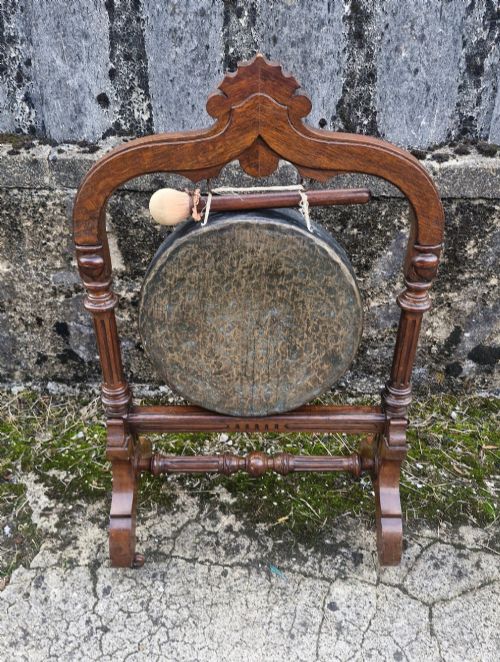
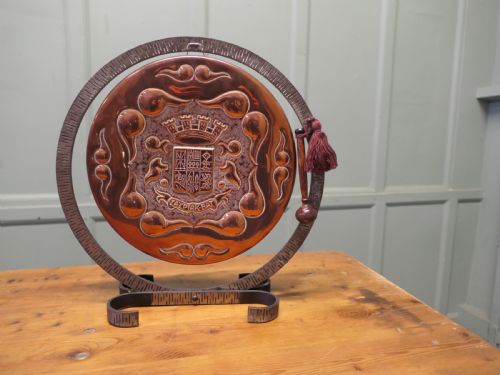
Origins stretch from British workshops working in the Gothic Revival, Rustic Victorian, and Arts and Crafts styles to continental examples such as Basque folk art and pieces influenced by Chinese export and Qing Dynasty aesthetics. Each style dictates whether the frame leans towards architectural carving, rustic horn, or hand-hammered metalwork.
How traditional dinner gongs were made
Frames are constructed from seasoned hardwoods including oak and mahogany, often shaped through carving, turned spindle work, or joinery appropriate to Gothic Revival and Arts and Crafts principles. Wrought iron and hand-hammered copper provide structural contrast and industrial strength, particularly in pieces originating from Basque workshops or Scottish country houses.
Gong discs themselves are cast or hammered from bronze, brass, or copper alloys designed to produce a sustained, deep resonance when struck. Cord and textile elements suspend the metallic disc within its frame, ensuring the vibration remains unimpeded by the surrounding woodwork.
Traditional Dinner Gong Retail Price Guide 2026
Typical asking prices for traditional dinner gong among the pieces listed under this phrase on Sellingantiques today, from the lower quarter to the upper quarter. They describe what is for sale here now, not the wider market.
Listings feature periods spanning the 1880s, the Victorian era, the 1900s, and the 1930s.
What varies in quality
The distinction between ordinary and exceptional pieces lies in the integration of materials and the depth of surface ornamentation. Carved oak frames with crisp architectural detailing or intricate dragon motifs demonstrate a higher level of artisan investment than plain, utilitarian mountings.
Acoustic quality sets the finer examples apart, determined by the metallurgy of the gong disc and the purity of its suspension. Well-forged hand-hammered bronze or copper produces a clear, resonant tone that sustains cleanly, while lesser assemblies yield a duller sound.
The Traditional Dinner Gong Glossary
- Gong
- A percussion instrument consisting of a flat or concave metal disc that vibrates when struck with a mallet. It forms the acoustic centre of every assembly.
- Gothic Revival
- An architectural and decorative style drawing inspiration from medieval forms, often seen in pointed arches and heavy timber framing. This style gives many Victorian frames their medieval church-like silhouette.
- Arts and Crafts
- A design movement valuing traditional craftsmanship, visible construction, and simple materials over mass production. Pieces from this tradition show honest joinery and hand-finished surfaces.
- Qing Dynasty Style
- Aesthetic characteristics originating from the final imperial dynasty of China, frequently featuring dragon carvings and symbolic motifs. Such details appear on imported stands and gongs.
- Basque Folk Art
- Regional decorative traditions from the Basque Country involving hand-hammered copper and ironwork. Items in this style display distinctive localized metalworking techniques.
Traditional Dinner Gong: Frequently Asked Questions
How do you strike a traditional dinner gong?
These gongs are played using a dedicated mallet, typically struck near the centre of the metal disc to produce a full resonance.
Striking too near the edge deadens the vibration and restricts the carrying power of the sound.
Where were dinner gongs placed in a house?
They usually stood in entrance halls, corridors, or main reception rooms where the sound could carry easily to all upstairs and downstairs quarters.
This central placement ensured the summons to dinner reached every part of the household.
How do I care for the metal and wood?
Wood frames benefit from occasional treatment with appropriate waxes to maintain the condition of the oak or mahogany.
Metal discs require minimal interference, as cleaning away age patination can alter both the appearance and the acoustic resonance.
How can I tell a Victorian gong from a later one?
Victorian examples frequently employ Gothic Revival motifs, heavy turned oak, or Aesthetic Movement styling, reflecting nineteenth-century taste.
Later pieces from the twentieth century often adopt simpler lines or distinct regional motifs such as Chinese dragon carvings.