

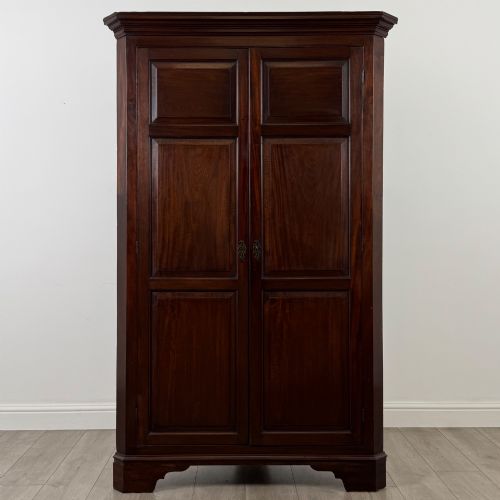

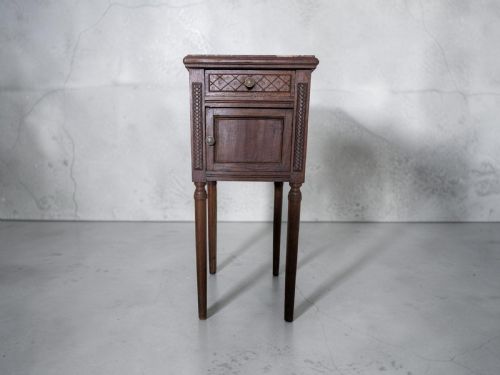
Traditional Dark Wood Cupboards
Traditional dark wood cupboards offer enduring storage utility, combining rich mahogany and oak grains with centuries of cabinet-making heritage.
Traditional Dark Wood Cupboards
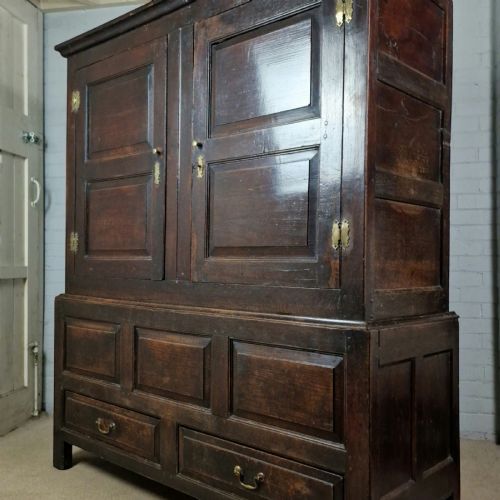
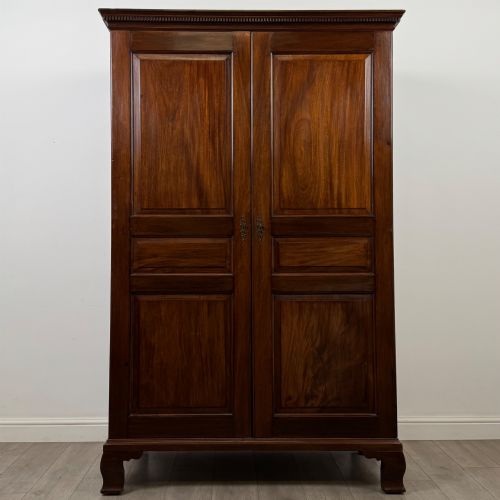
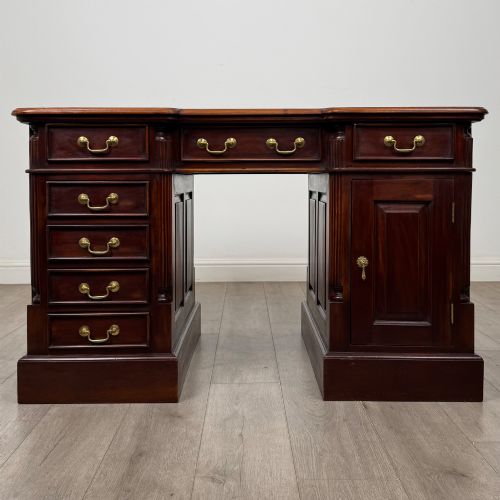
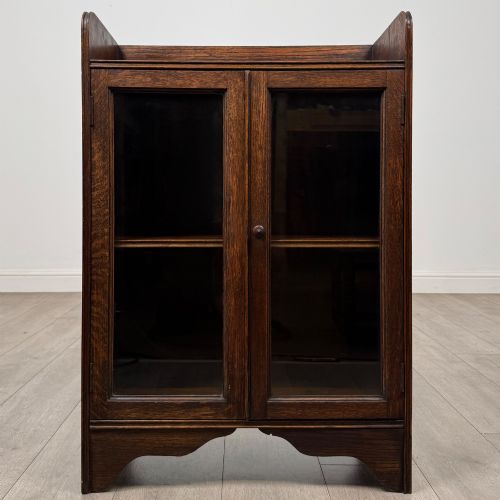
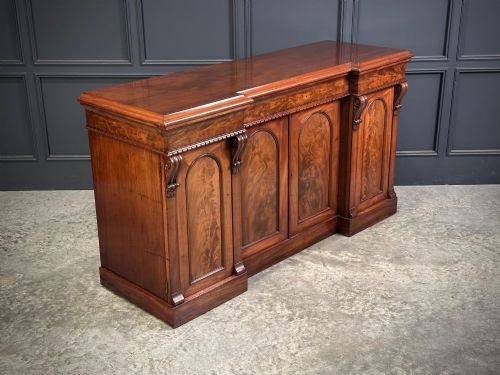
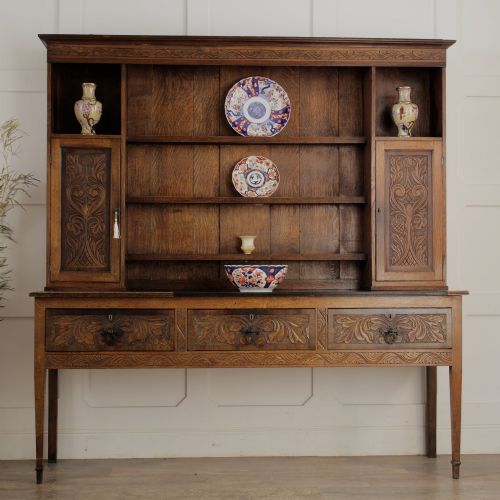
Traditional dark wood cupboards encompass a diverse range of storage forms, spanning from 18th-century Georgian corner cabinets to sturdy Victorian sideboards and Edwardian display cabinets. Buyers seeking traditional dark wood cupboards will frequently encounter solid oak and mahogany pieces originating from the Georgian and Victorian eras, alongside regional forms such as Welsh dressers.
How they were made
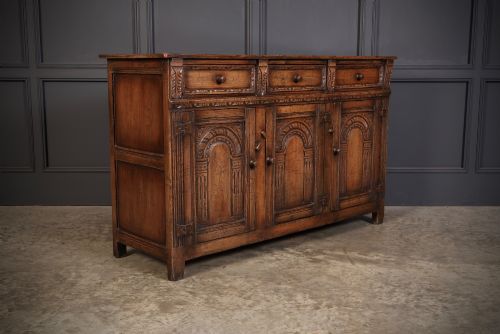
Cabinet-makers relied heavily on solid oak and rich mahogany timbers, occasionally utilising flame mahogany veneer to achieve striking grain patterns on larger surfaces such as sideboards and wardrobes. Construction often incorporated traditional joinery alongside hand-carved details, particularly evident in oak dressers and Jacobean style pieces.
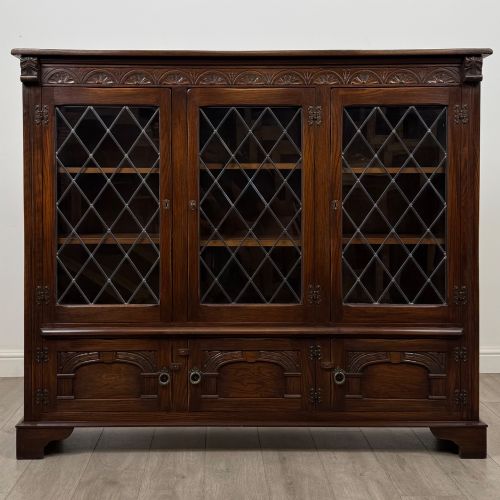
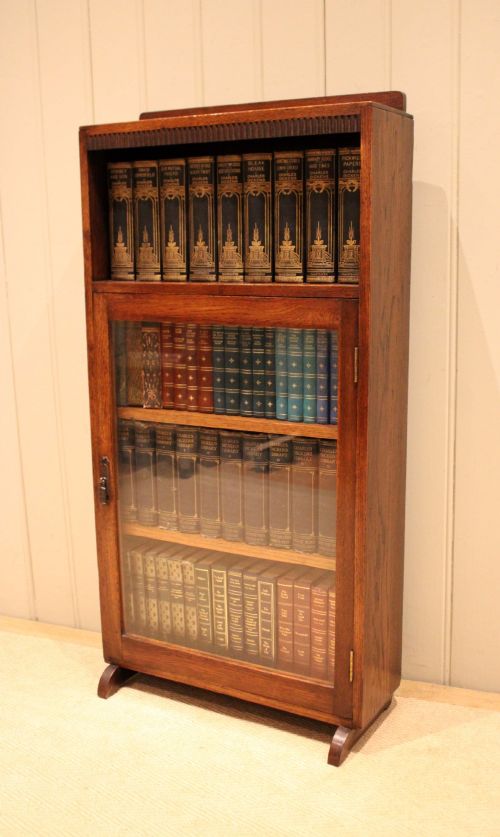
Hardware played an essential functional and decorative role, with brass fixtures commonly fitted to drawers and doors. Glass panels were integrated into bookcases and display cabinets, while iron fittings reinforced larger storage units like apothecary chests and cupboards.
One extraordinary apothecary chest packs eighty distinct drawers into a single cabinet for organising traditional medicine.
What varies in quality
Quality in these storage pieces rests upon the selection of timber and the precision of the cabinet-making, distinguishing finely figured flame mahogany veneers and carefully matched solid oak boards from simpler constructions. The depth and execution of hand-carving also set superior examples apart, particularly on regional oak dressers and revival sideboards.
Structural integrity and the retention of original elements, such as brass hardware, glass panes, and internal shelving, dictate the standing of a piece within its period. Refined proportions and balanced joinery reflect the higher tier of workshop production across Georgian and Victorian examples.
The Traditional Dark Wood Cupboards Glossary
- Flame mahogany
- A veneer cut from the fork of the mahogany tree, displaying a distinctive flamed or feathered grain pattern that commands visual attention on high-end furniture.
- Linen press
- A tall storage piece featuring upper sliding trays or shelves enclosed by doors, traditionally used for storing household linen before hanging wardrobes became standard.
- Corner cabinet
- A specialised storage unit designed to fit neatly into the corner of a room, produced in both hanging and floor-standing formats during the Georgian period.
- Breakfront
- A piece of furniture, such as a sideboard or bookcase, where the central section projects forward from the flanking sections to create visual depth.
- Apothecary chest
- A multi-drawer storage cabinet originally utilised by practitioners of traditional medicine for organising herbs, powders, and remedies.
Traditional Dark Wood Cupboards: Frequently Asked Questions
How do I date a dark wood cupboard?
Dating relies on identifying the primary wood, construction techniques, and stylistic markers specific to eras like the Georgian, Victorian, or Edwardian periods. Details such as drawer construction and hardware often provide key chronological clues.
Examining secondary timbers and overall proportions helps confirm whether a piece belongs to the 18th, 19th, or early 20th century.
What is the difference between an oak dresser and a sideboard?
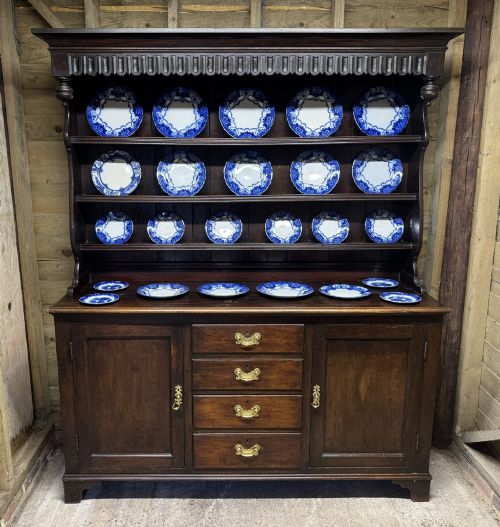
An oak dresser typically incorporates an upper plate rack for displaying ceramics above a base fitted with drawers and cupboards, particularly associated with regional Welsh styles. Sideboards are generally lower, flat-topped units designed primarily for serving food and storing dining accessories.
While both utilise sturdy oak or mahogany, their historical domestic functions determined their distinct structural forms.
How should I care for antique mahogany furniture?
Antique mahogany benefits from being kept away from direct sunlight and extreme temperature fluctuations, which can dry out the timber and cause veneer to lift. Regular dusting with a soft, dry cloth preserves the polished surface.
Occasional applications of appropriate wax help nourish the wood and maintain its rich dark lustre without building up heavy residues.
Are bedside cabinets always sold as pairs?
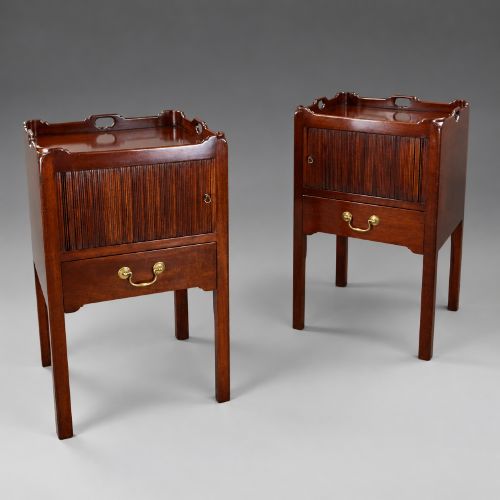
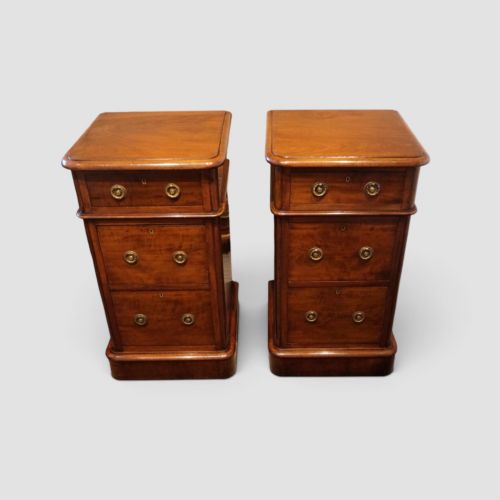
Bedside cabinets and night tables appear both as individual pieces and occasionally as matched pairs, depending on their original domestic use. Georgian and Victorian bedrooms often utilised single washstands or bedside cupboards rather than identical flanking units.
Pairs do occur among Edwardian and later 1930s pieces, but single items remain entirely common in the historical record.