

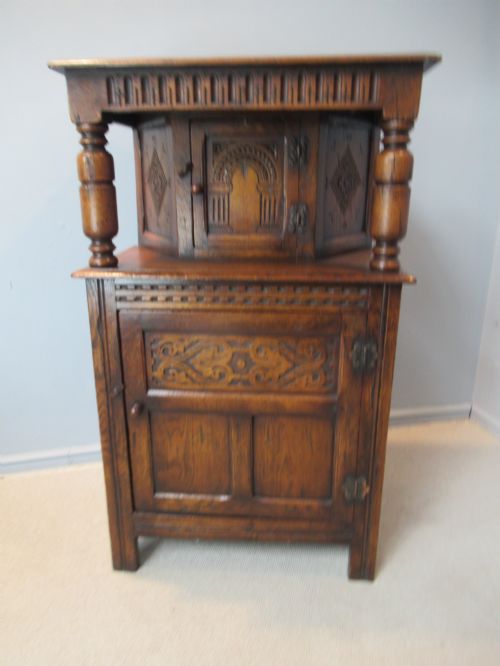

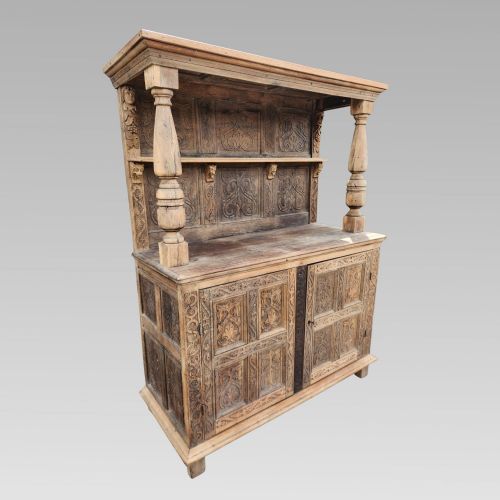


Traditional Court Cupboard
A traditional court cupboard anchors a room with historic timber, offering tiered storage that evolved from early English and Welsh country houses.
Traditional Court Cupboard
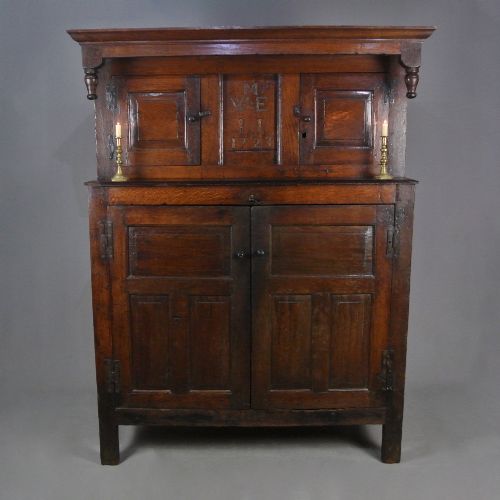
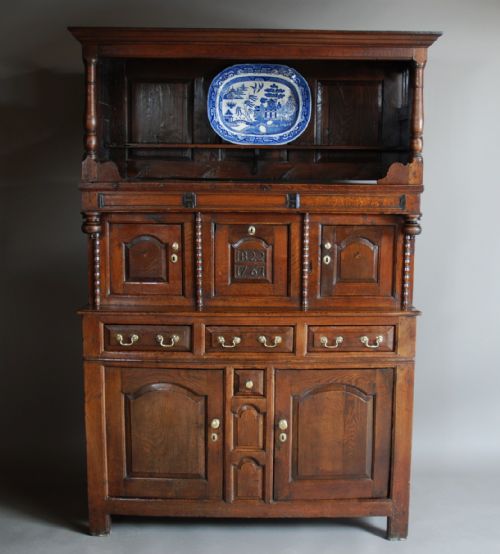
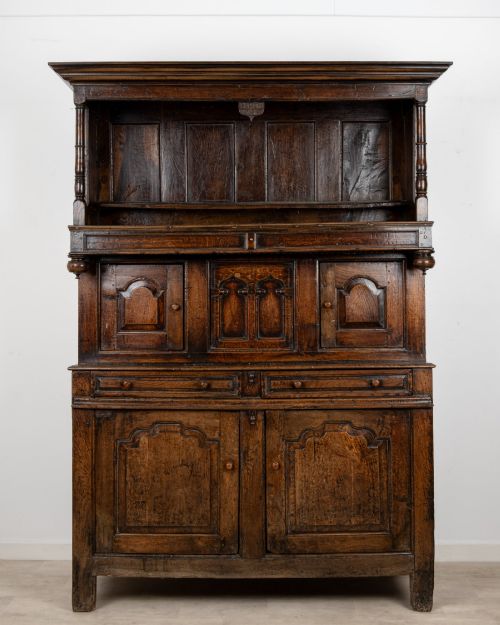
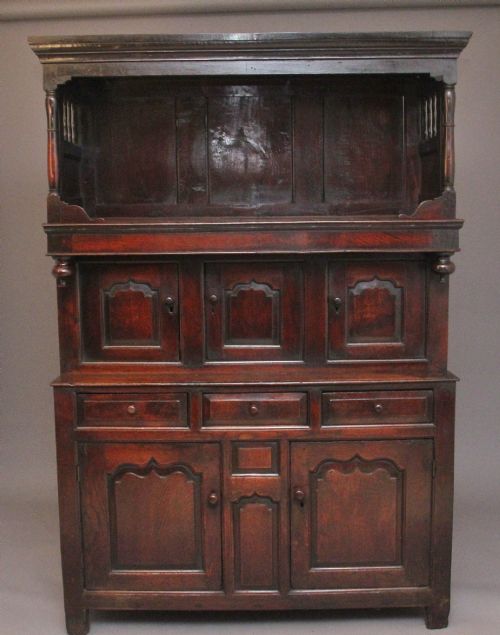
A traditional court cupboard is a sturdy storage piece built primarily from native hardwoods during periods ranging from the seventeenth century to the twentieth century. These architectural forms include regional Welsh variations such as the cwpwrdd tridarn and deuddarn alongside English court and livery cupboards.
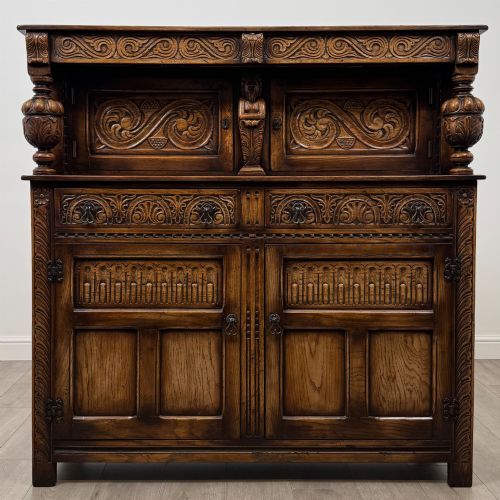
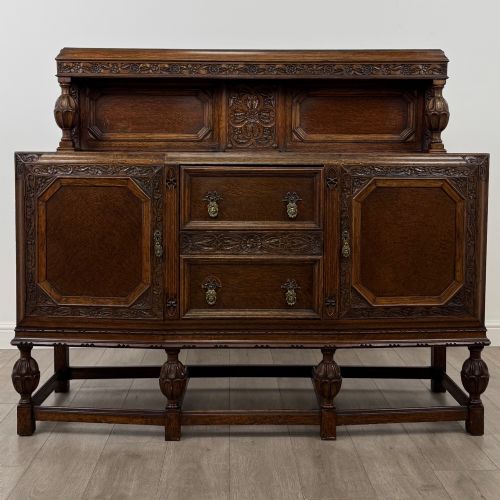
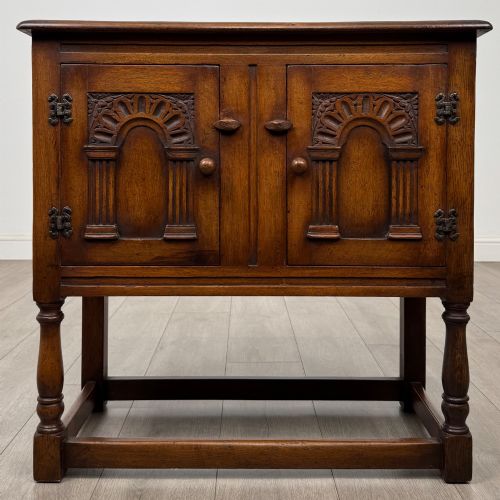
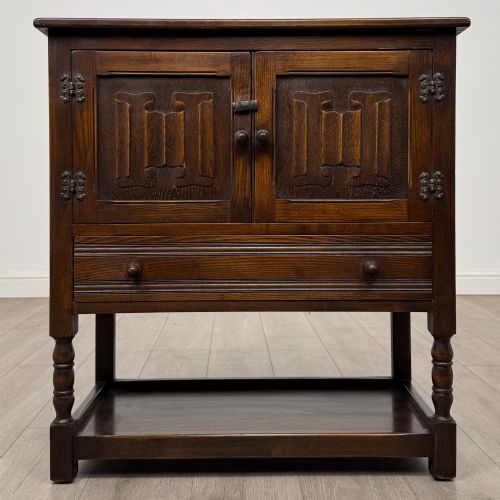
Buyers browsing this selection frequently encounter early eighteenth century examples alongside later nineteenth century and Edwardian revivals fashioned in the Jacobean and Tudor styles. The forms span multi-tiered cupboards with panelled doors to smaller sideboards and dressers sharing the same heavy timber construction.
Origins stretch from rural English workshops to the Snowdonia region of Wales, where local cabinetmakers utilised indigenous woods. Whether structured as a towering tridarn or a compact deuddarn, each piece reflects the domestic storage needs of historic rural dwellings.
How they were made
Master joiners constructed these cupboards primarily from solid oak and elm, selecting timber for its strength and grain pattern. Panels were joined using traditional methods that allowed the wood to move naturally with changes in humidity over the centuries.
Metalwork played a functional and decorative role, with iron and brass hardware securing doors and drawers. Details such as carved ornamentation and applied mouldings were hand-chiselled directly into the structural timber.
The listings here span eight distinct periods, reaching from the seventeenth century through to the nineteen-thirties.
What varies in quality
The standard of a traditional court cupboard depends on the integrity of its timber and the depth of its original surface patina. Pieces retaining their early construction joints and uncompromised boards stand apart from heavily altered examples.
The crispness and ambition of the hand-carving distinguish finer workshops from more utilitarian regional outputs. Proportions and the balanced integration of upper and lower tiers also dictate the visual harmony of the finished piece.
The Traditional Court Cupboard Glossary
- Cwpwrdd tridarn
- A traditional Welsh three-tier cupboard featuring an open or enclosed upper section above a middle cabinet and lower base. This regional form developed to display and store household provisions.
- Cwpwrdd deuddarn
- A two-part Welsh cupboard comprising an upper cabinet section set upon a larger lower base. It represents a slightly more compact alternative to the towering tridarn.
- Livery cupboard
- An early storage form traditionally used for keeping food and candles ventilated in the great hall. These pieces rely on turned spindles and pierced panels for air circulation.
- Patina
- The deep, lustrous surface sheen developed by timber over centuries of handling, polishing and exposure to light. It serves as an indicator of age and continuous use.
- Joined cupboard
- A piece constructed using mortise and tenon joinery secured with wooden pegs rather than metal nails. This technique defines seventeenth and eighteenth century cabinetmaking.
Traditional Court Cupboard: Frequently Asked Questions
Where were traditional court cupboards placed?
These pieces traditionally stood in the main hall or dining parlour of substantial homes to display plate and store food.
Today, they function well in dining rooms or spacious hallways where their vertical proportions provide substantial display and storage space.
How do I care for historic oak furniture?
Maintain the timber by applying traditional beeswax sparingly and avoiding direct sunlight or modern heat sources that dry the wood.
Stable room temperatures prevent the historic joints and panels from splitting or shifting over time.
How can I tell an early piece from a revival copy?
Early pieces display hand-tool marks, pegged joinery, and timber shrinkage consistent with centuries of age.
Revival pieces from the nineteenth and twentieth centuries often utilise machine-sawn backing boards and standardised hardware.