
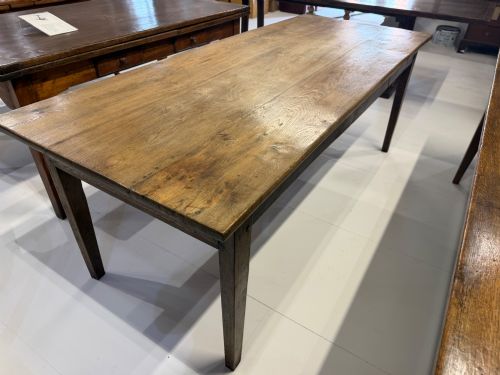
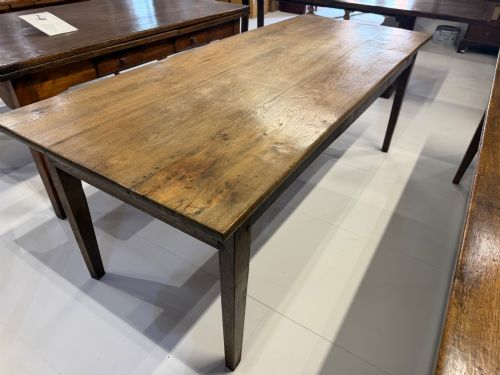
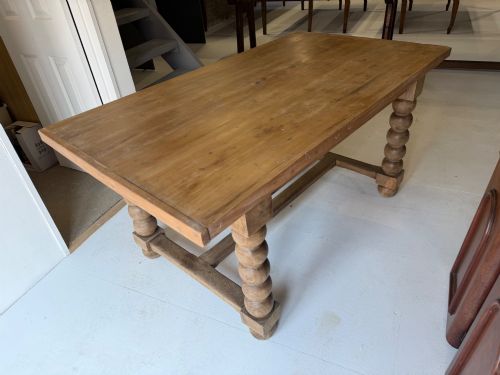
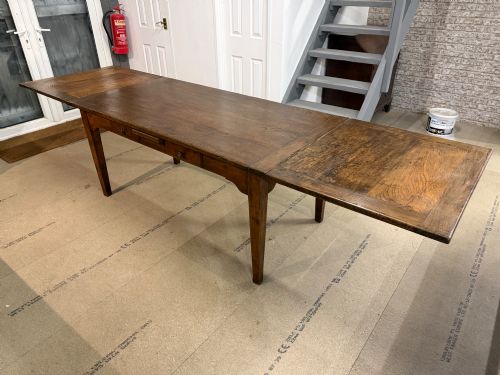
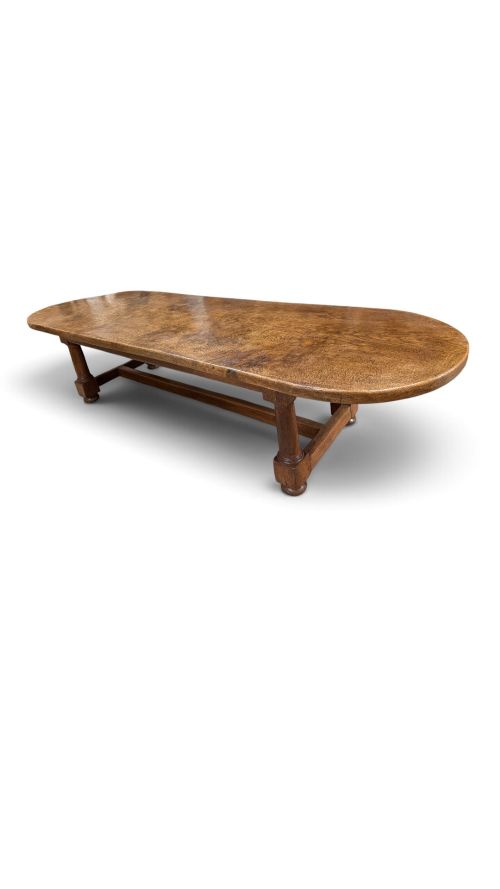
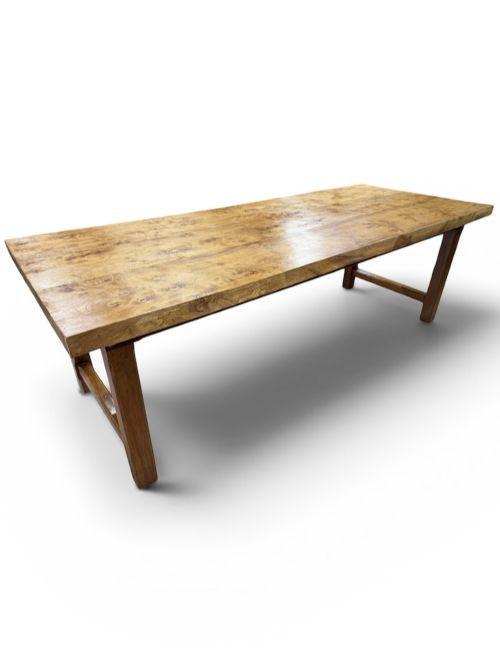
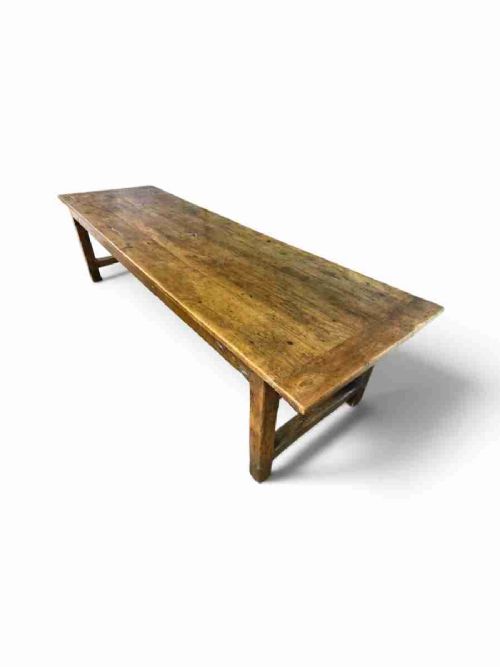
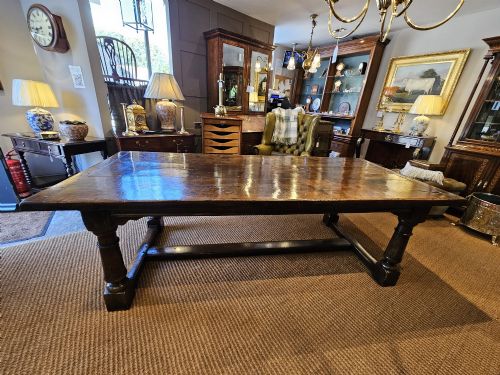
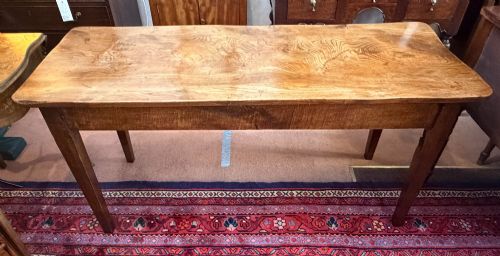
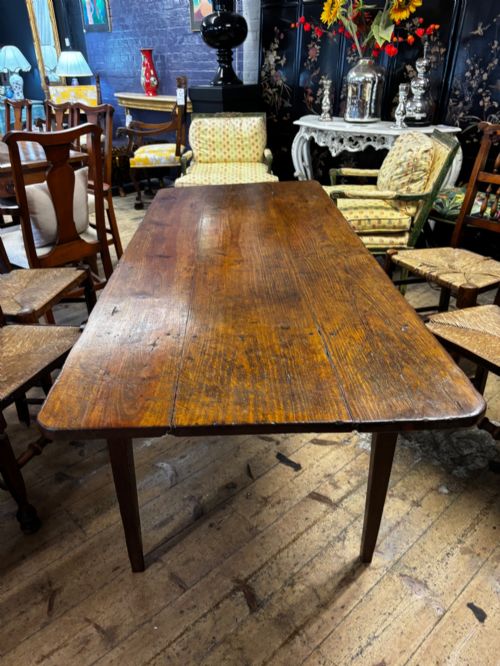
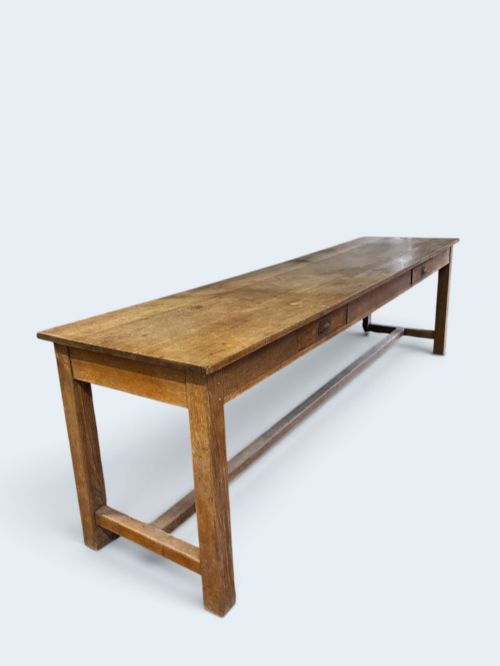
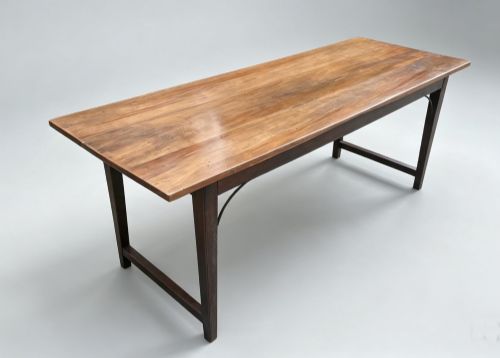
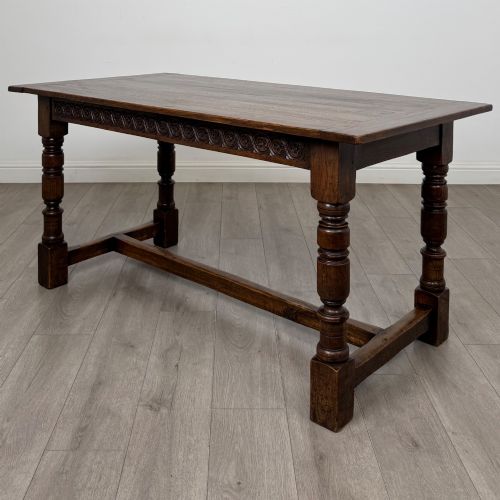
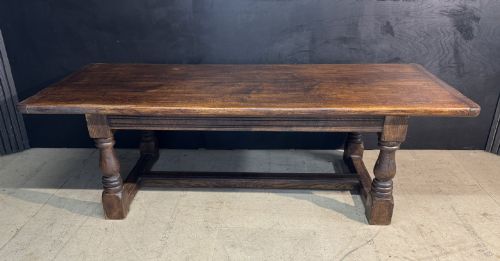
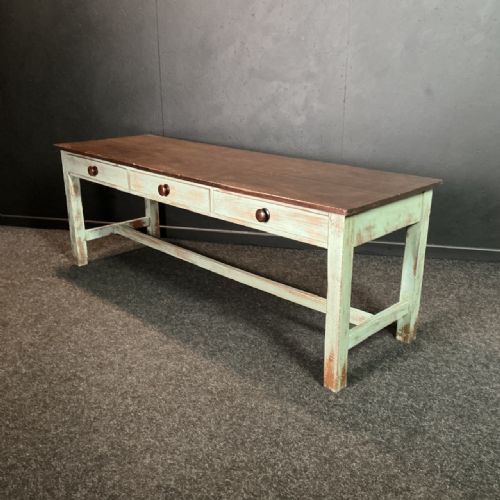
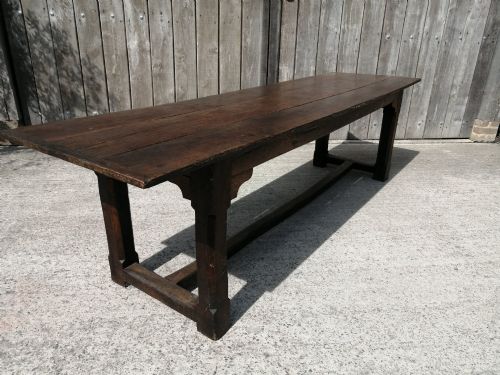
Traditional Country Refectory Table
A traditional country refectory table brings sturdy timber and centuries of domestic life directly into the modern dining room.
Traditional Country Refectory Table
When you search for a traditional country refectory table, you encounter long, heavy boards built for communal dining and farmhouse kitchens. The examples available span from the eighteenth century through the Georgian and Victorian eras up to the early twentieth century.
You meet various forms on this page, including standard dining tables, serving tables, and coffee tables. Most pieces adopt rustic farmhouse, French country, or Jacobean revival styles.
The materials reflect domestic utility, relying heavily on sturdy woods suited to daily family use.
Materials and construction methods
Makers built these tables primarily from solid oak, pine, elm, beech, and fruitwood, often combining timbers within a single piece. Structural strength came from thick planks and substantial legs, sometimes featuring carved details or tapered designs.
Surface finishes range from natural wax to paint, protecting the wood while recording decades of kitchen labour and family meals.
Materials span solid oak, elm, pine, beech, and fruitwood alongside occasional iron fittings.
Judging quality and character
Quality rests in the integrity of the timber, particularly the presence of single-plank tops and the weight of the underlying frame. Tables constructed from dense old-growth oak or elm display superior longevity compared to lighter secondary woods.
Proportion and joinery separate standard utility pieces from finer examples, such as those with bobbin legs or period carving. Patina and honest wear contribute to the desirability of older pieces without diminishing their structural soundness.
The Music House Norwich
The Traditional Country Refectory Table Glossary
- Refectory table
- A long, narrow dining table originally used in monasteries and later adopted in large country houses. These tables provide substantial seating capacity and prominent stretchers.
- Single plank top
- A tabletop fashioned from one wide board rather than multiple joined pieces. This feature indicates substantial timber harvested from mature trees.
- Stretcher
- A horizontal support connecting the legs of a table for added stability. They often show wear from resting feet over generations.
- Patina
- The surface sheen and colour developed through age, handling, and waxing. It reveals the history of the timber.
- Jacobean Revival
- A style popular in the nineteenth and twentieth centuries mimicking seventeenth-century English furniture. It often incorporates heavy turnings and dark, carved woodwork.
Traditional Country Refectory Table: Frequently Asked Questions
How do I seat eight people?
Long refectory and farmhouse tables naturally accommodate multiple diners along their length without obstructive corner legs. Selecting a table measuring eight feet or more provides adequate elbow room for larger gatherings.
Bench seating or sturdy side chairs fit easily beneath the overhang of the top when not in use.
Are these tables suitable for daily use?
These pieces were originally constructed for heavy daily service in farmhouses, kitchens, and communal halls. Their solid timber construction handles normal family meals and daily domestic activity with ease.
Routine maintenance involves simple waxing to protect the wood grain from moisture and staining.
How do I date an oak table?
Examining the timber grain, tool marks, and construction joints helps determine the manufacturing period. Older pieces often feature pegged mortise and tenon joinery and hand-sawn board edges.
Hardware, leg turnings, and overall wear patterns offer further clues to whether a table originates from the eighteenth century or a later revival.
What is the difference between oak and pine?
Oak provides a dense, heavy, and durable surface with prominent medullary rays and a deep golden or brown hue. Pine offers a softer, lighter alternative with a paler tone common in provincial kitchen furniture.
Both woods appear across the nineteenth and twentieth century listings, serving different aesthetic preferences.