

Traditional Country House Sofa
A traditional country house sofa brings deep comfort and quiet elegance to a room, built for decades of fireside lounging.
Traditional Country House Sofa
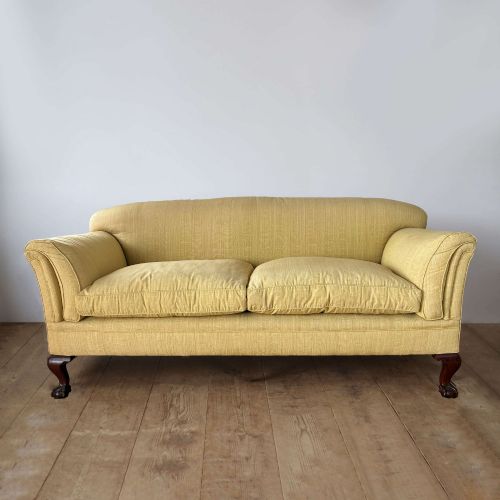
A traditional country house sofa covers a wide range of deep-seated and generous seating options found in English drawing rooms and libraries. When searching for a traditional country house sofa, buyers encounter heavy upholstery styles spanning the Victorian, Edwardian, and Regency periods.
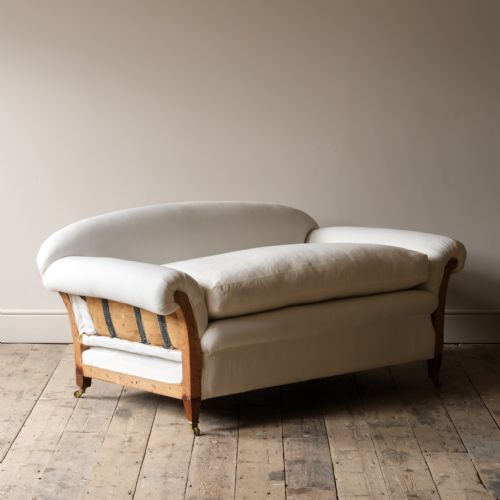
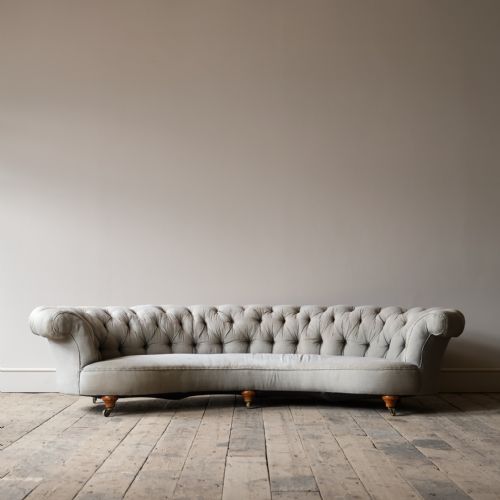
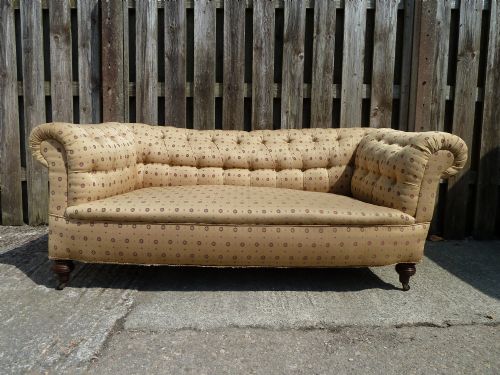
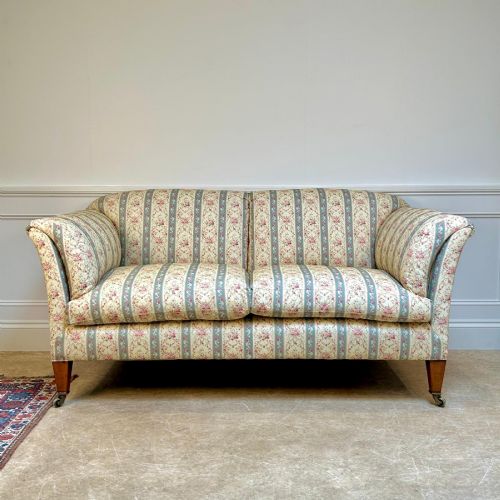
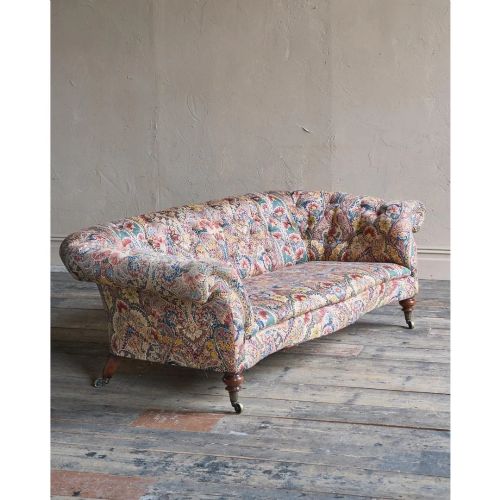
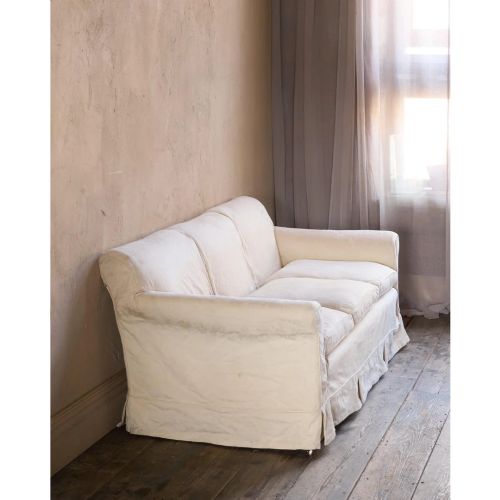
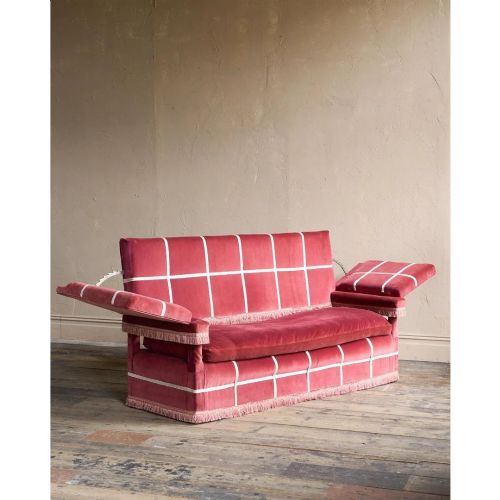
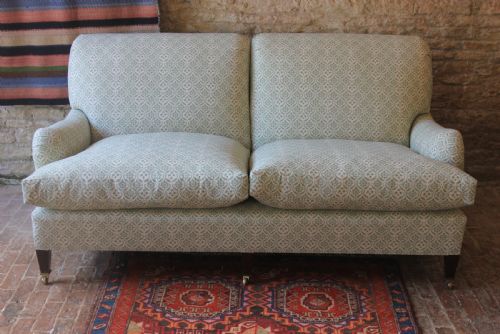
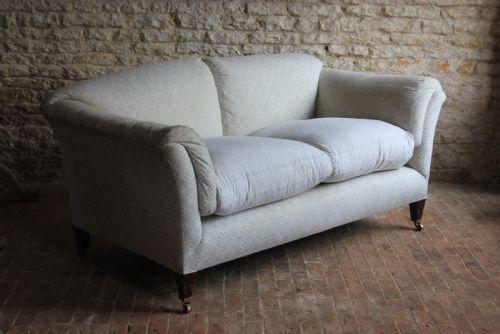
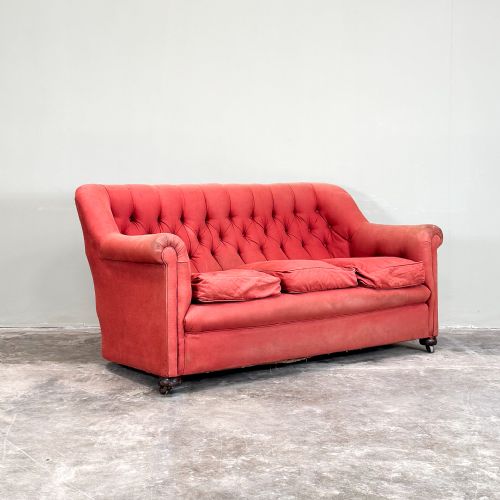
The most common forms on this page include buttoned Chesterfields, low-slung Knole sofas with adjustable arms, and generous two or three-seater settees. Makers often built these pieces using hardwood frames designed to support heavy springing and extensive upholstery.
Origins stretch from London workshops to regional cabinet makers, reflecting the changing tastes of country estates across the nineteenth and early twentieth centuries. These pieces range from simple utilitarian frames to grander giltwood and mahogany show-wood designs.
How these sofas were constructed
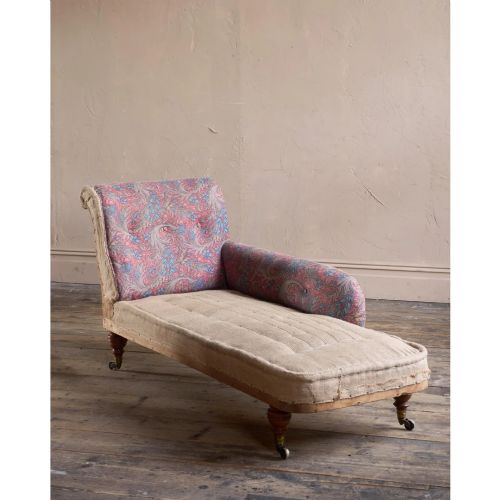
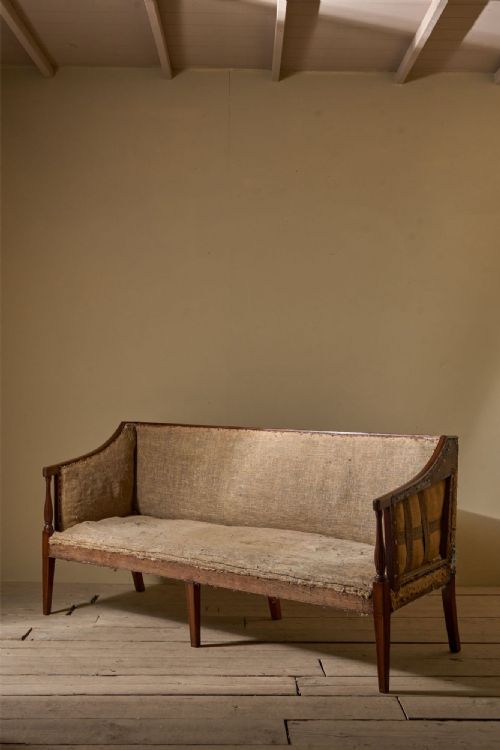
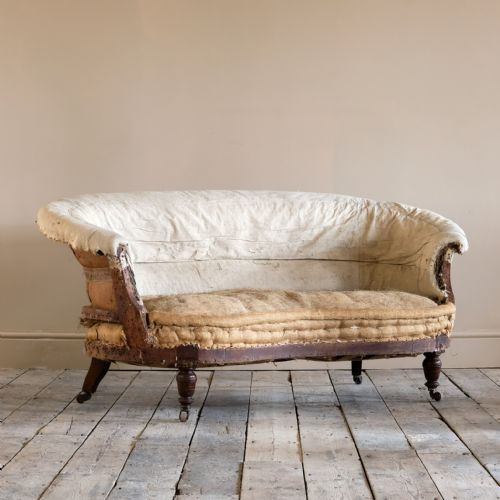
Frames rely upon seasoned hardwoods such as mahogany and general timber, providing a rigid skeleton to bear the heavy internal stuffing. Traditional upholsterers built the internal support using layers of hessian, calico, and robust metal springing rather than modern foam.
Visible woodwork often includes turned brass castors, polished mahogany legs, and occasional giltwood or simulated rosewood finishes. Makers secured the upholstery using durable canvas and traditional stitching methods that allowed the stuffing to settle comfortably over time.
Listings feature hardwood frames combined with traditional support materials including hessian, calico, and brass castors.
What separates the finest examples
Quality rests heavily upon the integrity of the internal hardwood frame and the depth of the original springing system. Pieces that retain their robust structural proportions without sagging timber demonstrate superior cabinet making.
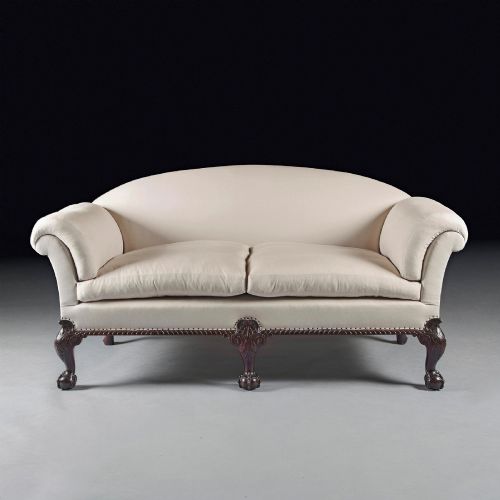
The finesse of the exterior show-wood, from carved ball and claw feet to neatly turned mahogany legs, distinguishes standard workshop output from premier London makers. Original uncompromised frame construction holds greater appeal than heavily altered or replaced timbers.
Howard and Sons·Hampton and Sons·Morison and Co
The Traditional Country House Sofa Glossary
- Chesterfield
- A deep-buttoned upholstered sofa traditionally featuring arms and back of the same height. This design provides upright support while remaining deeply comfortable for long periods.
- Knole sofa
- An early upholstered seat style characterised by hinged or adjustable drop arms tied with decorative braids. Originating from Knole House, these pieces offered privacy and warmth in draughty rooms.
- Hessian
- A coarse woven fabric typically spun from jute or hemp fibres, used beneath the final upholstery layers. It serves as a strong foundation to contain internal stuffing materials.
- Calico
- A plain-woven unbleached cotton textile stretched tightly over the stuffing to shape the interior before the decorative top fabric is applied. It creates a smooth and stable base for velvet or damask.
- Castor
- A small wheel mounted in a swivel frame attached to the foot of the sofa leg, allowing heavy furniture to move easily across carpets and wooden floors. These are frequently cast in brass.
Traditional Country House Sofa: Frequently Asked Questions
What defines a traditional country house sofa?
These sofas are characterised by deep, generous proportions, substantial hardwood frames, and traditional upholstery methods designed for comfort and durability.
They emerged from English estates where seating needed to withstand heavy daily use while maintaining an understated elegance.
How do I care for antique upholstery?
Protect delicate fabrics like velvet and damask from direct sunlight to prevent fading, and vacuum them gently using a soft brush attachment.
Professional cleaning is recommended for antique textiles to preserve the integrity of the original fibres and internal stuffing.
Are these sofas suitable for daily sitting?
Most pieces feature robust hardwood frames and resilient traditional springing built precisely for everyday household use.
Their deep seats make them particularly well-suited for relaxed lounging in sitting rooms and libraries.
How can I tell a Victorian piece from an Edwardian one?
Victorian examples often display heavier proportions, deep buttoning, and darker mahogany timbers, reflecting mid-nineteenth-century taste.
Edwardian pieces tend to introduce lighter frames, simpler lines, and softer floral or damask coverings typical of the early twentieth century.