
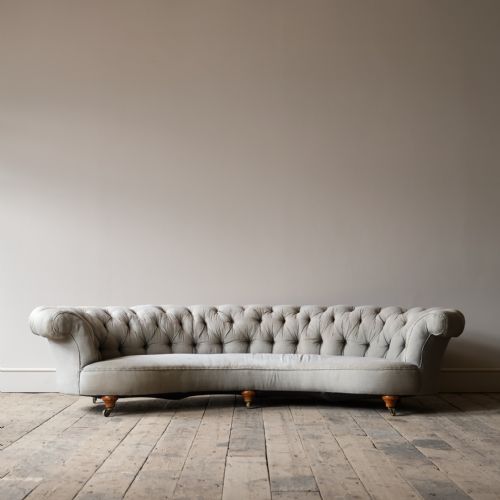
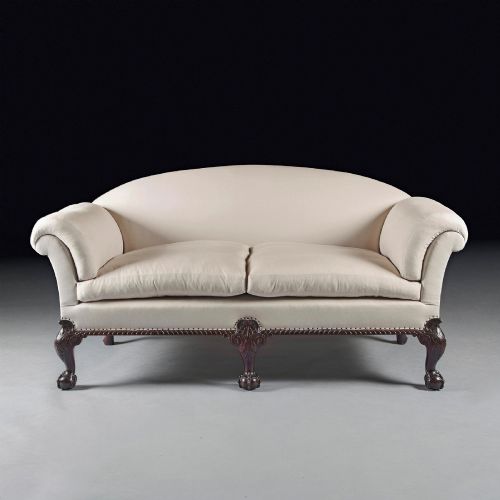
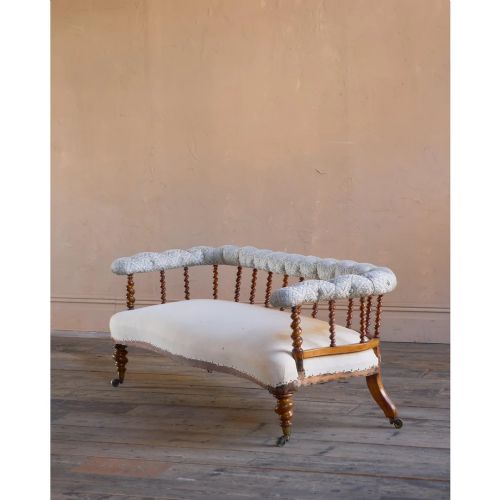
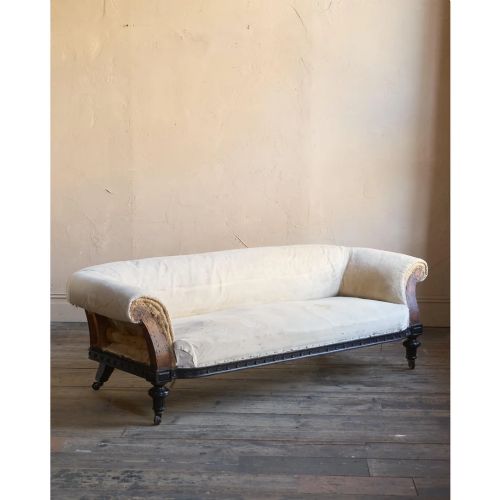




Victorian Curved Back Couch
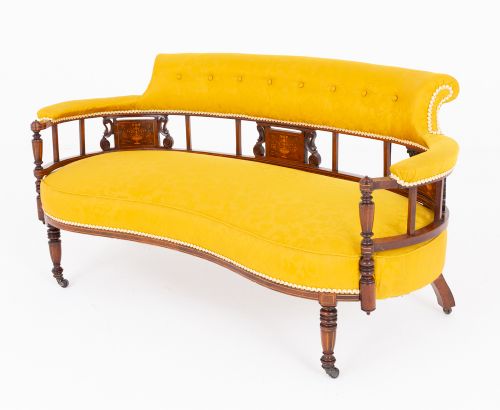
A victorian curved back couch brings deep comfort and nineteenth-century elegance to a room through rich wood frames and plush upholstery.
Victorian Curved Back Couch
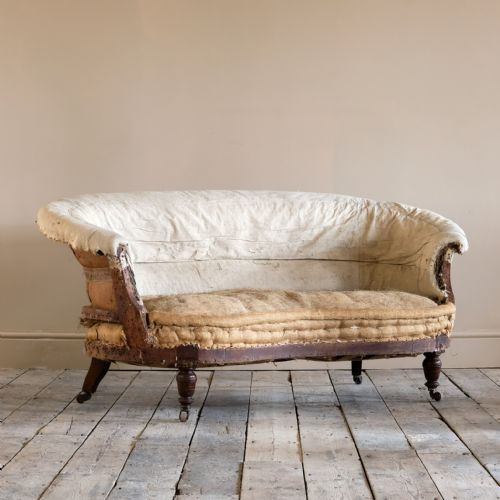
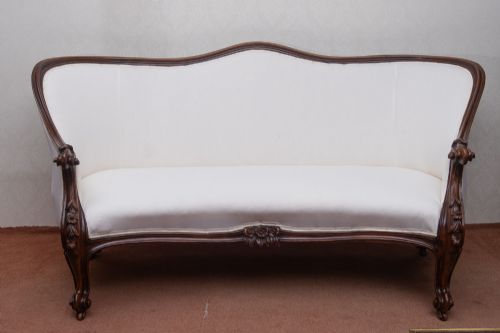
A victorian curved back couch encompasses nineteenth-century settees, sofas, and chaises longues designed with flowing, rounded lines. These seating pieces emerge from periods spanning the mid-nineteenth century to around nineteen hundred.
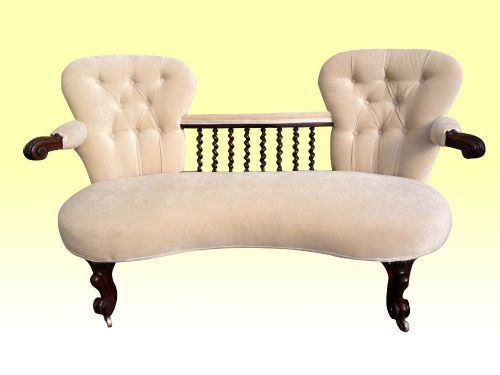
The selections available here range from rosewood and mahogany framed salon settees to large leather Chesterfields and button-backed canapes. Makers and workshops of the era produced diverse forms including kidney-shaped sofas and spindle-backed designs.
Buyers encounter Victorian pieces alongside examples influenced by the Aesthetic Movement and the Victorian Chippendale Revival. French provincial and chateau styles also appear among these nineteenth-century seating options.
How They Were Made
Frames rely on hardwoods such as mahogany and rosewood, carved or turned to support the upholstered structures. Brass details occasionally complement the timber framework.
Upholstery materials include leather, velvet, and various fabrics, often featuring deep buttoning techniques. Button back construction secures the padding while creating distinct geometric patterns across the backrest.
Listings feature nineteenth-century furniture utilising mahogany, rosewood, brass, leather, and velvet across various Victorian and Edwardian styles.
What Varies in Quality
The caliber of a victorian curved back couch rests upon the selection of timber and the precision of the frame joinery. Dense hardwoods like rosewood and mahogany indicate a higher grade of manufacture than ordinary softwoods.
Upholstery execution dictates the overall standard, distinguishing standard workshop output from exceptional cabinet maker production. Refined buttoning and quality fabric choices set superior seating apart.
Howard & Sons·C. Hindley & Sons·Hampton & Sons
The Victorian Curved Back Couch Glossary
- Chesterfield
- A large upholstered sofa traditionally featuring deep buttoning and rolled arms of equal height to the back. This form became a staple of nineteenth-century seating.
- Canape
- An ornamental sofa or settee with an exposed wooden frame, popular in French and English period interiors. These pieces often showcase carved woodwork.
- Chaise longue
- An upholstered chair elongated for reclining, combining the functions of a chair and a sofa. Nineteenth-century versions frequently display curved wooden frames.
- Spindle back
- A chair or sofa back constructed with vertical turned wooden rods. This style provides structural support while maintaining a lighter visual weight.
- Button back
- An upholstery technique where buttons are pulled deep into the padding to create tufted indentations. This method secures the internal stuffing and adds texture.
Victorian Curved Back Couch: Frequently Asked Questions
How do I identify a Victorian sofa?
Look for specific nineteenth-century characteristics such as mahogany or rosewood frames, deep buttoned upholstery, and curved silhouettes. Period pieces often exhibit stylistic influences from the Aesthetic Movement or Victorian revivals.
Examine the construction methods and materials used in the frame and upholstery. Genuine examples reflect the cabinet-making standards of the nineteenth century.
Where were these couches placed?
These seating pieces typically occupied formal reception rooms, drawing rooms, and large parlours in nineteenth-century homes. Settees and chaises longues provided comfortable seating for social gatherings or resting.
Smaller salon sofas suited intimate drawing rooms, whilst robust leather Chesterfields often furnished libraries or studies.
How do I care for leather upholstery?
Maintain antique leather by keeping it away from direct heat sources and strong sunlight, which cause drying and cracking. Dust the surface regularly with a soft, dry cloth.
Apply suitable leather conditioners periodically to preserve suppleness. Avoid harsh chemical cleaners that damage nineteenth-century finishes.
What is an Aesthetic Movement sofa?
An Aesthetic Movement sofa reflects the late nineteenth-century design ethos prioritising visual beauty over strict historical revival. These pieces often incorporate simpler lines and artistic detailing.
They stand apart from heavily ornamented Victorian furniture through restrained forms and thoughtful use of wood and fabric.