
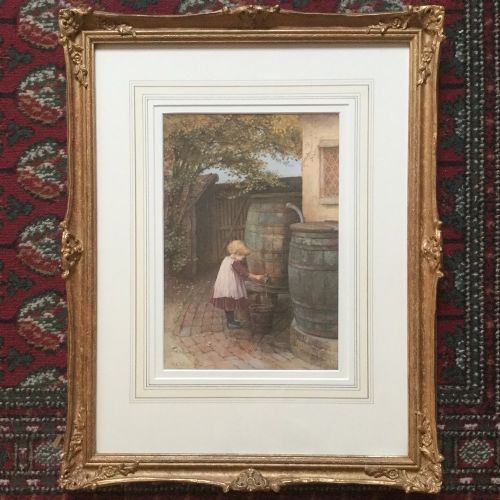


Traditional Cottage Landscape Painting
A traditional cottage landscape painting captures the rural charm of the British countryside through oil and watercolour.
Traditional Cottage Landscape Painting
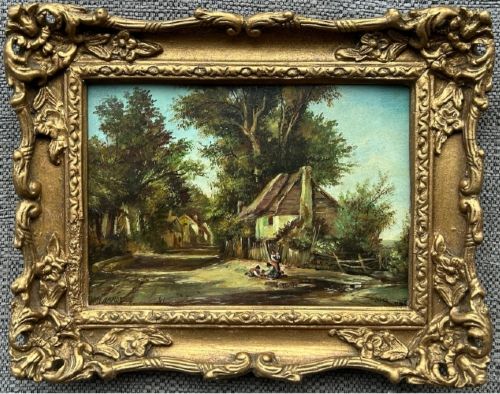
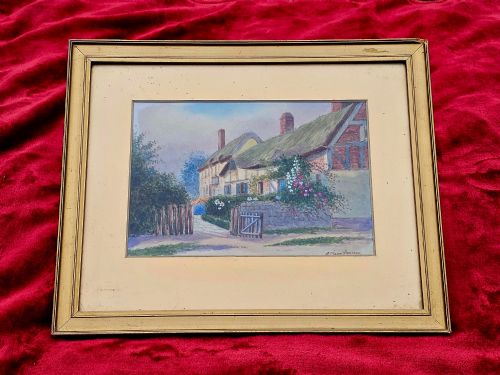
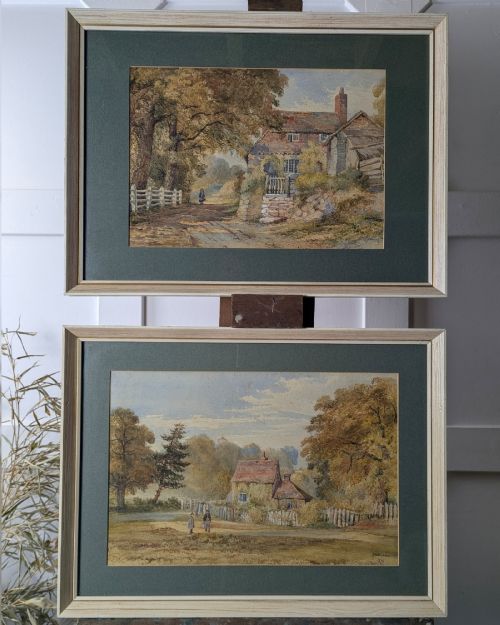
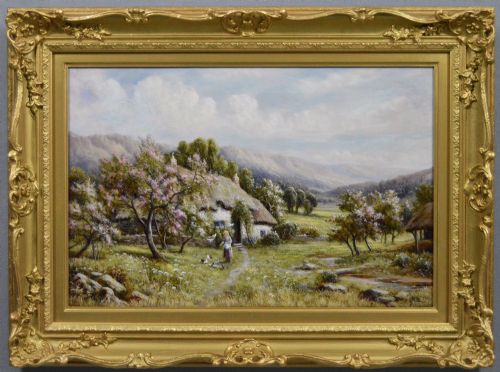
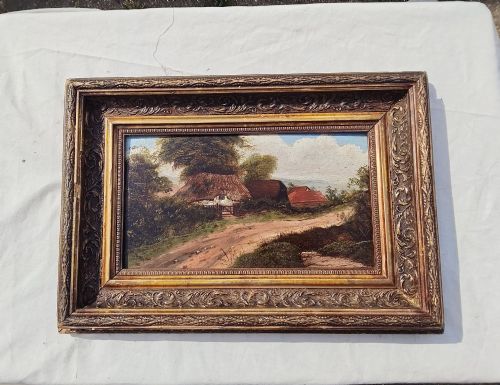
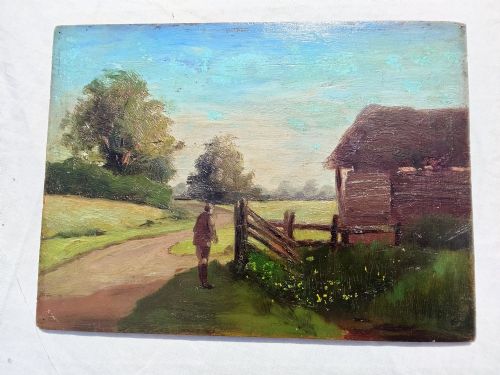
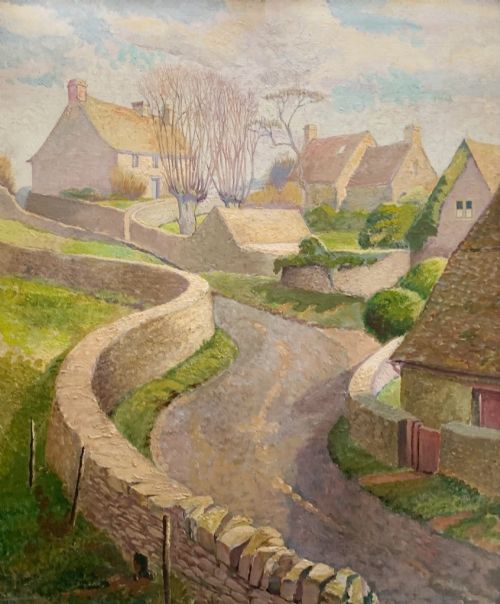
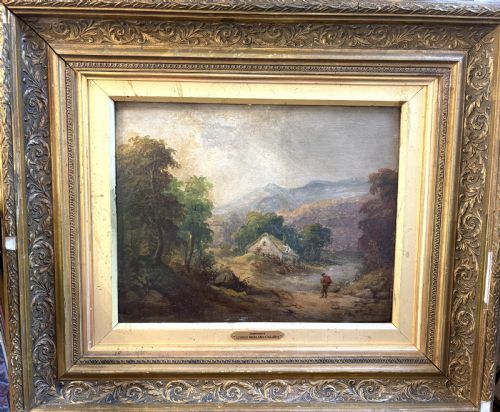
Traditional cottage landscape painting works depict rural dwellings, farmsteads, and country gardens across the British Isles. These pieces emerge from the nineteenth and twentieth centuries, spanning periods from the Victorian era through to the mid-twentieth century.
The works take the form of framed oil paintings on canvas, panel, board, and card, alongside detailed watercolour paintings on paper. Domestic scenes featuring figures, livestock, and thatched roofs dominate the selection found on this page.
Makers and painters of the English School apply varied styles, including British Impressionism and Edwardian Pastoral, to record local topography and quiet countryside moments. Collectors encounter regional views from Yorkshire, Sussex, and Scotland among the listed items.
How they were made
Artists utilise oil paint and watercolour pigment upon supports of canvas, wood, paper, and card, applying medium with brushes to build texture and tone. Framed artwork often retains its original wooden or gilded frame, protecting the painted surface beneath glass or open air.
Techniques range from fluid watercolour washes on paper to heavier impasto strokes of oil on wooden board and canvas. Painters capture light and atmosphere through layered pigments, working en plein air or translating studio sketches into finished landscapes.
Materials recorded in this selection include oil on canvas, watercolour on paper, wood panels, and card supports.
What varies in quality
The skill of the brushwork and the precision of compositional balance distinguish finer works from simpler student pieces. Artists who capture atmospheric light, convincing perspective, and nuanced seasonal colour command greater appreciation.
The integrity of the original support, the stability of the paint layer, and the presence of a period-appropriate frame influence the overall character of each painting. Works bearing clear signatures or attributed to documented nineteenth and twentieth-century painters carry distinct documentary value.
William Howard Hardy·A. Marie Parsons·Robert A. Nottingham·Robert John Hammond·George Morland·Charles Edward Wilson·John Horace Hooper·Reginald Grange Brundrit·Fred Lawson·Arthur Tucker·J S Ainley·William Hoggatt·James Hardy Junior·William Greaves·Charles Vickers·John McDougal·Theresa Stannard·Robert Finley McIntyre·Lorenzo Headley·Helmut Reuter·Henry Charles Fox·Will Anderson·Robert Hollands Walker·John Falconar Slater·Thomas James Lloyd
The Traditional Cottage Landscape Painting Glossary
- Watercolour
- A paint consisting of colour pigments suspended in a water-based solution, typically applied to paper supports.
- Impasto
- The process of laying paint thickly on a canvas or board, leaving visible brush or palette knife marks.
- Panel
- A rigid flat piece of wood used as a structural support for an oil painting.
- Provenance
- The chronological ownership history and documented origin of an artwork.
- Gouache
- An opaque water-based paint that provides solid, matte colour application.
Traditional Cottage Landscape Painting: Frequently Asked Questions
What periods do these paintings date from?
These works primarily date from the nineteenth and twentieth centuries, encompassing Victorian, Edwardian, and later periods.
Artists active during these eras produced views of rural life using traditional oil and watercolour techniques.
How should I display watercolour paintings?
Waterpapers require framing behind glass with acid-free mounts to protect the delicate pigments from atmospheric moisture and dust.
Positioning the artwork away from direct sunlight prevents the watercolour pigments from fading over time.
What is the difference between oil and watercolour?
Oil paint utilises oil binders that dry slowly, allowing artists to blend tones and build thick textured surfaces on canvas or board.
Watercolour employs water-soluble binders on paper, creating luminous translucent washes that dry rapidly.
Are these paintings signed by the artists?
Many pieces feature visible signatures, monograms, or inscriptions left by the painter, occasionally detailing the specific location depicted.
Other works remain unsigned or are attributed to specific regional bodies such as the English School based on stylistic evidence.