


Framed Highland Scenery Artwork
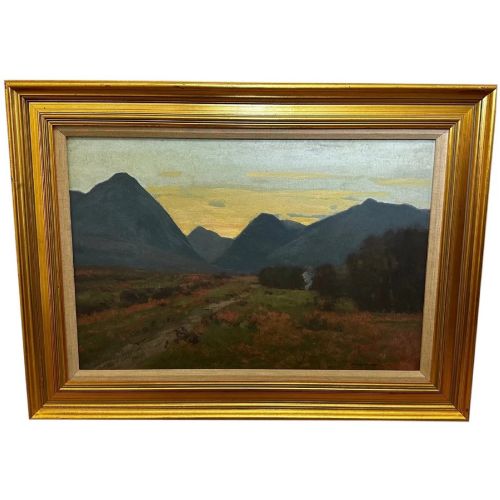
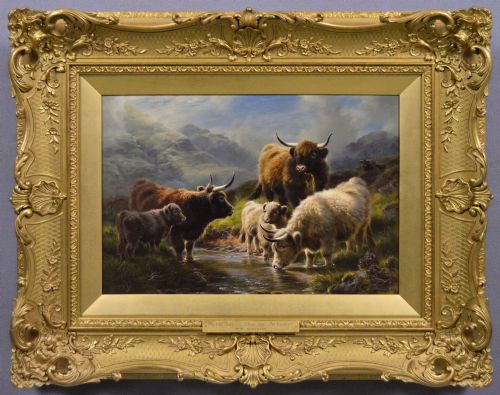
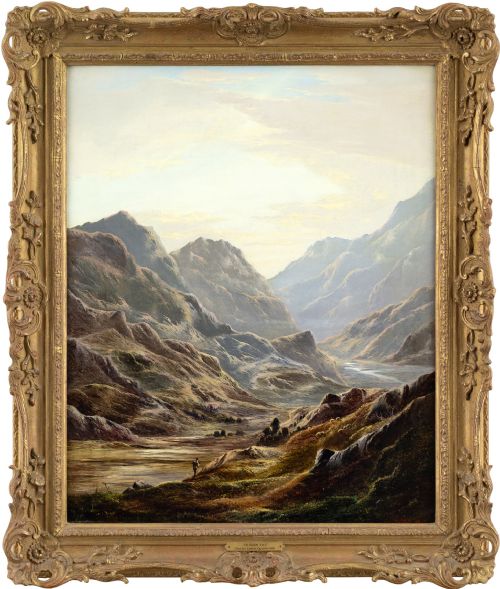
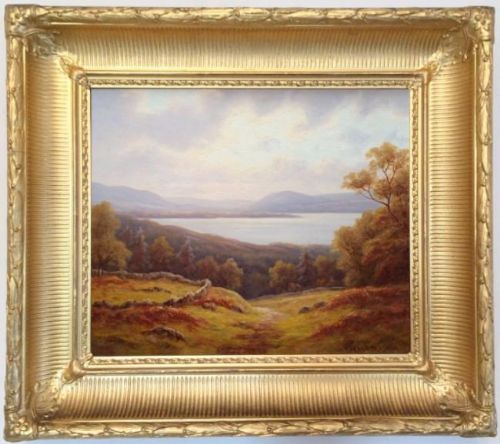
Framed highland scenery artwork captures remote Scottish terrain in oils, offering the enduring charm of lochs, cattle and rugged hills for the wall.
Framed Highland Scenery Artwork
Buyers seeking framed highland scenery artwork encounter nineteenth-century and early twentieth-century oil paintings depicting rural Scottish views. These works most frequently feature canvas or wood panels set within ornate frames of gilt wood and gesso.
The selections span Victorian pastoral compositions alongside Scottish Impressionism and nineteenth-century British realism. Common subjects include Highland cattle beside bodies of water such as Loch Lomond and Glen Tay.
Works originate from noted practitioners of the period, ranging from signed canvases by George Houston and William Watson Jnr to atmospheric views by Alfred de Breanski Snr.
How they were made
Makers built these pieces using oil paint applied to prepared canvas supports or solid wood panels. Brushwork varies from tight nineteenth-century realism to looser Scottish Impressionist applications.
The surrounding frames rely on carved wood finished with layers of gesso and gold leaf to create gilded enrichment. This framing technique provides substantial weight and decorative presence suited to domestic display.
Listings feature works created across the nineteenth century up to nineteen twenty, employing oil paint on canvas or wood panel.
What varies in quality
Quality separates through the dexterity of the brushwork and the anatomical accuracy of featured Highland cattle or figures. Stronger examples display confident handling of atmospheric light across water and distant mountain peaks.
The integrity and preservation of the original gilt wood and gesso frames influence overall distinction. Frames retaining crisp ornamentation without heavy restoration hold greater visual harmony with the canvas within.
George Houston RSA RSW·William Watson Jnr·Charles Leslie·Everett Watson Mellor·Alfred de Breanski·Alfred de Breanski Snr·John W Morris
The Framed Highland Scenery Artwork Glossary
- Gilt wood
- Carved timber coated with a thin layer of gold leaf. It provides a reflective, opulent border that enhances the colours of the oil painting.
- Gesso
- A plaster-like mixture applied to wood frames to create a smooth surface for moulding decorative details. It accepts gilding efficiently.
- Oil on canvas
- Pigment bound in drying oil spread across a stretched fabric support. This combination allows for rich blending and textured impasto.
- Wood panel
- A rigid wooden base utilised for supporting paint instead of fabric. It offers a stable ground favoured in certain nineteenth-century landscape works.
Framed Highland Scenery Artwork: Frequently Asked Questions
How do I hang a heavy framed oil painting?
Secure the piece directly into wall studs using appropriate steel picture hooks or brackets rated for substantial weight.
Ensure the hanging wire or rings on the back are robust and level before mounting the artwork securely against the wall.
Where should I display highland scenery artwork?
Position the piece in a room with stable humidity away from direct sunlight to protect both the oil paint and the gilded frame.
Principal living areas or studies provide suitable environments where the traditional scale and pastoral subject matter can be appreciated.
How do I identify a Victorian oil painting?
Examine the canvas preparation, stretcher frames and pigment characteristics typical of nineteenth-century British school production.
Signatures, artist plaques on the frame, and historical framing styles often provide additional confirmation of the period.
What is Scottish Impressionism?
This style involves looser brushstrokes and an emphasis on natural light and outdoor atmosphere rather than strict academic realism.
Artists working in this manner sought to capture the shifting weather and mood of the Scottish landscape dynamically.