

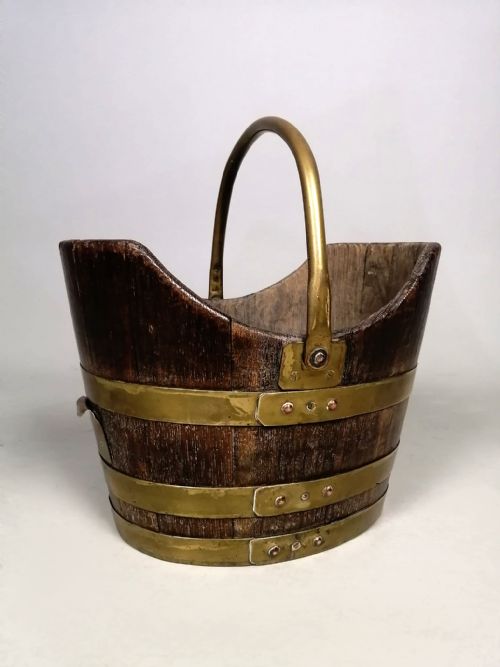


Traditional Copper Log Holder
These traditional copper log holder pieces are sturdy fireside vessels formed in metal to store fuel beside the hearth.
Traditional Copper Log Holder
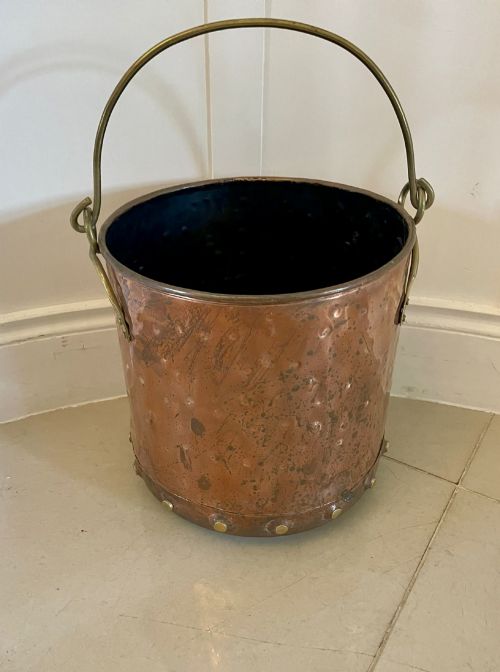
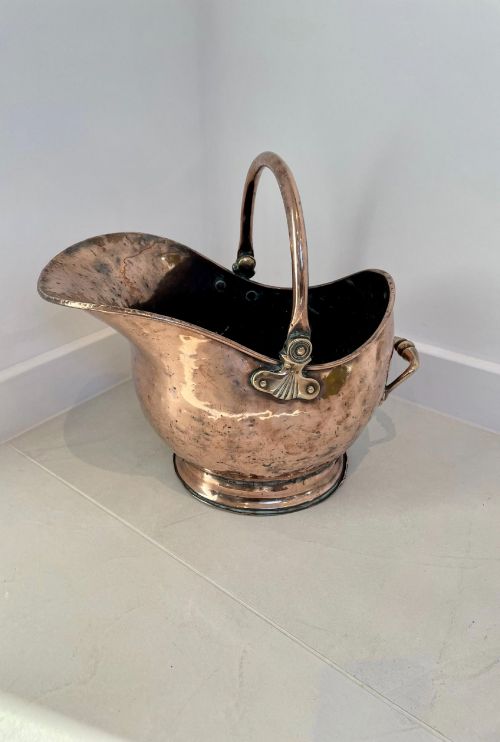
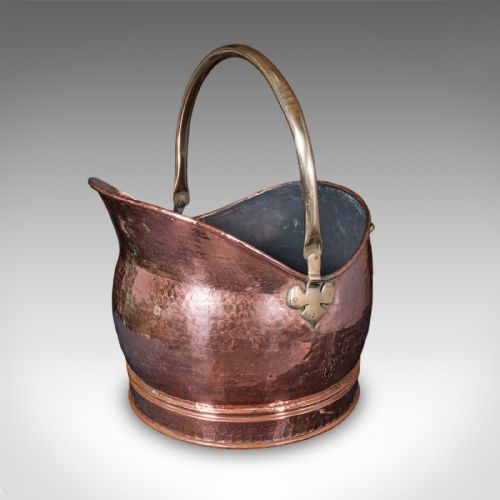
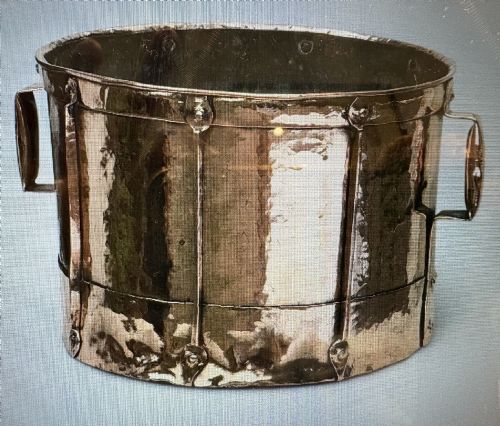
A traditional copper log holder brings a warm metallic sheen to the hearth, serving both a practical function for fuel storage and a decorative role in the room. When searching for a traditional copper log holder, buyers encounter various forms including helmet scuttles, grain measures, and cylindrical log bins.
The pieces appearing on this page span several centuries, featuring items from the Georgian and Victorian eras alongside 19th-century domestic vessels. Common alternate forms serving the same purpose include coal buckets, coal scuttles, and fireside baskets.
Origins range across English, French, and provincial workshops, uniting utilitarian design with decorative metalwork. Many examples incorporate contrasting brass fittings, iron swing handles, and occasionally wooden elements.
How they were made
Construction relies heavily on sheet copper beaten, joined, and shaped into robust vessels designed to withstand heavy daily use. Riveting and seaming form the main structural joints, often reinforced with brass bands or iron rims.
Handles and fittings utilise cast brass or wrought iron, attached securely to bear the weight of fuel. Hand-finishing marks frequently remain visible on the metal surface, showing the hammer work of the artisan.
Traditional Copper Log Holder Retail Price Guide 2026
Typical asking prices for traditional copper log holder among the pieces listed under this phrase on Sellingantiques today, from the lower quarter to the upper quarter. They describe what is for sale here now, not the wider market.
Some vessels began life measuring grain in French fields before retiring to warm British hearths as log bins.
What varies in quality
Quality shows in the thickness of the metal gauge and the integrity of the structural joints. Thicker copper resists dents and holds its shape better over decades of hearthside service.
Refinement in decorative details, such as hand-beaten patterns, shaped brass feet, and sturdy riveted handles, separates standard utility vessels from finer examples made for prominent reception rooms.
The Traditional Copper Log Holder Glossary
- Helmet scuttle
- A fireside bucket with a flared lip resembling a classical helmet, designed for pouring fuel cleanly onto a fire. These typically feature a high rear handle and a smaller lifting handle at the front.
- Grain measure
- A cylindrical agricultural container adapted over time for domestic fireside use. French provincial examples often display this origin.
- Wrought iron
- Iron beaten and shaped by hand while hot, commonly utilised for swing handles and support legs. It provides sturdy structural reinforcement.
- Brass banding
- Metal strips secured around the body of a wooden or metal vessel to add strength and decoration. These bands are frequently fastened with visible rivets.
Traditional Copper Log Holder: Frequently Asked Questions
What were traditional copper log holders used for?
These vessels served to store and transport coal, logs, and other solid fuels directly to the fireplace for burning.
Their robust construction allowed them to hold heavy loads of fuel while sitting safely near the hearth.
How do I clean a copper log holder?
Gentle washing with warm soapy water removes everyday dust and soot without harming the historic surface metal.
Avoid harsh chemical abrasives that strip away the natural patination built up over centuries of age.
Are these pieces from the Victorian period?
Many examples date from the Victorian era, alongside earlier Georgian items and later 19th-century pieces.
Stylistic cues and construction methods help distinguish the specific era of manufacture.
Can I use an antique coal scuttle for logs?
Most containers sized as log bins or large buckets accommodate firewood easily beside a modern fireplace.
Helmet scuttles suit smaller logs or coal, depending on the internal capacity of the vessel.