

Traditional Clothes Armoire
Traditional clothes armoire examples combine deep storage with period character, offering substantial timber presence and fitted internal hanging space.
Traditional Clothes Armoire
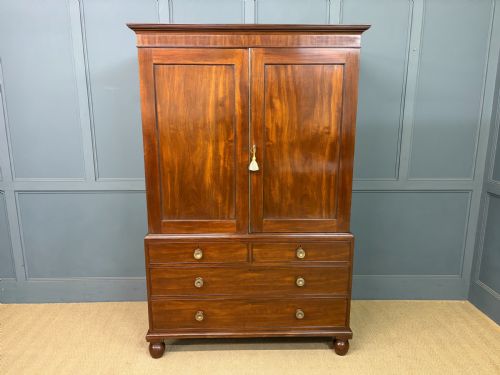
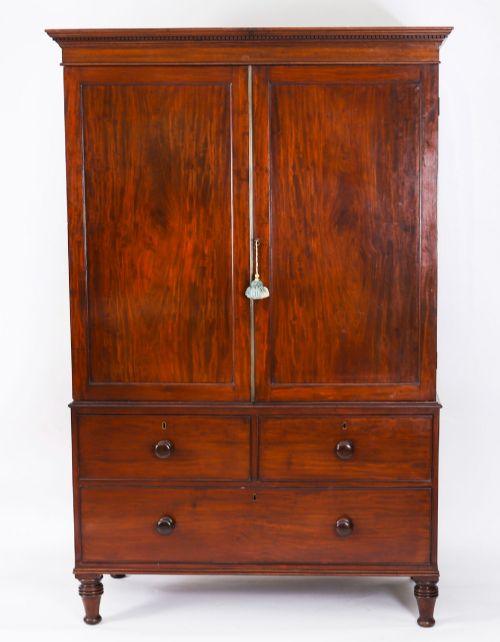
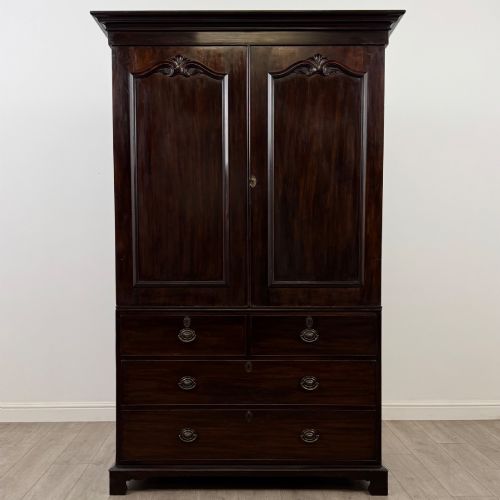
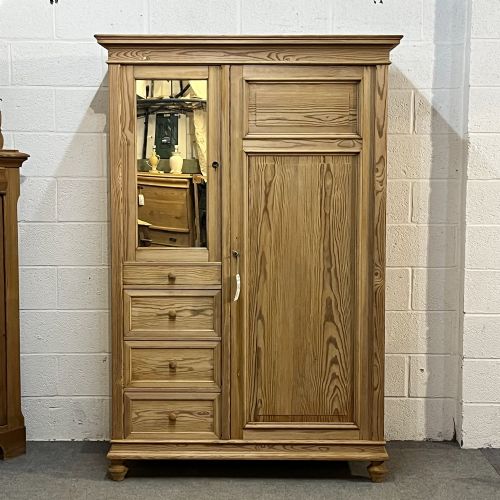
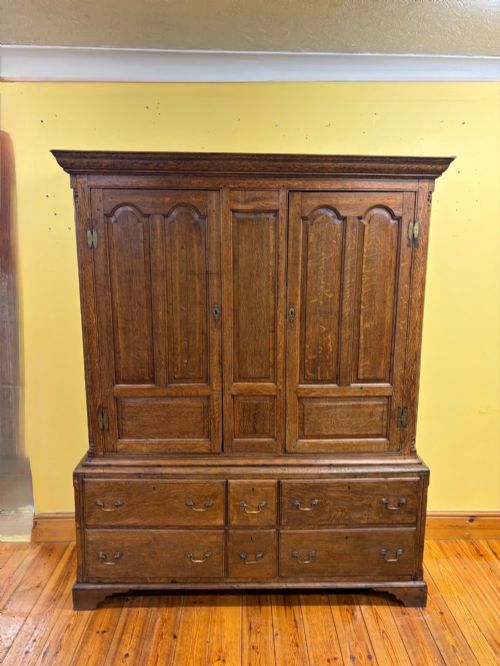
A traditional clothes armoire serves as a large storage cabinet or wardrobe, frequently taking the form of a linen press, compactum or hanging wardrobe. These pieces provide tall internal space for garments alongside lower drawers or linen slides.
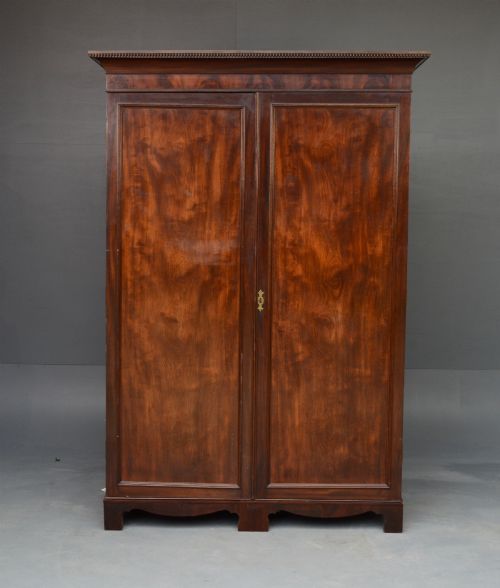
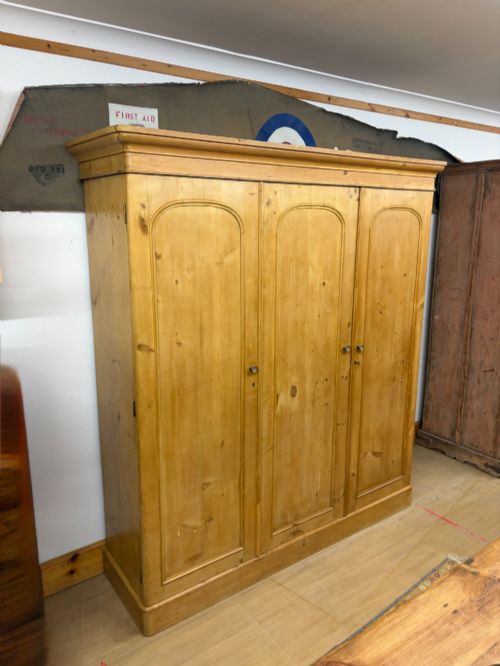
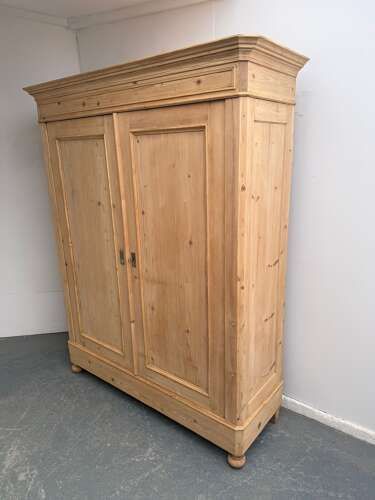
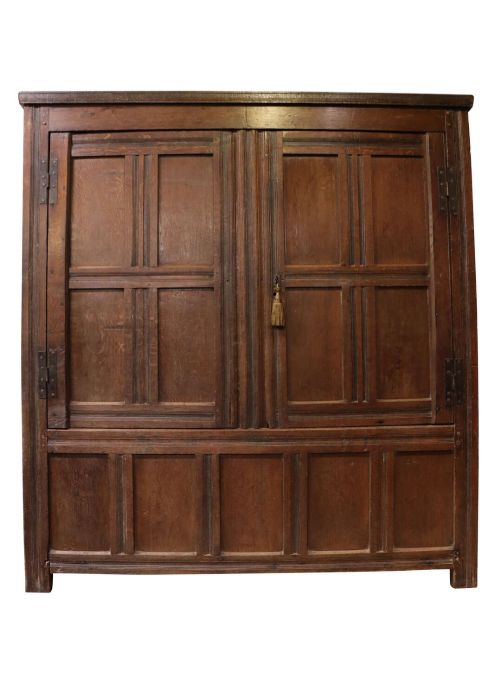
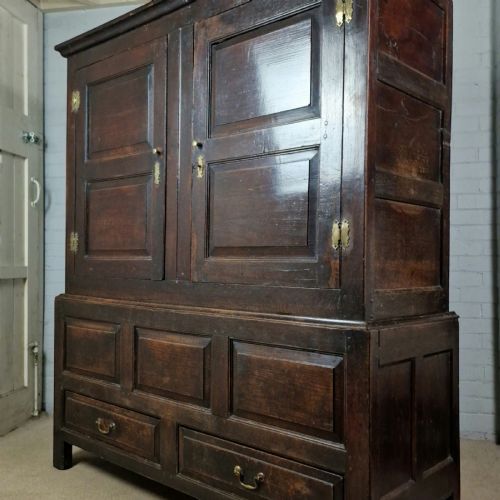
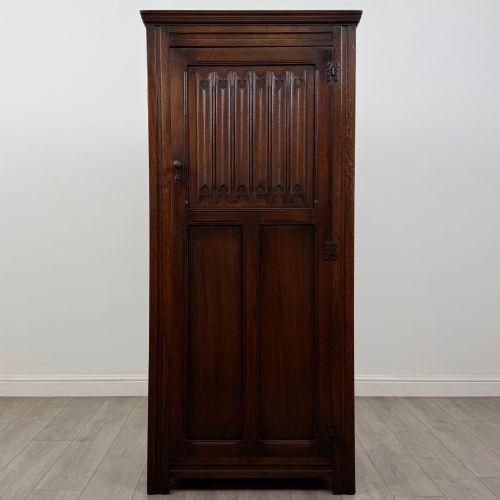
The pieces on this page span several centuries, with prominent examples originating from the Georgian and Victorian eras, alongside Edwardian and 20th century iterations. Buyers encounter forms ranging from panelled oak vestment cupboards to grand flame mahogany presses and knockdown pine wardrobes.
Regional and stylistic variations include English country oak pieces, French provincial walnut armoires, and formal Georgian mahogany cabinets. Proportions shift from low cottage cupboards to expansive triple and four-door configurations.
Materials and construction methods
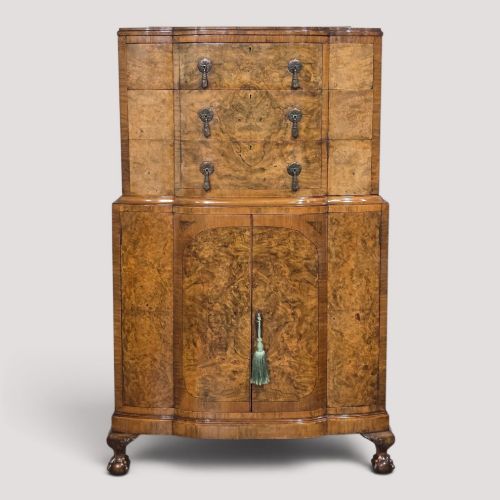
Cabinet makers relied primarily on solid timbers such as oak, mahogany, walnut and pine, often enhancing decorative surfaces with flame mahogany veneer or burr walnut. Brass hardware, iron fittings and glass panels appear frequently across doors and internal compartments.
Construction techniques involve heavy timber framing, fielded panels and dovetailed joints for internal drawers. Many Victorian and Edwardian examples utilise knockdown construction to facilitate movement between rooms, while earlier pieces employ fixed pegged joints.
Traditional Clothes Armoire Retail Price Guide 2026
Typical asking prices for traditional clothes armoire among the pieces listed under this phrase on Sellingantiques today, from the lower quarter to the upper quarter. They describe what is for sale here now, not the wider market.
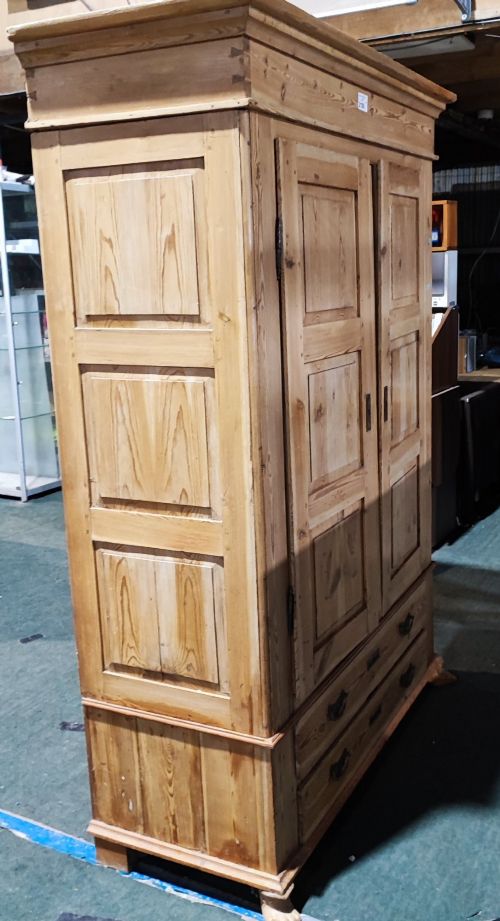
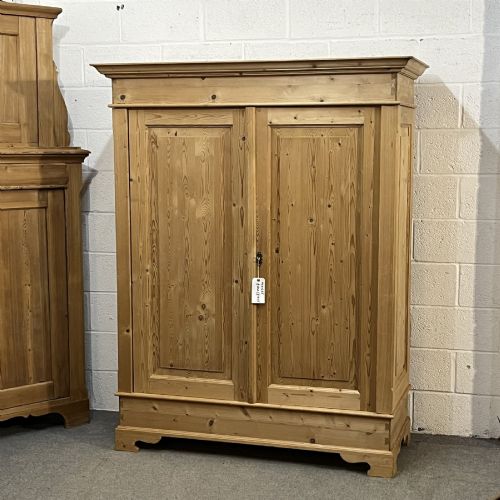
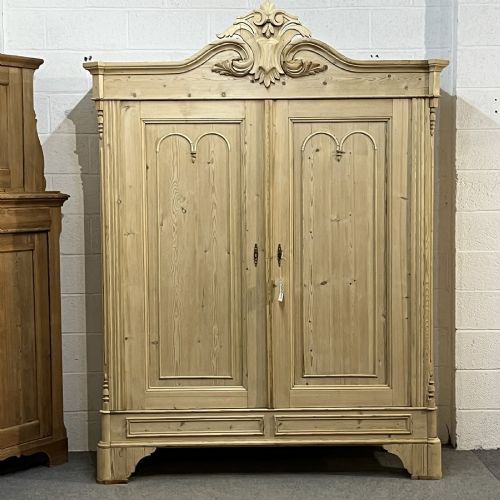
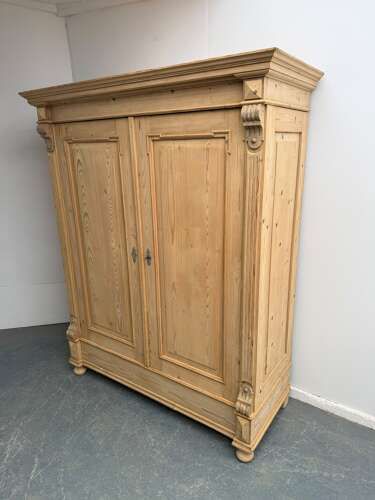
Several Victorian pine wardrobes remain ready for custom waxing or painting, offering a blank canvas for any interior colour scheme.
Distinctions in quality and execution
Quality reveals itself in the selection of timber figures, such as highly figured Cuban mahogany or burr walnut, and the precision of the joinery. Superior pieces display crisp mouldings, well-fitted panel work and intact original brass furniture.
Structural integrity separates workshop execution, seen in robust internal framing and smooth drawer action. The balance of proportions and depth of hand-waxed finishes distinguish custom cabinet work from standard utility pieces.
The Traditional Clothes Armoire Glossary
- Armoire
- A tall wardrobe or cupboard, traditionally used for storing garments and textiles. French and continental examples often feature carved detailing.
- Linen Press
- A tall storage cabinet featuring upper sliding trays for linens and lower drawers for hanging clothes or folded items. These often display Georgian or Victorian proportions.
- Compactum
- A fitted wardrobe that combines hanging space, shelf compartments and multiple internal drawers within a single cabinet footprint. They emerged strongly during the late Victorian and Edwardian periods.
- Knockdown
- A piece of furniture constructed to dismantle into sections for transport and reassembly in homes. This method appears frequently in large pine wardrobes.
- Livery Cupboard
- An early form of storage cupboard used for provisions or garments, typically constructed in solid oak with panelled doors. Surviving examples date back to the 17th and 18th centuries.
Traditional Clothes Armoire: Frequently Asked Questions
How do I distinguish a linen press from a standard wardrobe?
A linen press traditionally includes sliding shelves or trays in the upper section for storing folded textiles, paired with drawers below. Standard wardrobes focus primarily on vertical hanging space behind full-length doors.
Over time, many linen presses were converted into hanging wardrobes by removing internal trays to accommodate modern clothing lengths.
What is a knockdown wardrobe?
A knockdown wardrobe is built to disassemble into flat components like cornices, sides, bases and doors. This design allowed large Victorian and Edwardian timber furniture to move easily through narrow stairwells and doorways.
These pieces use internal bolts, wooden pins or interlocking tongue-and-groove joints to secure the structure without permanent glue.
Where should I place a large wooden armoire?
Large timber wardrobes require stable humidity away from direct heat sources and radiators to prevent timber splitting or veneer warping. Measuring ceiling height and floor clearance is essential before positioning heavy oak or mahogany pieces.
Allow sufficient clearance around doors and drawers to ensure functional access in bedrooms or hallways.
How do I care for antique pine and mahogany surfaces?
Maintenance involves applying natural beeswax to nourish the timber grain and maintain a soft sheen without building up synthetic residues. Avoid liquid spills and clean surfaces using a dry or barely damp soft cloth.
Regular polishing protects the historical patina developed across centuries of handling.