



Traditional Classical Landscape Painting
A traditional classical landscape painting brings idealised vistas of antiquity and pastoral calm into a room.
Traditional Classical Landscape Painting
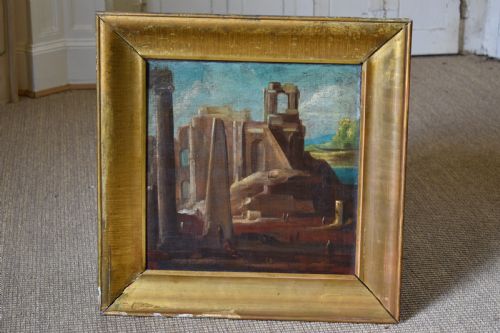
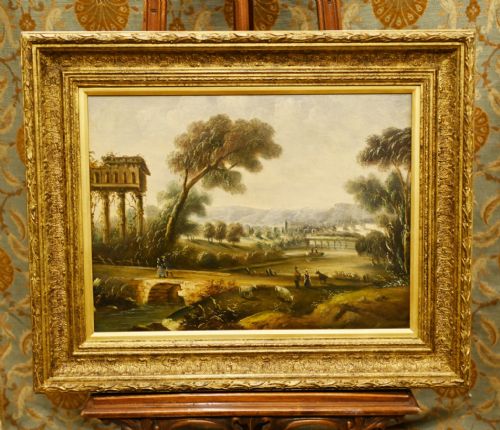
A traditional classical landscape painting transports viewers to structured, idealised worlds of rivers, ruins, and pastoral figures. These works span periods from the seventeenth century to the nineteenth century, including Georgian and Grand Tour examples.
Buyers regularly encounter oil on canvas works depicting Italianate scenes, Scottish schools, and Dutch forest views. Forms range from expansive coastal vistas to intimate woodland settings framed in wood.
The aesthetic draws heavily on historical movements such as 18th Century Italianate and 19th Century Romanticism. Many canvases reflect the grand tour tradition or follow the manner of historic masters like Claude Lorrain.
Materials and construction
Artists built these works using oil paint applied to canvas stretched over wood frames. Pigments were layered to create depth in skies, foliage, and water.
Many historical frames utilise gesso and gold leaf on giltwood or gilt wood to complement the painted scenes. The combination of oil paint and canvas provides the durable surface seen across centuries.
Listings feature oil paintings spanning from the seventeenth century through the twentieth century, incorporating materials like gold leaf, gesso, and wood.
Judging quality in traditional classical landscape painting
Quality rests in the handling of light, atmospheric perspective, and the structural balance of the composition. Superior works demonstrate confident brushwork in natural elements like water, foliage, and architectural ruins.
Attribution to specific schools or circles, such as the Dutch school or followers of Richard Wilson, elevates a piece. The preservation of the original oil paint surface and the quality of the associated giltwood or gesso frame also contribute significantly to the standing of the work.
Carl Johan Fahlcrantz·John Hamilton Mortimer·Andre de Moller·Eugene Verboeckhoven·Pierre Emmanuel Dielmans·Jan Evert Morel·Richard Wilson·Claude Lorrain·Karel Frans Philippeau·Frederick Bartman·Canaletto·Peter de Wint
The Traditional Classical Landscape Painting Glossary
- Italianate landscape
- A style of painting influenced by the light and topography of Italy. It frequently incorporates classical ruins and pastoral figures.
- Grand tour
- A period of European travel undertaken by upper-class young men to collect art and antiquities. This practice inspired numerous landscape commissions.
- Oil on canvas
- A medium consisting of pigments suspended in a drying oil spread over a woven fabric support. This technique allowed artists to achieve rich colour and subtle blending.
- Giltwood
- Wood that has been treated with gold leaf or gold paint. Frames created this way often accompany classical oil paintings.
- School
- A group of artists working in a similar style or region during a specific period. This term indicates artistic lineage rather than a formal academy.
Traditional Classical Landscape Painting: Frequently Asked Questions
What is a classical landscape painting?
A classical landscape painting depicts an idealised natural scene, often featuring classical architecture, ruins, and pastoral figures. These works draw inspiration from historical traditions and Mediterranean geography.
Such paintings were produced across several centuries, reflecting changing interpretations of nature, antiquity, and pastoral harmony.
How were these oil paintings framed?
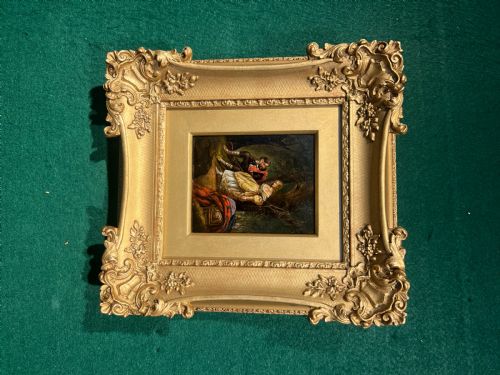
Many of these oil paintings are housed in frames made of wood embellished with gesso and gold leaf. These giltwood surrounds enhance the visual depth of the canvas.
Frames often reflect the period of the artwork, ranging from simple wooden profiles to ornate gilded designs.
What subjects appear in these scenes?
Common subjects include rivers, mountains, forests, harbours, and pastoral figures near ancient ruins. Artists often placed anglers, travellers, or agricultural workers within the composition to establish scale.
Scenes frequently reference specific regions such as Italy, Scotland, or the Netherlands, filtered through an artistic ideal.
How do I date a landscape painting?
Dating relies on stylistic clues, stretcher construction, canvas type, and the composition itself. Clues such as costume details or architectural elements help narrow the timeframe.
Documentation, signatures, and attribution to particular schools or historical periods also provide reliable chronological markers.