





Traditional Child High Chair
A traditional child high chair is a sturdy piece of historic seating designed for young diners, offering domestic utility and fine period craftsmanship.
Traditional Child High Chair
A traditional child high chair provides elevated seating for youngsters, taking forms such as high chairs, children's chairs, and armchairs. These pieces emerge from periods spanning the Georgian, Regency, and Victorian eras, alongside 19th-century and 1930 examples.
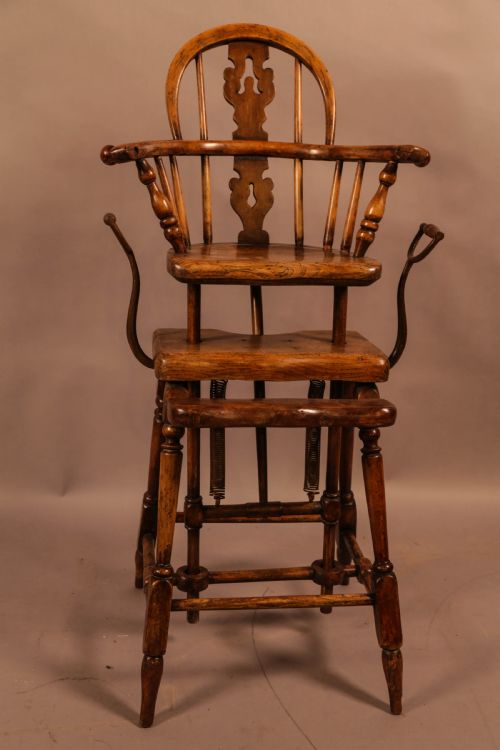
The versions most likely to be met on this page include mahogany designs with caned or bergere seats, elm ladderbacks, and robust windsor chairs. Makers utilised vernacular and rustic styles to build functional furniture for domestic settings.
Makers shaped these items using woods like mahogany, elm, oak, yew wood, and beech, often incorporating rush, cane, or leather for seating. Continental painted examples also appear alongside folk art pieces.
How traditional child high chairs were made
Carpenters constructed traditional child high chairs using sturdy native and imported hardwoods including mahogany, elm, oak, beech, and yew wood. They shaped solid timbers into turned legs, spindles, and curved armrests to support active youngsters.
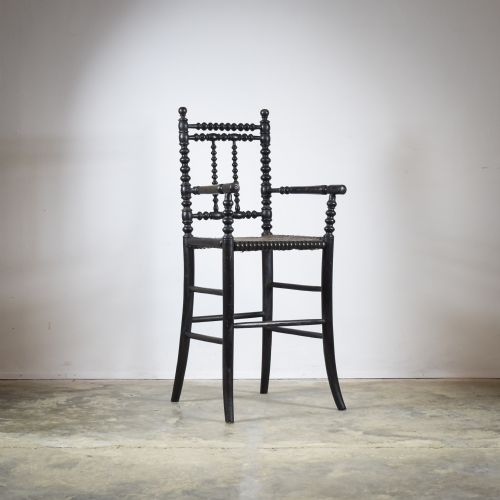
Seating surfaces involved skilled weaving techniques, utilising cane, rush, and bergere alongside fitted leather pads. Artisans employed bobbin turning and ladderback framing to add structural integrity and decorative detail.
Materials recorded on this page include mahogany, cane, elm, oak, leather, yew wood, rush, and beech.
What varies in quality
The preservation of original woven seating materials, whether cane, rush, or bergere, influences the integrity of the object. Finer examples retain their original structural joinery and surface patination without heavy modern intervention.
The Traditional Child High Chair Glossary
- Bergere
- A type of upholstered armchair featuring woven cane panels on the back and sides. This technique provides a light yet supportive structure for historic seating.
- Ladderback
- A chair back constructed with horizontal wooden slats resembling the rungs of a ladder. This traditional vernacular design appears frequently on country seating.
- Windsor chair
- A wooden chair built with a heavy solid wooden seat into which the legs and back spindles are separately bored and wedged. This method creates a robust and stable frame.
- Bobbin turned
- A form of woodturning characterised by a series of rounded, spool-like shapes carved along the length of a leg or stretcher. Cabinetmakers utilised this method extensively during the 19th century.
- Vernacular
- Everyday furniture made by local craftsmen following regional traditions rather than high-style metropolitan fashions. These pieces emphasise practical utility and local materials.
Traditional Child High Chair: Frequently Asked Questions
How were historic high chairs used?
These elevated seats allowed young children to sit safely at table height during family meals. They combined domestic practicality with sturdy joinery to withstand daily nursery use.
Over generations, many of these chairs transitioned from active dining furniture into decorative decorative items or collector's display pieces within domestic interiors.
What woods are typical for these chairs?
Traditional examples utilise a variety of hardwoods suited to daily wear and tear. Mahogany, elm, oak, beech, and yew wood appear frequently across the available inventory.
Craftsmen selected these timbers for their strength and grain patterns, often pairing them with woven rush, cane, or leather seating elements.
How do I date a child high chair?
Dating relies on observing structural characteristics, turning styles, and prevailing period aesthetics. Pieces align with Georgian, Regency, and Victorian design markers, as well as specific 19th-century and 1930 conventions.
Comparing construction methods, such as bobbin turning or ladderback framing, helps establish the era of manufacture alongside wood selection.
Can I use an antique high chair today?
While these pieces retain their robust construction, modern safety standards for children's furniture have evolved significantly. Many collectors choose to display them as decorative historical objects rather than for active daily use.
Assessing the structural stability of the joints and the original footings helps determine whether a piece is suitable for light modern seating.