


Traditional Chesterfield Couch
A traditional chesterfield couch brings deep buttoning and sturdy timber frames into a room, offering both historic character and lasting comfort.
Traditional Chesterfield Couch
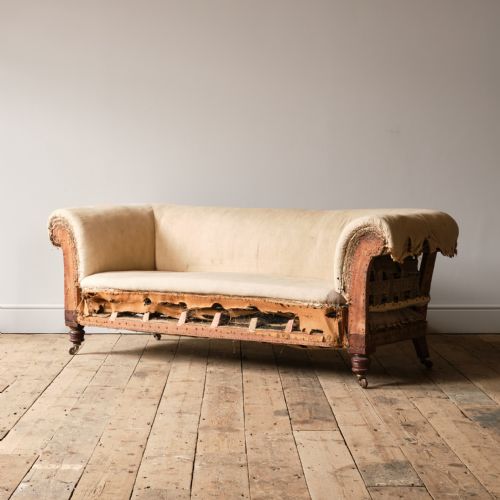
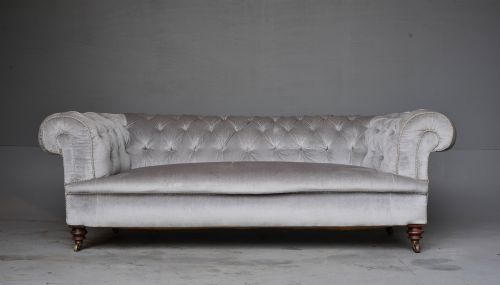
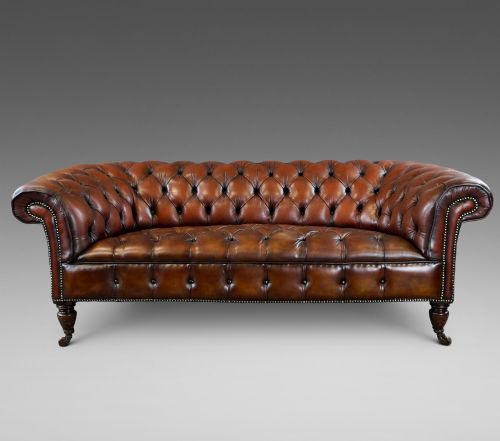
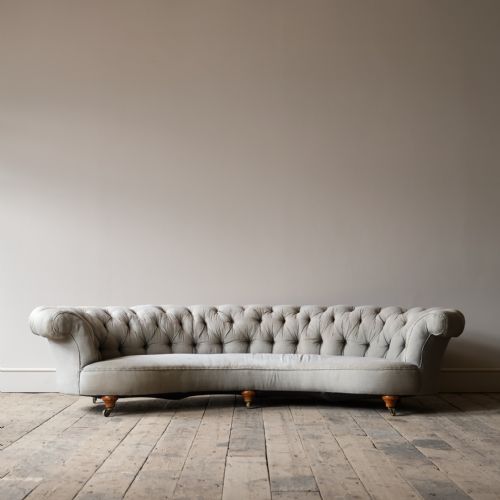
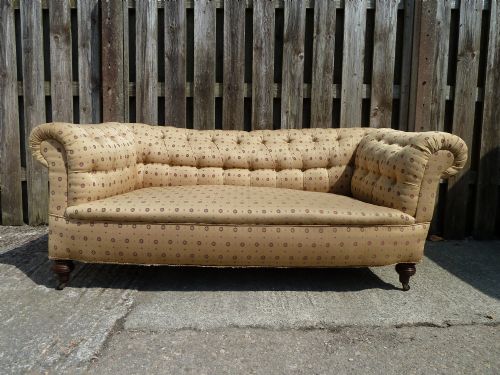
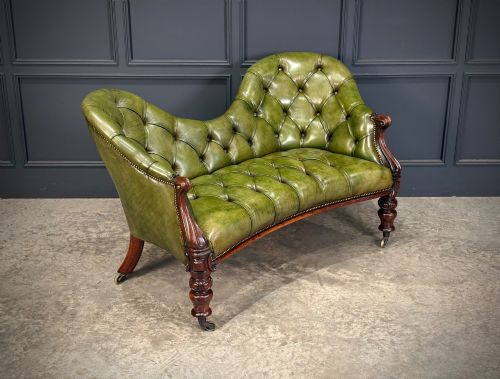
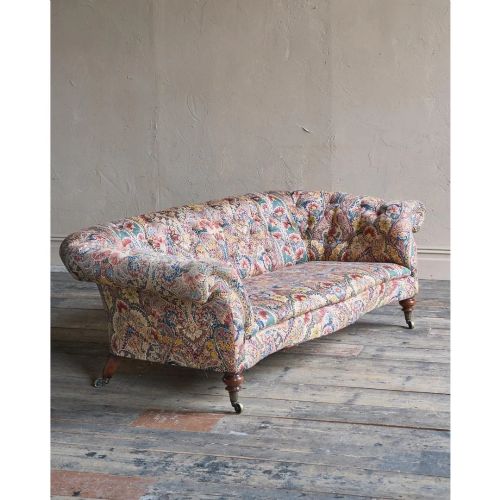
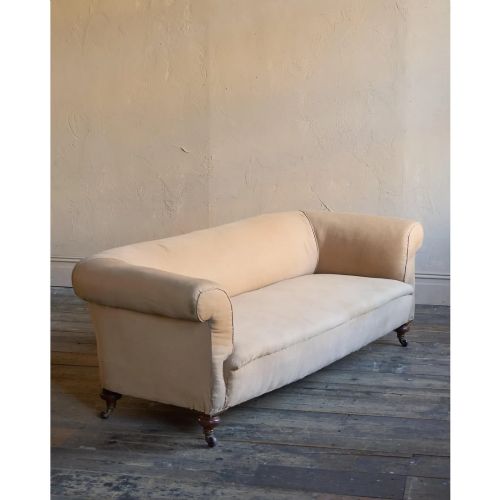
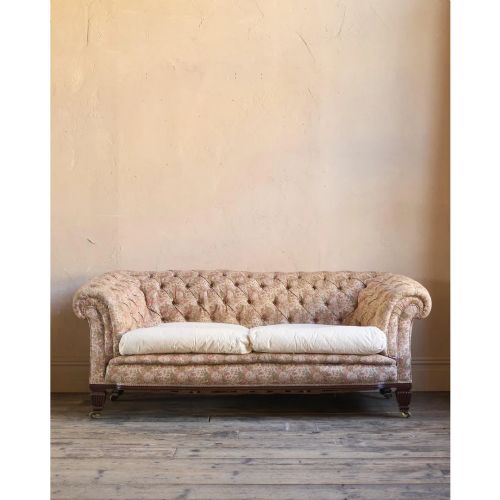
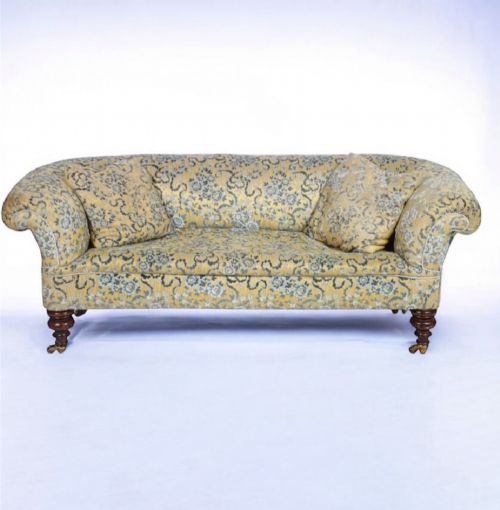
A traditional chesterfield couch is a deep-seated seating form defined by its characteristic buttoned upholstery and rolled arms, appearing most frequently in Victorian and nineteenth-century examples across these listings. Buyers seeking this type will encounter substantial proportions, often upholstered in rich leather or occasionally calico linen, reflecting the formal drawing rooms and country houses of their origin.
The selection ranges from compact two-seat configurations to grander examples spanning over two hundred centimetres, alongside occasional variations such as chaise longues and double spoon-back settees. Nineteenth-century pieces dominate the selection, though early twentieth-century interpretations from the Edwardian era and the nineteen-thirties also surface regularly.
Makers and retailers like Howard and Sons, Hampton and Sons, Jas Shoolbred, and Gillows appear amongst the nineteenth-century examples, grounding these pieces in notable cabinet-making traditions. Whether found in raw leather awaiting a custom hand-dyed finish or preserved in original buttoned hide, these sofas remain practical seating centrepieces.
Materials and construction methods
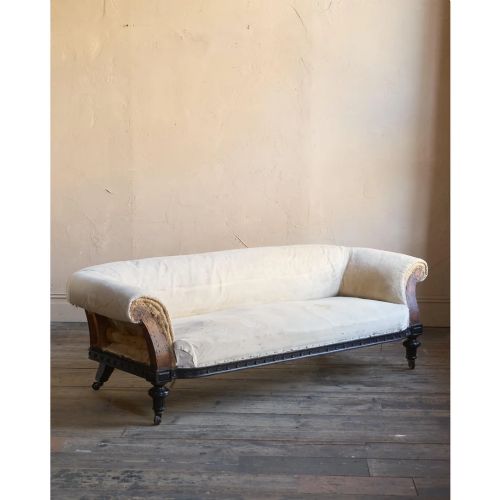
Makers built the foundational frames of a traditional chesterfield couch from sturdy hardwoods such as mahogany and general timber, ensuring structural rigidity for deep-sprung seating. Traditional upholstery methods relied on coil springing and horsehair stuffing, which provided resilient support beneath the surface.
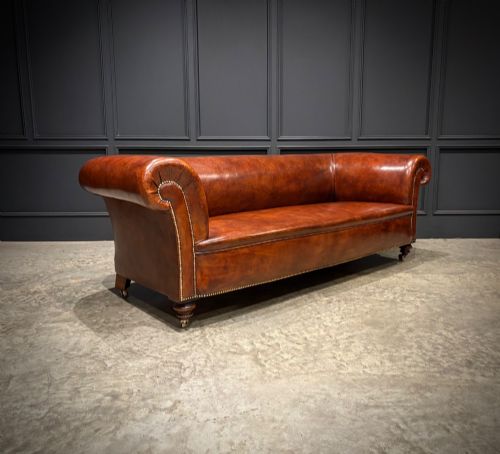
Leather serves as the primary covering for these couches, often hand-dyed in shades of brown, whiskey, or red, while alternative examples feature fabric upholstery such as calico linen. Brass details occasionally complement the timber and leather elements, finishing the framework of nineteenth and twentieth-century workshops.
Some nineteenth-century couches hide their maker's marks discreetly on the underside of the timber frame, waiting patiently for a curious cushion lift.
Distinctions in craftsmanship and materials
The standard of a traditional chesterfield couch rests primarily in the integrity of its internal frame and the execution of its deep-buttoned upholstery. Finer examples display precise woodwork, carved elements, and substantial timber chassis that withstand centuries of use without losing structural stability.
The choice of covering material and the depth of the hide treatment further separate baseline examples from superior pieces. Hand-dyed leathers and traditional horsehair stuffing represent higher artisanal input compared to later or purely utilitarian restorations.
Howard and Sons·Hampton and Sons·Jas Shoolbred·Gillows
The Traditional Chesterfield Couch Glossary
- Deep buttoning
- A traditional upholstery technique where buttons are pulled tight through the padding to create a diamond pattern across the back and arms. This method secures the internal stuffing and gives the couch its characteristic quilted profile.
- Horsehair gilling
- The practice of using cleaned horsehair as a traditional stuffing material inside upholstered furniture. It provides firm, breathable resilience that maintains its shape over decades of sitting.
- Chaise longue
- An elongated upholstered seat designed for reclining, combining the backrest of a sofa with the extended length of a daybed. Nineteenth-century makers occasionally applied chesterfield buttoning to these forms.
- Coil springing
- A system of interconnected metal springs tied within the seat frame to distribute weight evenly. This construction supports the deep seating profile typical of nineteenth-century sofas.
Traditional Chesterfield Couch: Frequently Asked Questions
How do I identify a Victorian chesterfield?
Victorian examples of a traditional chesterfield couch typically feature heavy hardwood frames, deep hand-tufted buttoning, and traditional horsehair stuffing beneath leather or linen upholstery. Look for nineteenth-century construction traits such as hand-tied coil springs and robust timber legs.
Maker stamps on the wooden frame or castors can also help confirm the nineteenth-century origin of the piece.
What is hand-dyed leather on these sofas?
Hand-dyed leather involves applying pigment by hand to raw or stripped hide, allowing the colour to build up naturally across the surface of the couch. This technique creates tonal depth and highlights the natural grain of the leather.
Many antique frames are treated this way during restoration to achieve a rich whiskey brown or antique finish.
Are these couches comfortable for daily use?
Traditional chesterfield couches are constructed with deep seats and robust coil springing designed for substantial daily seating. The firm support provided by traditional horsehair stuffing and deep buttoning makes them structurally sound for modern living spaces.
Selecting a length that matches your room ensures the proportions suit your seating needs.