


Rolled Arm Leather Settee
A rolled arm leather settee brings rich texture and deep comfort to a room, drawing on decades of traditional seating design.
Rolled Arm Leather Settee
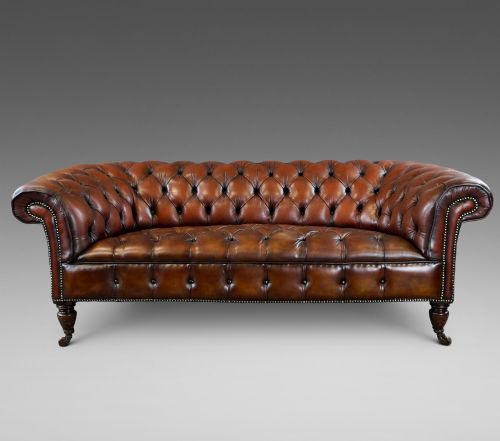
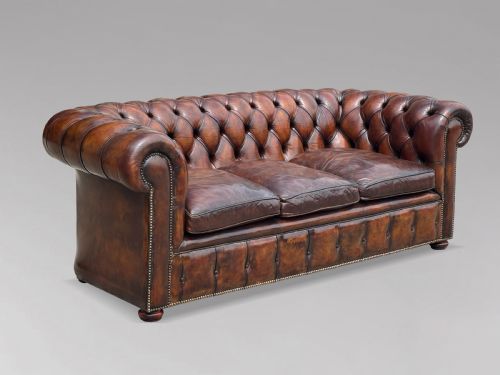
A rolled arm leather settee provides deep seating framed by characteristic curved arms and substantial proportions. These pieces appear frequently as Victorian or Edwardian chesterfields, bringing substantial presence to domestic interiors.
Buyers encounter variations ranging from nineteenth-century buttoned models to later twentieth-century iterations. The form relies on low backs and sweeping arms designed for long periods of sitting.
Most examples found here date from the nineteenth and early twentieth centuries, anchored by traditional English country and Victorian styles. The category spans standard three-seater formats down to larger bespoke proportions.
Materials and Construction
Frames combine sturdy timbers such as mahogany and assorted hardwoods to support heavy internal springing and thick hides. Leather upholstery is stretched over deep buttoning, securing the padding to the wooden frame.
Metal components appear through brass tacks and castor fixings on the feet. Wood finishes range from polished mahogany bases to exposed timber supports.
Listings feature Victorian and Edwardian periods alongside twentieth-century Art Deco and mid-century examples.
Assessing Quality and Condition
Quality rests in the integrity of the wooden frame and the depth of the original upholstery work. Pieces retaining untouched period leather display a distinct patina that later interventions cannot replicate.
The tension of the deep buttoning and the suppleness of the hide dictate the comfort and structural longevity of the sofa. Finer examples balance robust internal framing with carefully shaped leather rolls on the arms.
Howard and Sons·Hampton and Sons of Pall Mall·Maple and Co
The Rolled Arm Leather Settee Glossary
- Chesterfield
- A large upholstered sofa characterised by arms and back of the same height, typically featuring deep buttoning. This form remains the defining archetype for the rolled arm leather settee.
- Deep buttoning
- An upholstery technique where twine is pulled through padding and secured to the frame with buttons, creating diamond-shaped indentations. This method keeps internal stuffing firmly distributed.
- Raw leather
- Unfinished hide that has not yet received surface colour or final treatments. Makers utilise this state when commission pieces require bespoke hand dyeing.
- Patina
- The surface sheen and softening developed on leather through age and handling. Collectors prize this visual indicator of historical use.
- Castor
- A small wheel fitted to the base of furniture legs for ease of movement. Many nineteenth-century examples incorporate brass fittings on the feet.
Rolled Arm Leather Settee: Frequently Asked Questions
How do I clean antique leather?
Wipe surfaces gently with a dry or slightly damp cloth to remove dust without stripping natural oils. Avoid harsh detergents that damage historical hides.
Apply specialist leather balms sparingly to maintain suppleness. Test any product on a hidden area first.
What defines a traditional chesterfield?
Equal height back and arms combined with deep buttoning define the classic silhouette. Rolled arms provide a contained boundary for the seating area.
Generous proportions distinguish these pieces from standard domestic settees. They were built for long sitting rooms and studies.
Are these sofas comfortable for daily use?
Deep springing and padded leather arms offer substantial physical support. The low back encourages a relaxed posture rather than upright sitting.
Heavier models require dedicated floor space and careful placement away from direct heat sources. Their solid hardwood frames withstand regular habitation.
How do I date a leather sofa?
Examine the timber species in the frame and the style of the brass castors. Victorian pieces often display distinct buttoning patterns and darker mahogany supports.
Later twentieth-century versions introduce different hide treatments and synthetic webbing. Compare stitching methods against known period benchmarks.