

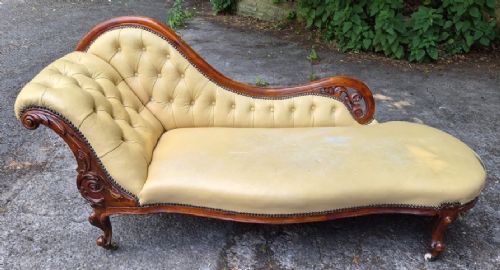


Traditional Chaise
A traditional chaise brings the low, reclining elegance of the nineteenth-century drawing room into a modern home.
Traditional Chaise
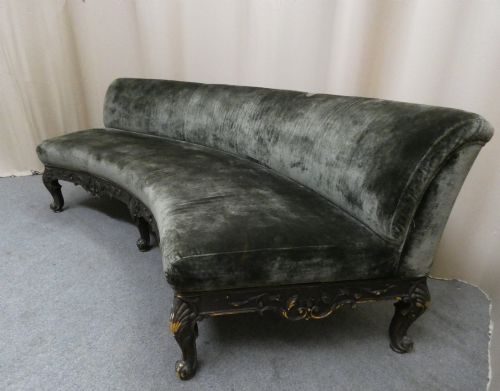
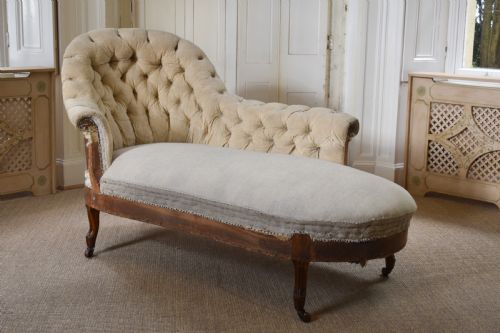
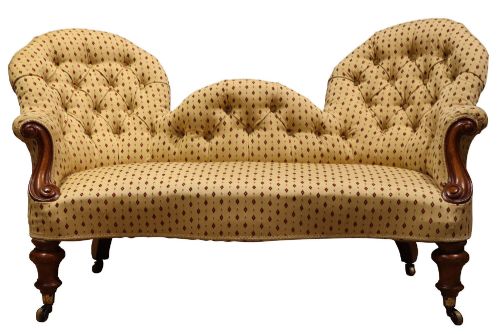
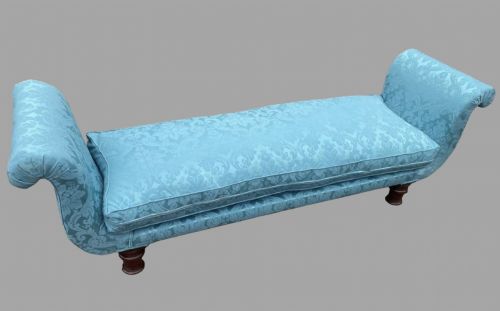
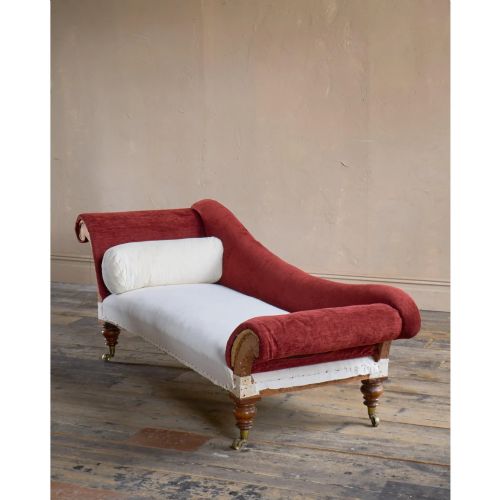
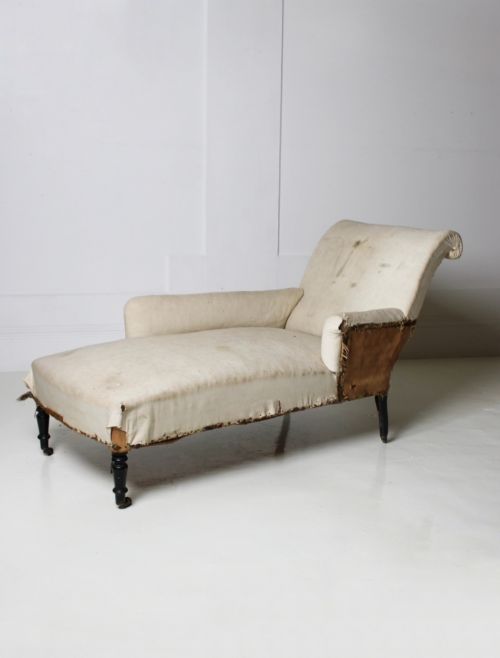
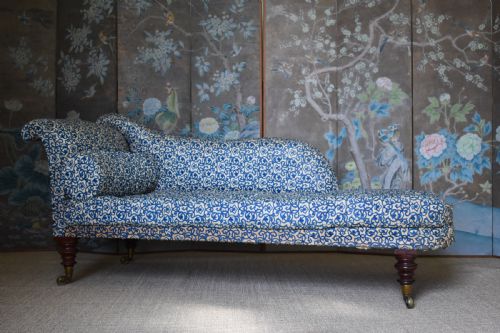
A traditional chaise offers a long, cushioned seat designed for reclining, typically framed by a single elevated scroll end or framed at both ends like a double-ended settee. The forms span the nineteenth century, taking shape through Regency, William IV, and Victorian eras alongside French provincial influences.
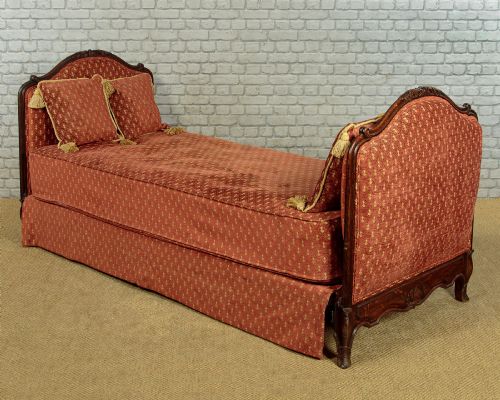
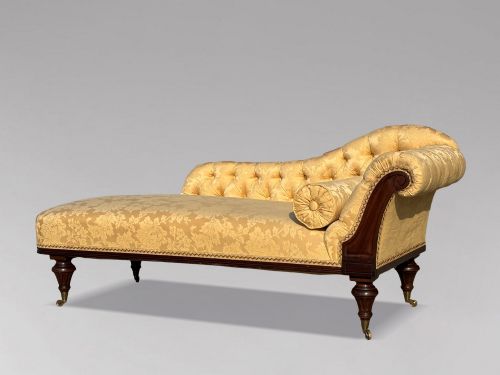
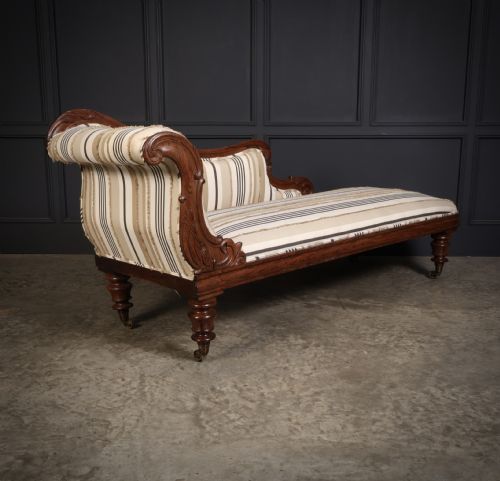
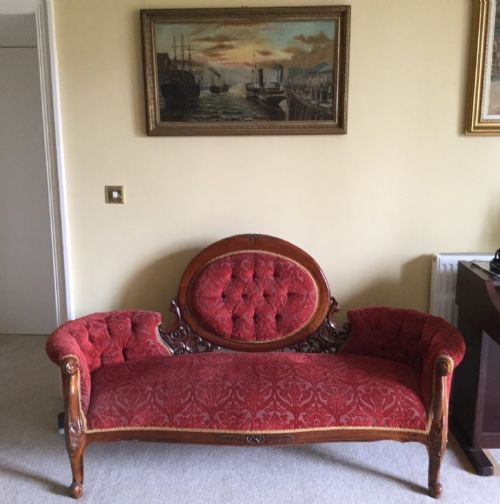
The most common examples on this page are Victorian mahogany or rosewood frames upholstered in velvet, brocade, or leather. These daybeds and chaise longues range from large country house models to compact reception salon pieces with buttoned backs and concealed storage.
Materials and construction
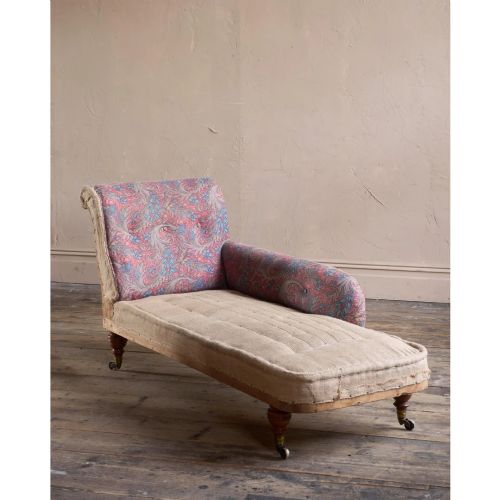
The structural frames rely on dense hardwoods such as mahogany and rosewood, carved with scroll ends or bobbin turnings, often supported by brass castors. Traditional upholstery methods utilise horsehair fill beneath coverings of velvet, leather, calico, or heavy brocade.
Joinery techniques from the nineteenth century dictate the solidity of each daybed, with sprung settee bases providing the internal support for deep-pile fabric and buttoned leather surfaces.
Traditional Chaise Retail Price Guide 2026
Typical asking prices for traditional chaise among the pieces listed under this phrase on Sellingantiques today, from the lower quarter to the upper quarter. They describe what is for sale here now, not the wider market.
One nineteenth-century chaise includes a concealed storage compartment, hiding away quiet secrets beneath the reclining upholstery.
Distinctions in quality
The distinction between standard pieces and the finest examples rests on maker attribution and frame carving. Pieces bearing workshop signatures or attributions to prominent makers carry superior joinery and more refined timber selection.
Upholstery finish and the integrity of the underlying horsehair fill or sprung base also separate standard daybeds from exceptional reception salon models. Original timber patination and crispness in carved scroll ends elevate the standing of a chaise.
Howard and Sons·Jas Shoolbred·Hampton and Sons·Gillows
The Traditional Chaise Glossary
- Chaise longue
- A long seat for reclining, literally translating from French as long chair. It combines the functions of a chair and a daybed.
- Scroll end
- A sweeping, curved wooden terminal on a sofa or daybed frame. This architectural feature defines nineteenth-century seating profiles.
- Horsehair fill
- Traditional animal hair stuffing utilised for padding in antique upholstery. It provides firm, resilient support beneath leather or fabric.
- Double-ended
- A seating configuration featuring raised headboards or scroll ends at both sides of the frame. This symmetrical form resembles an elongated settee.
- Buttoned
- An upholstery technique where indentations are secured with twine and buttons through the padding. This creates a diamond pattern on velvet or leather backs.
Traditional Chaise: Frequently Asked Questions
Where did people place a traditional chaise?
These reclining seats occupied withdrawing rooms, grand bedrooms, and reception salons where owners rested during the day without retiring to bed.
They sat away from walls to display the carved timber backs and scroll ends from all angles within the room.
How do I identify a Victorian chaise?
Victorian examples typically feature dark mahogany or rosewood frames with heavy carving, often upholstered in deep-pile velvet or buttoned leather.
They frequently display sprung bases and asymmetrical scroll ends designed for reclining to one side.
What is a lit bateau?
A lit bateau translates as a boat bed, taking a curved, hooded form that resembles a vessel on the water.
These French-influenced daybeds bring a distinct silhouette to nineteenth-century seating arrangements.
Can I use a daybed for sleeping?
Daybeds and chaises were originally constructed for daytime resting and reclining rather than full night-time sleeping.
The single raised end supports the head while lounging with a book or during an afternoon rest.