


Traditional Ceramic Table Lamp
These traditional ceramic table lamps bring centuries of Asian and European pottery into domestic rooms as lit objects.
Traditional Ceramic Table Lamp
A traditional ceramic table lamp repurposes historic vessels, jars, and vases from the eighteenth, nineteenth, and early twentieth centuries into functional domestic lighting. These pieces draw heavily on Asian porcelain and earthenware traditions, alongside European tin-glazed ceramics and Majolica.
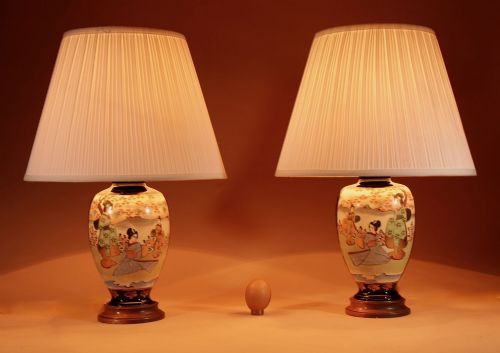
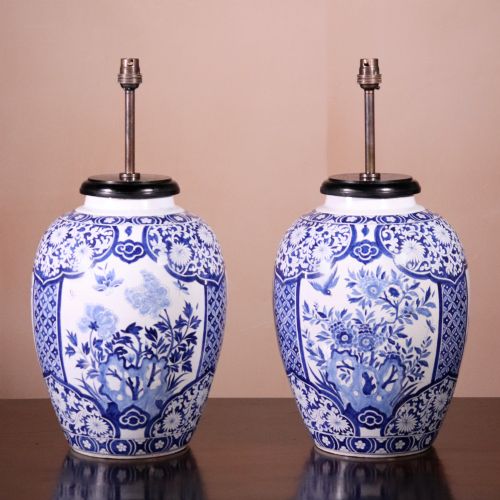
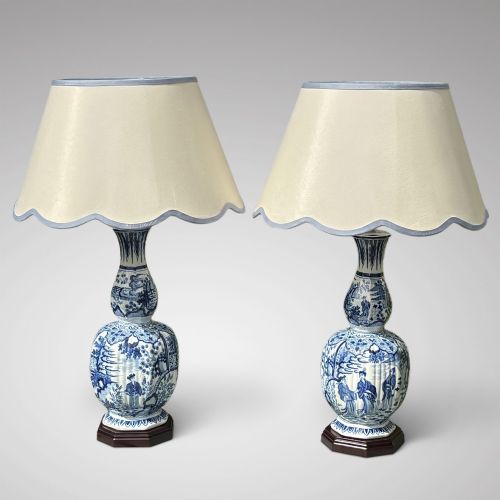
The most common forms on this page include Chinese blue and white ginger jars, Japanese Satsuma and Arita Imari vases, and Dutch Delftware vessels. Many started life as oil lamps or decorative vases before conversion into modern electric table lamps.
The selection ranges across Victorian, Edwardian, and earlier periods, often pairing hand-painted ceramic bodies with brass fittings and fabric shades. Buyers encounter pairs and single monumental pieces spanning diverse cultural ceramic histories.
What varies in quality
The sophistication of the hand-painted decoration separates standard production from superior pieces, particularly in the fine brushwork of Japanese Satsuma or Chinese blue and white porcelain. Crispness of detail in the ceramic moulding and the depth of the glaze dictate overall visual presence.
The integration of brass mounts and the proportion of the ceramic body to the lamp fittings influence the structural harmony of the piece. Well-balanced proportions and intact, high-fire glazes mark the finer examples in this range.
Listings span periods from the eighteenth century through the Edwardian era, incorporating materials like porcelain, brass, earthenware, and silk.
The Traditional Ceramic Table Lamp Glossary
- Delftware
- Tin-glazed earthenware produced in the Netherlands, typically featuring blue and white painted tin enamel over a buff body. This tradition mimics imported Chinese porcelain.
- Famille Rose
- A palette of opaque rose-pink enamel colours introduced to Chinese ceramics during the Qing Dynasty. It allows for subtle tonal gradations in floral and figural motifs.
- Imari
- Japanese export porcelain decorated in underglaze blue, iron red, and gold. These colourful patterns gained immense popularity in European interiors.
- Majolica
- Low-fired earthenware covered with an opaque lead-glaze containing tin oxide. It produces vibrant, rich coloured surfaces seen in Victorian and continental pieces.
- Crackleware
- Pottery featuring a network of fine cracks purposefully created in the glaze layer. This aesthetic effect occurs naturally during cooling or through specific kiln formulas.
Traditional Ceramic Table Lamp: Frequently Asked Questions
Are these lamps converted from old vases?
Many traditional ceramic table lamps utilise historic vases, ginger jars, and oil lamps that were later adapted for electric lighting. The conversion process preserves the original ceramic body while updating the internal wiring and hardware for modern use.
This method gives antique vessels a functional role in contemporary rooms without altering their primary decorative surfaces.
How do I identify eighteenth century pieces?
Eighteenth-century examples often display specific hand-painted motifs, such as early Dutch Delftware or Arita Imari designs, paired with the characteristic weight and paste of older ceramics. Examining the base, glaze texture, and wear patterns helps indicate age.
Consulting the stylistic markers of periods like Chinese export or early European earthenware provides further context for dating.
Can I find matching pairs?
Listings frequently include matched pairs of Japanese Satsuma, Arita Imari, or Chinese blue and white jar lamps. These pairs offer balanced symmetry for placement on sideboards or mantelpieces.
Single monumental vase lamps also appear for use as individual focal points in a room.
What styles are represented here?
The selection encompasses Chinoiserie, Japanese Meiji, Qing Dynasty, and Dutch Delftware styles alongside Victorian and Edwardian interpretations. These aesthetic traditions reflect centuries of cross-cultural trade and design exchange.
Each style brings distinct colour palettes and decorative motifs, from monochrome blue and white to vibrant polychrome enamels.