




Traditional Cattle Wall Art
Traditional cattle wall art brings the pastoral life of past centuries directly into a room through oil and watercolour paintings.
Traditional Cattle Wall Art
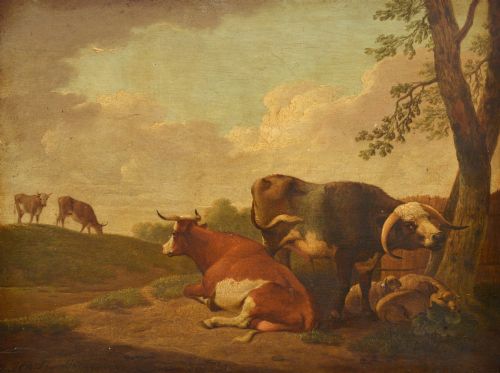
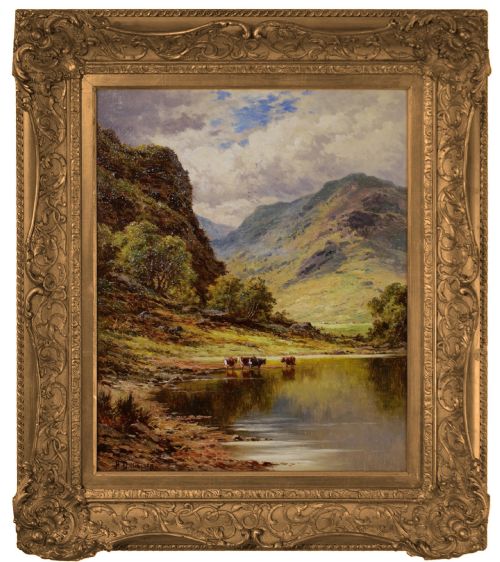
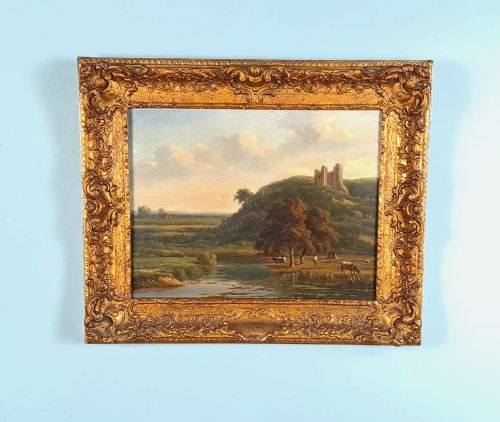
When seeking traditional cattle wall art, buyers encounter pastoral scenes depicting cows, bulls, and sheep situated within British and Scottish landscapes, riversides, and farmyards. These works span the nineteenth and early twentieth centuries, encompassing Victorian, Edwardian, and Regency periods.
The prevalent forms on this page comprise oil paintings on canvas and board alongside framed watercolour paintings. Many compositions capture animals drinking by streams, resting near barns, or traversing mountainous terrain alongside drovers and figures.
The selection ranges from intimate waterpainting studies housed in burr frames to expansive canvas landscapes executed by established nineteenth-century animal and landscape painters. Buyers primarily find framed works ready for hanging, reflecting the artistic conventions of the 1850s to the 1920s.
Materials and techniques
Artists painted primarily with oil paint or watercolour upon prepared canvas, wood panels, or paper, utilising layered pigment to capture the texture of animal hides and atmospheric light. Canvases were secured to wooden stretchers and mounted within decorative wooden surrounds.
Frames play a structural and aesthetic role, frequently formed from carved wood with applied gesso details or finished in giltwood to complement the tonal depth of the paintings.
Several cows manage to look profoundly philosophical while standing knee-deep in nineteenth-century river mud.
What varies in quality
The standard of a painting rests upon the anatomical accuracy of the cattle and the naturalism of the surrounding landscape, where confident brushwork distinguishes master works from formulaic studio pieces. Nuanced handling of light upon water and sky creates depth, whereas lesser examples rely on repetitive foliage and static compositions.
The preservation of the original canvas, the stability of the paint layer without extensive cracking, and the harmony of period frames - whether giltwood or burr wood - contribute significantly to the integrity of the piece.
Thomas Sidney Cooper·Alfred de Breanski Snr·Sidney Richard Percy·Henry Hillier Parker·William Sydney Cooper
The Traditional Cattle Wall Art Glossary
- Gesso
- A plaster-like mixture applied to wooden frames before gilding or painting. It provides a smooth base for intricate moulded decoration.
- Stretcher
- The internal wooden frame upon which an artist stretches canvas before painting. Inscriptions on this wooden structure often record titles or artist details.
- Watercolour
- A painting method using water-soluble pigments on paper. These works require protective glass framing to prevent moisture damage.
- Pastoral
- A genre of art depicting rural life, shepherds, and livestock in idealized natural settings. These scenes dominate nineteenth-century British landscape painting.
Traditional Cattle Wall Art: Frequently Asked Questions
What subjects appear in traditional cattle wall art?
These works typically show cattle, sheep, and horses within British river valleys, Scottish highlands, and farmyard settings. Figures such as drovers and milkmaids frequently accompany the livestock.
Scenes range from tranquil riverbanks to mountainous landscapes captured during various times of day.
How do I date a cattle painting?
Dating relies on stylistic clues, artist signatures, framing materials, and inscriptions found on the reverse canvas or stretcher bars. Nineteenth-century works often reflect Victorian pastoral or realist conventions.
Costume details on any human figures also help narrow the decade of creation.
How should I hang a framed oil painting?
Oil paintings on canvas require stable wall fixings suited to the combined weight of the canvas, wooden stretcher, and heavy giltwood or burr frame. Hang them away from direct sunlight and fluctuating heat sources.
Proper picture wire and robust wall hooks ensure secure mounting.