
Traditional Carved Oak Seating
Traditional carved oak seating encompasses centuries of sturdy benches, settles and chairs built to last.
Traditional Carved Oak Seating
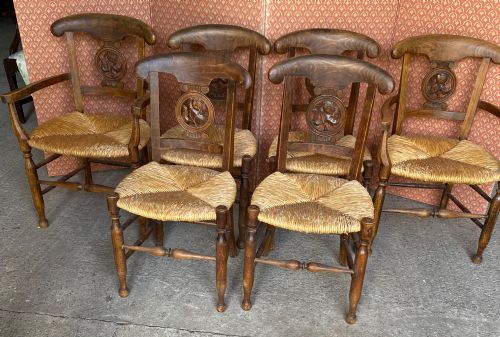
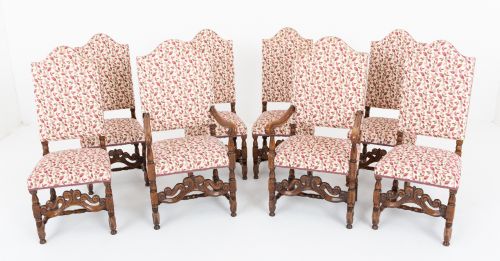
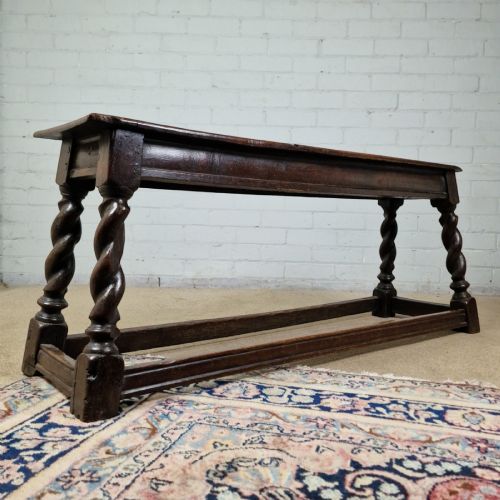
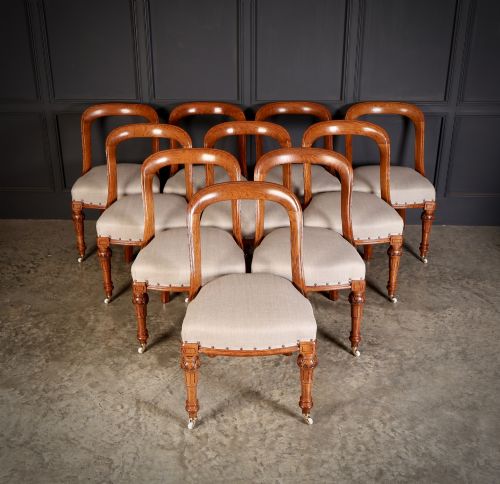
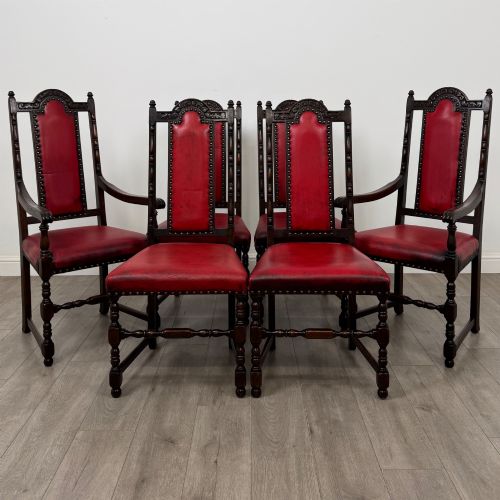
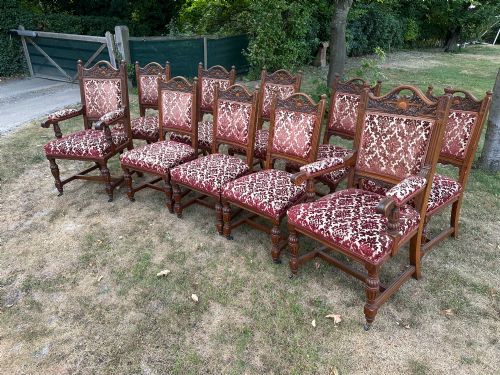
Traditional carved oak seating covers a robust range of domestic furniture, from grand sets of dining chairs to utilitarian country stools and high-backed hall settles. Buyers searching for traditional carved oak seating encounter pieces spanning the seventeenth through the early twentieth centuries, reflecting shifting domestic habits and enduring rural traditions.
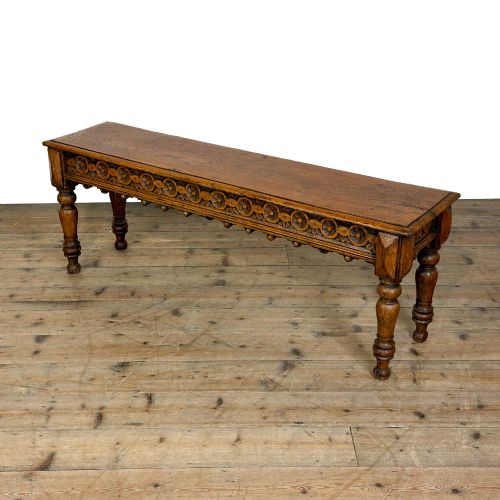
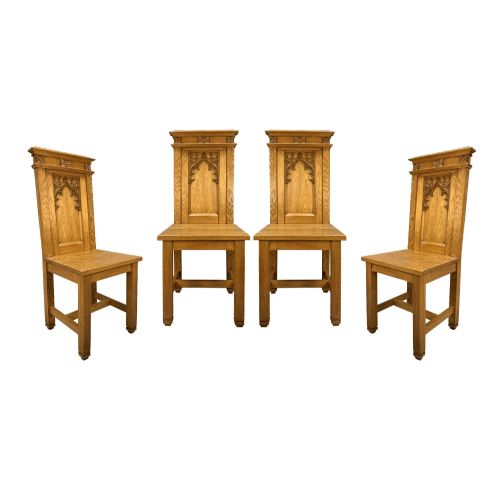
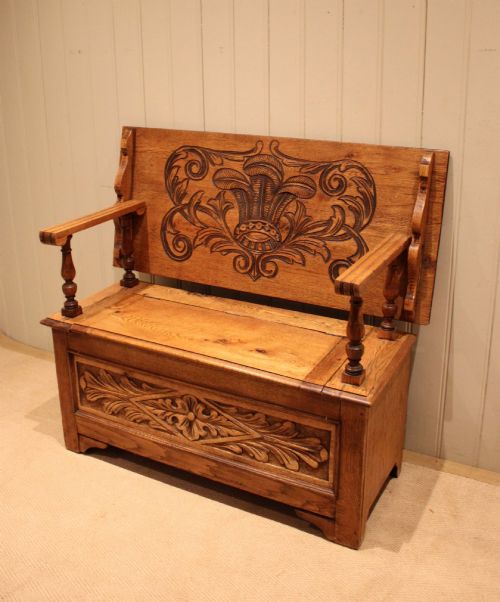
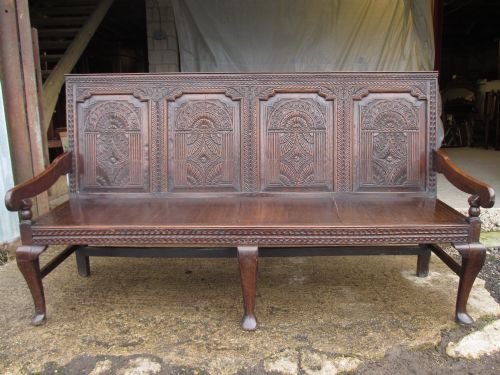
The selection on this page leans heavily toward Victorian and Edwardian interpretations of earlier styles, alongside eighteenth-century vernacular forms and country seating. Common formats include hall benches with lift-up lids, panel-backed settles, Windsor chairs, and substantial dining sets.
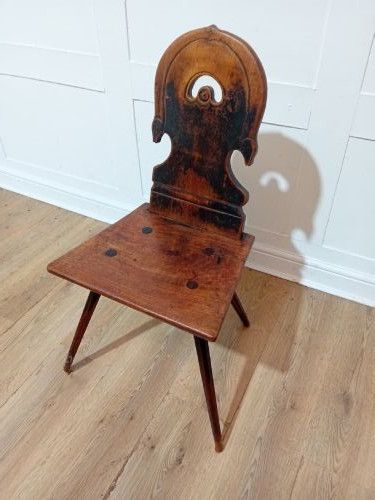
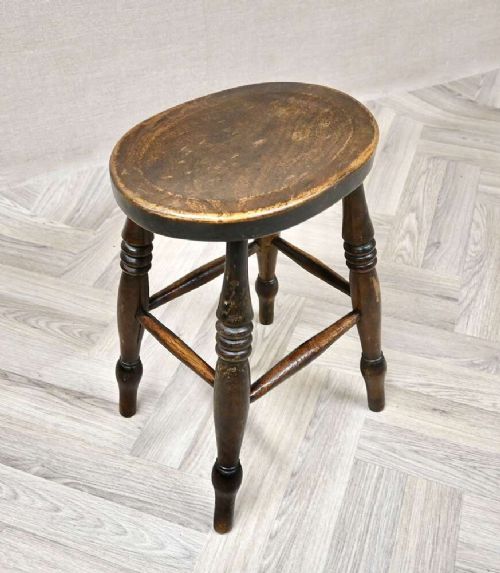
Regional British vernacular traditions supply much of the character in these pieces, particularly in Windsor chairs and country stools incorporating secondary woods like elm, beech, and yew. Makers adapted classical and Gothic motifs into heavy, honest timber forms meant for daily use in halls, dining rooms, and parlours.
How traditional carved oak seating was made
Carpenters and joiners relied primarily on solid oak, selected for its strength and heavily figured grain, often supplemented with regional timbers such as elm for seats and beech or yew for spindles. Construction methods combined traditional mortise and tenon joints pegged securely together, ensuring the framework could withstand generations of heavy physical use.
Carving was executed by hand using gouges and chisels directly into the solid timber, producing relief patterns that drew upon Jacobean, Gothic, and Renaissance vocabulary. Surfaces were frequently waxed or polished to a deep lustre, while secondary elements occasionally incorporated brass fixings, leather upholstery, or woven cane and bergere panels.
Listings feature oak alongside elm, beech, and yew, spanning centuries from the seventeenth to the twentieth.
What varies in quality
The architectural ambition of the carving and the integrity of the timber frame define the upper tier of these pieces. Superior examples display crisp, deeply undercut relief work executed by skilled hands, whereas lesser pieces rely on shallow, mechanical tool marks or later surface embellishment.
Structural harmony also dictates value, seen in the balance of proportions and the retention of original components like panel backs, turned legs, and solid timber seats. Heavy-handed restoration, mismatched sets, or replacement panels diminish the cohesive historical integrity that serious collectors look for in vernacular seating.
The Traditional Carved Oak Seating Glossary
- Settle
- A wooden bench with a high back, solid arms, and often a storage box beneath the seat. It was designed to keep draughts away from people sitting near the hearth.
- Wainscot chair
- An early wooden armchair constructed with panelled backboards and turned supports. This form represents status and durability in seventeenth-century households.
- Bergere
- An upholstered armchair featuring woven cane or wickerwork on the back and sides. It gained popularity during revival periods for domestic comfort.
- Windsor chair
- A traditional seating form constructed with a solid wooden seat into which the legs and spindles are directly bored. Country variations often include distinctive bow backs and arm supports.
- Box settle
- A heavy oak bench featuring a hinged seat lid that opens to reveal a deep storage compartment underneath. These pieces served dual functions in hallways and kitchens.
Traditional Carved Oak Seating: Frequently Asked Questions
What is a monks bench?
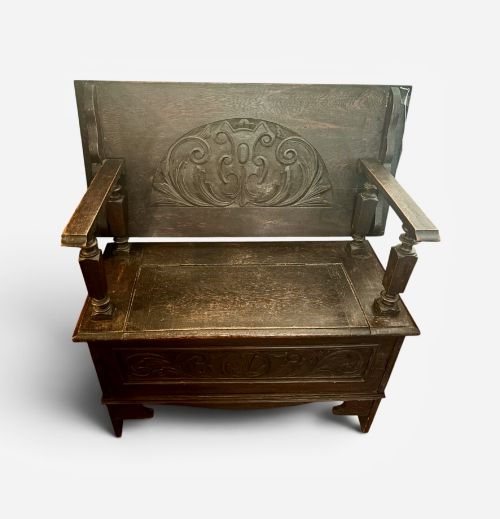
A monk's bench is a versatile multi-functional piece featuring a hinged top that folds down to form a table or desk surface. Beneath the seat, a built-in box compartment provides practical storage for household items.
These pieces were popular in various revival periods, adapting historic forms for twentieth-century homes. They suit hallways or smaller rooms where dual-purpose furniture is useful.
How do I identify a settle?
A settle is distinguished by its high wooden back and solid side arms, designed originally to block cold draughts in large rooms. Many examples include panelled backs and enclosed storage boxes beneath the seat.
They differ from standard benches through their architectural presence and enclosed seating area. Placed in a hallway or kitchen, they anchor the room with traditional weight.
Where were Windsor chairs used?
Windsor chairs originated in rural workshops, utilising a solid wooden seat bored to receive turned legs and spindles. They served as sturdy, practical seating in kitchens, farmhouses, and gardens.
Their comfortable saddle seats and resilient construction made them enduring household fixtures. Over time, regional turners developed distinct bow-back and comb-back variations.
How should I care for oak furniture?
Solid oak furniture benefits from regular dusting with a soft cloth and occasional applications of traditional beeswax to nourish the timber. Avoiding direct sunlight and sudden temperature changes protects the wood from splitting.
Maintaining a stable indoor climate preserves the original waxed or polished finish. Gentle care ensures the natural grain and historic patina continue to improve with age.