
Traditional Carved Lamp
A traditional carved lamp brings warmth and handcrafted texture to a room, drawing the eye with solid timber and classical detail.
Traditional Carved Lamp
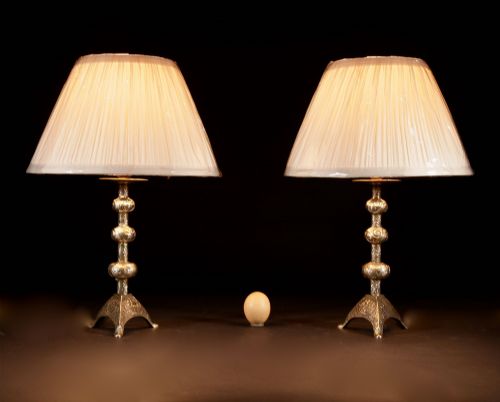
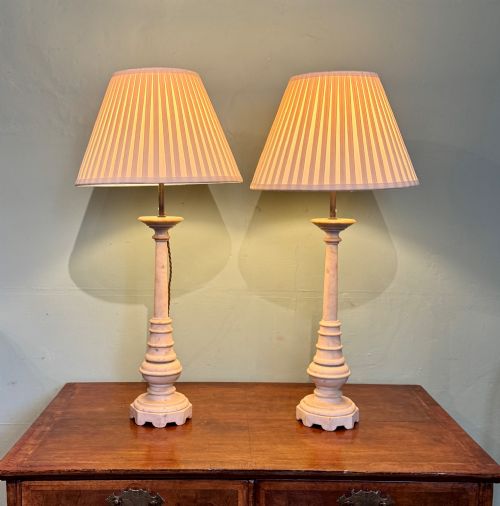
When you search for a traditional carved lamp, you look at floor and standard lamps shaped from solid timbers like oak, walnut, and mahogany. These pieces span the Victorian, Edwardian, and early twentieth-century periods, often reflecting revivalist tastes such as the William IV or Jacobean styles. Alongside standard lamps, the listings include table lamps and candlesticks rendered in brass, marble, and giltwood.
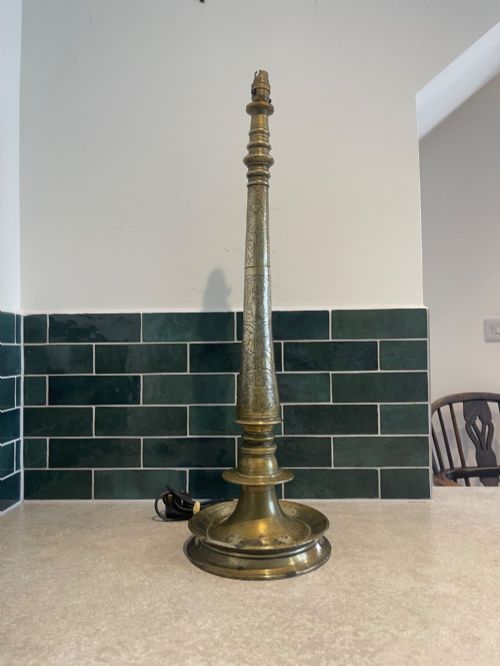
The versions you meet most frequently on this page date from the late nineteenth century up to the 1930s. They combine utilitarian function with ornamental turning, fluting, or hand-chiselled motifs. Many originate from British workshops, while others show international influences including Kashmiri and Indian brasswork.
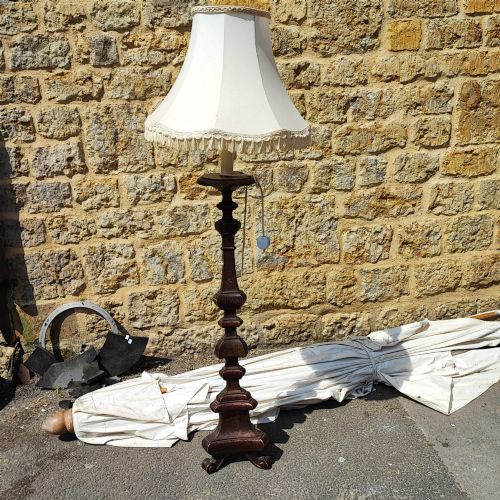
The selection ranges from tall floor-standing lights designed to anchor a corner of a reception room to smaller table lamps suited for side tables. They rely on substantial weighted bases or tripod supports to bear the height of the stem and the weight of the shade. Buyers select them to integrate authentic period craftsmanship into domestic lighting schemes.
Materials and construction methods
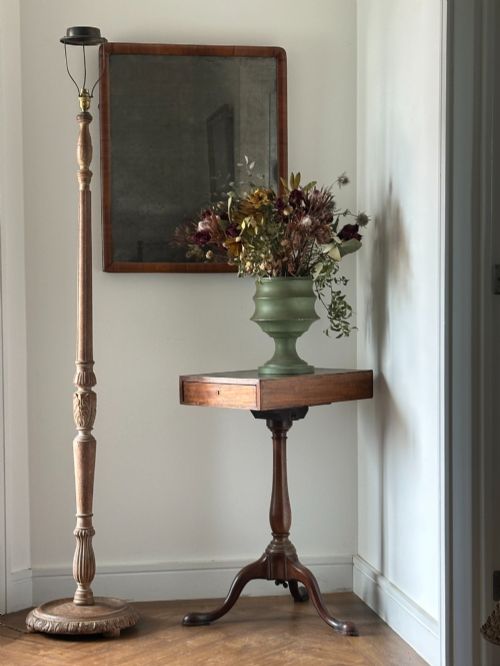
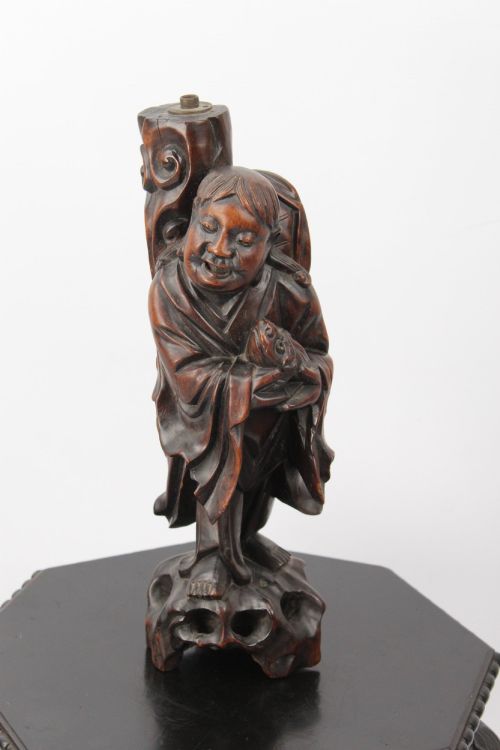
Maker's workshops relied heavily on dense hardwoods such as mahogany, walnut, and oak for standard and floor lamps. Craftsmen turned these timbers on lathes to form slender or barley-twist columns, then applied hand-carved acanthus leaves, fluting, or geometric patterns. Giltwood and limed finishes offered alternative surface textures that caught the ambient light.
Metal standards utilised cast brass and bronze, sometimes pairing classical motifs like Corinthian capitals with weighted iron bases for stability. Stone and ceramic elements, including marble and alabaster, appeared in lamp bodies to add heft and a cool tonal contrast to the surrounding woodwork. Joints were traditionally doweled, tenoned, or threaded securely to manage the vertical tension of the lamp rod.
A standard lamp column once served as a quiet dance partner for an over-enthusiastic Victorian parlour guest practising their steps.
Markers of distinction
Quality rests in the crispness of the hand-carving and the choice of timber. Superior standards display deep, undercut carving on the capitals and bases rather than shallow machine-pressed ornamentation. The selection of finely figured walnut or dense, straight-grained oak distinguishes a workshop piece from basic commercial production.
Proportion and stability separate the finest examples from the ordinary. A well-balanced standard lamp maintains a heavy, solid base that prevents tipping, paired with a straight, true column that shows no structural warp. The integration of metal fittings and switches into the original timber body without splitting the wood indicates careful historical adaptation.
The Traditional Carved Lamp Glossary
- Barley twist
- A spiral carving resembling a twisted barley sugar stick, popular on the stems of wooden furniture and standard lamps during the Victorian period.
- Corinthian capital
- The ornate, bell-shaped top of a column decorated with rows of acanthus leaves. It appears frequently on neoclassical revival brass and wooden standard lamps.
- Giltwood
- Timber that has been coated with a thin layer of gold leaf or gilt paint. This finish creates a bright, reflective surface favoured in neoclassical and French designs.
- Limed oak
- Oak timber treated with a white pigment or lime compound rubbed into the open grain. This technique highlights the natural texture while lightening the overall colour.
Traditional Carved Lamp: Frequently Asked Questions
How do I safely wire an antique lamp?
Most period lamps require modern rewiring to meet current safety standards and ensure the internal cord passes safely through the central channel.
Qualified electricians can thread modern flex through the original wooden or brass stem without damaging the historic structure.
What shade size suits a standard lamp?
The shade should balance the height and visual weight of the carved column below it.
A wider drum or empire shade works well on sturdy oak or walnut floor lamps to maintain proper proportion.
How do I distinguish Edwardian from Victorian lamps?
Victorian standard lamps often feature heavier, highly ornate carvings and darker timbers with dense embellishment.
Edwardian examples tend towards lighter proportions, simpler neoclassical lines, and sometimes limed or painted finishes.
Where should I place a floor lamp?
Position your standard lamp in a corner or beside a reading chair where it can cast ambient downward light.
Ensure the heavy base rests on a level surface away from high-traffic walkways to prevent accidental tipping.