


Traditional Canine Wall Art
Traditional canine wall art captures the character and loyalty of dogs through oil paint, watercolour and framed print.
Traditional Canine Wall Art
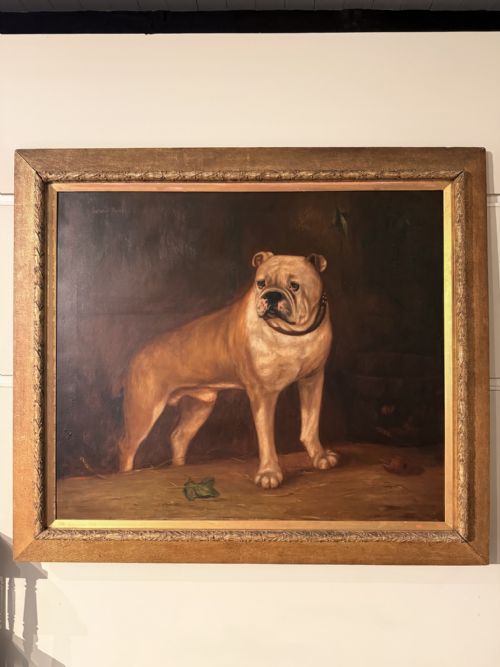
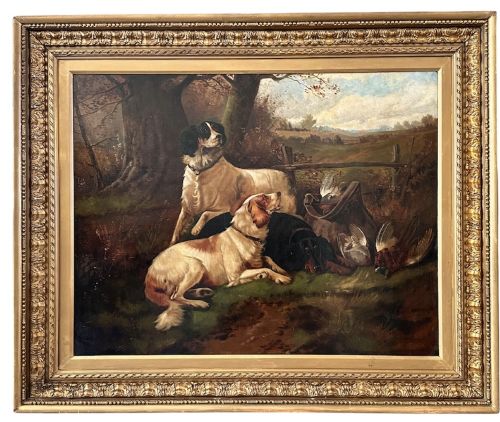
Traditional canine wall art encompasses paintings, watercolours and prints depicting dogs, ranging from gun dogs and terriers to spaniels and boxers. These works record individual animal portraits and sporting scenes across periods from the Victorian era into the mid-twentieth century.
The pieces on this page lean heavily towards oil paintings on canvas or board, alongside sporting watercolours and nineteenth-century prints. Victorian realism and British sporting art dominate the visual record, capturing subjects both in natural landscapes and domestic interiors.
How they were made
Artists worked primarily in oil paint upon canvas or wooden board, applying pigment to build depth in the animal's coat and expression. Watercolour was also utilised for lighter sporting scenes on paper, while period frames in gilt and wood completed the presentation.
Many works rely on traditional realist techniques developed through the nineteenth and early twentieth centuries. Painters layered oils to render texture in fur and the play of light within domestic or outdoor settings.
Listings span from Victorian works of the 1860s through to mid-century realists working in the 1950s.
What varies in quality
Quality rests upon the artist's ability to render the anatomy, texture and individual expression of the animal convincingly. Finer works display confident brushwork in the fur and eyes, moving beyond generic representation to capture distinct canine personality.
The handling of the background and setting contributes significantly to the overall merit of a piece. Superior examples integrate the subject harmoniously into an interior or landscape, whereas weaker works present the dog against a flat or unconvincing backdrop.
John Sargent Noble·LM Webb·C W Tuck·M.E. Hankinson·John Emms·Tom Carr·Valentine Thomas Garland·Samuel John Carter·William Albert Clark
The Traditional Canine Wall Art Glossary
- Oil on canvas
- Pigment suspended in drying oil applied to a stretched fabric surface. This combination allows for rich blending of colour and tone.
- Sporting art
- Depictions of rural pursuits, game animals and working dogs. This genre reflects the social history of the countryside.
- Realism
- An artistic movement focused on depicting subjects truthfully without artificiality. In dog portraits, this means accurate anatomy and naturalistic lighting.
- Gilt wood
- Timber treated with a thin layer of gold leaf or metallic gilding. Frames finished in this manner frequently accompany period paintings.
Traditional Canine Wall Art: Frequently Asked Questions
How do I date a dog painting?
Dating relies on stylistic clues, framing, stretcher construction and artist signatures where available. Clothing or interior furnishings depicted in the background also offer chronological markers.
Nineteenth-century works often employ heavier gilt frames and specific canvas stamps, while mid-century pieces reflect changing domestic tastes and simpler framing choices.
What is British sporting art?
British sporting art records rural pastimes, horses, hounds and gun dogs. These pieces celebrate the relationship between humans, animals and the countryside.
Works in this tradition range from field portraits of working spaniels to formal depictions of prized hunting dogs.
Where should I hang canine art?
These works suit studies, hallways and living rooms where traditional decor complements the subject matter. Pairing smaller oil portraits together creates a strong visual impact.
Avoid placing canvas works in direct sunlight or damp environments to protect the oil paint and wooden stretchers.
Are all the paintings signed?
Many pieces bear the signature or monogram of the artist, while others remain unsigned. Unsigned works are frequently attributed through style, subject matter and period materials.
Documentation on the reverse of the canvas or frame sometimes reveals the dog's name or the original context of the commission.