

Traditional Brown Chairs
Traditional brown chairs bring deep wood tones and centuries of craft to a room, ranging from country windsors to formal dining sets.
Traditional Brown Chairs
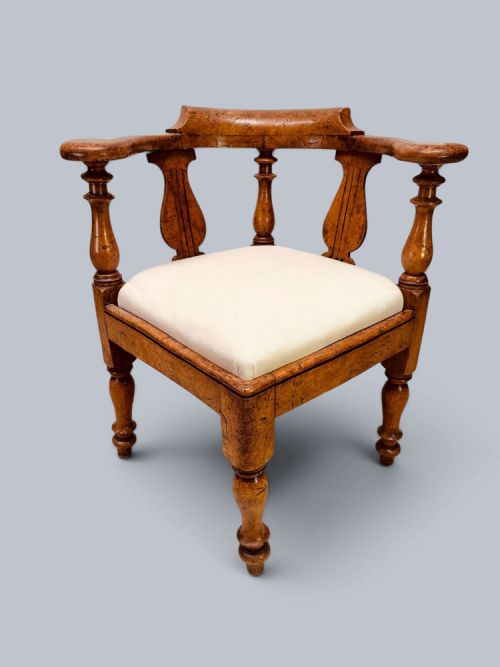
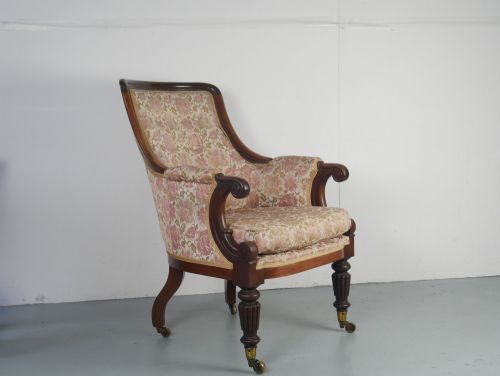
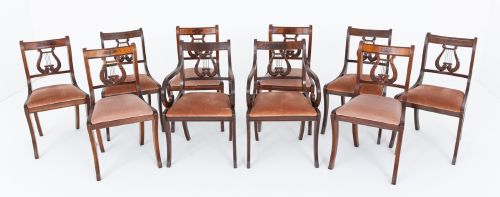
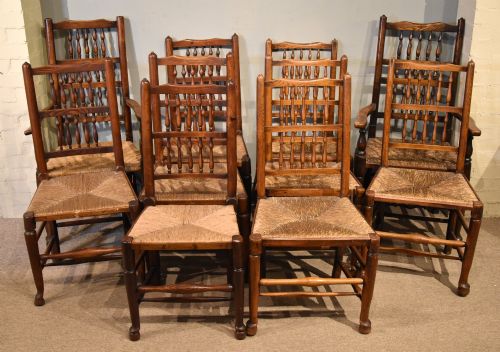
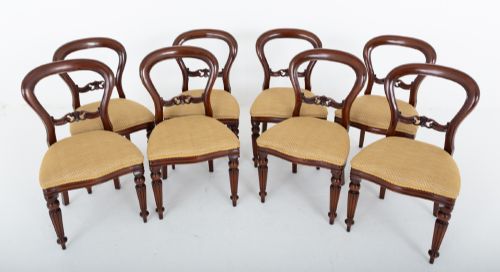
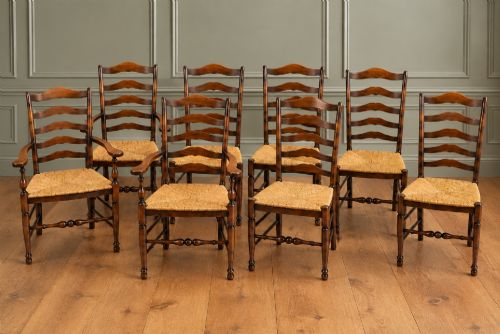
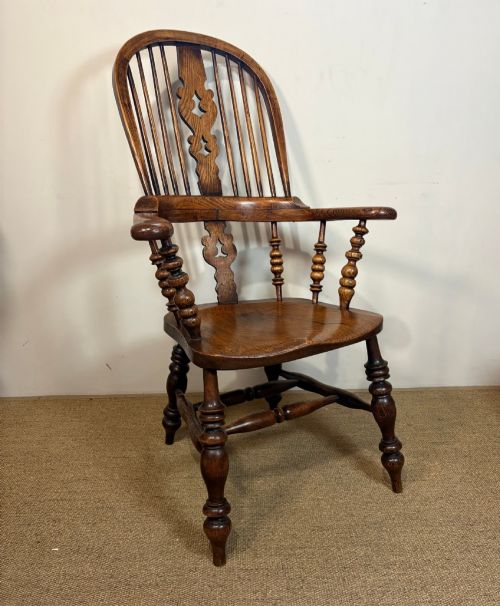
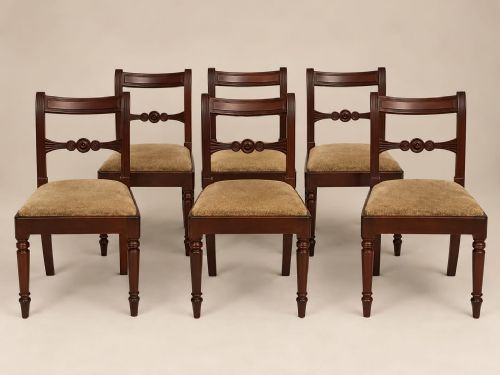
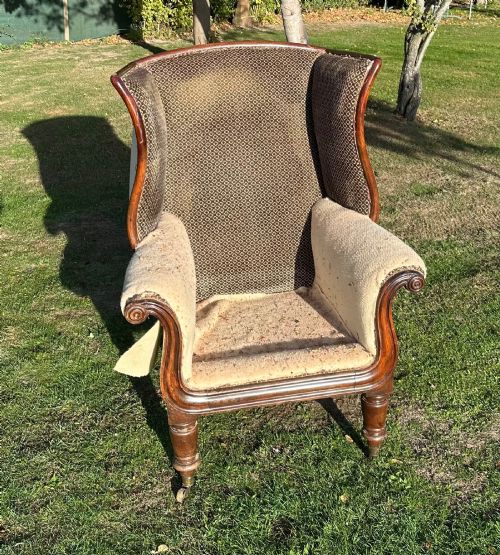
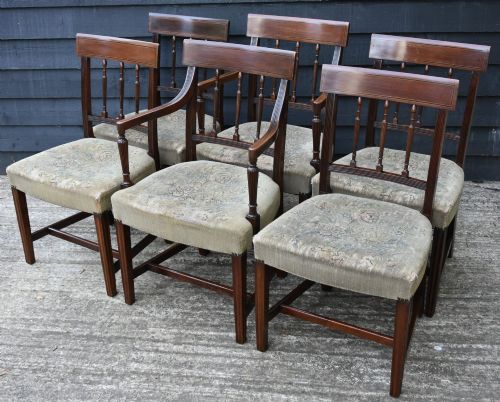
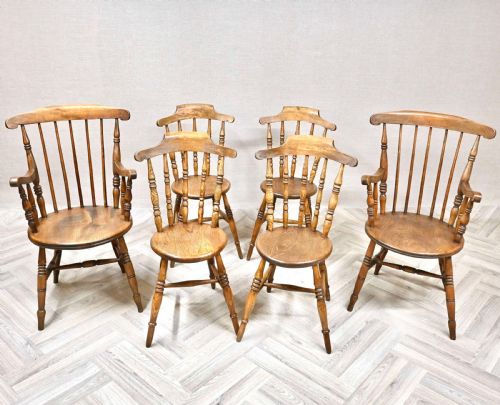
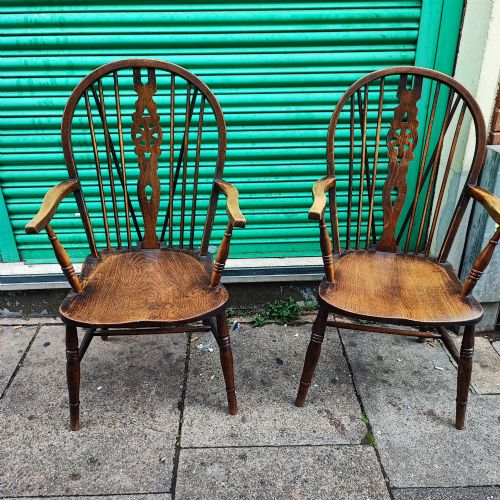
Traditional brown chairs cover a wide expanse of seating forms built across the eighteenth, nineteenth, and early twentieth centuries in mahogany, oak, elm, yew, and beech. These pieces range from country kitchen windsors and smoker's bows to formal regency, victorian, and georgian dining sets.
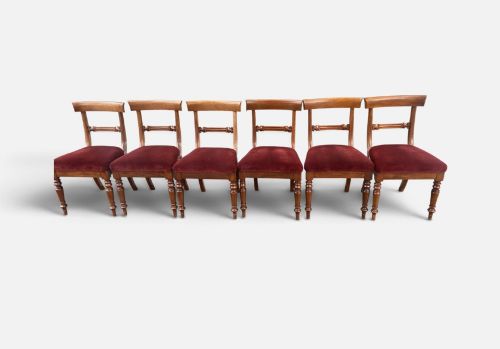
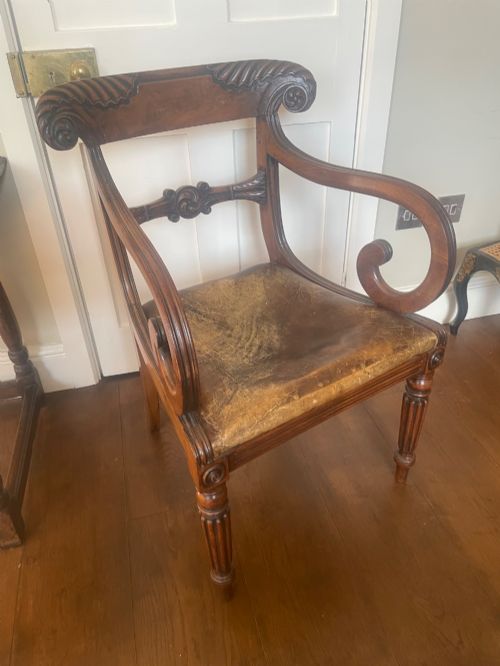
Buyers seeking traditional brown chairs most frequently encounter mahogany dining sets and oak or elm country armchairs. Sets of six or more chairs appear alongside single library chairs, desk chairs, and office chairs fitted with revolving mechanisms.
The styles span english country, french provincial, and various period revivals including regency, william iv, and hepplewhite influences. Each form carries the distinct utilitarian or formal design language of its originating workshop.
Materials and construction methods
Makers built these chairs using dense native and imported timbers, predominantly mahogany, oak, elm, ash, yew, and beech. Solid wood construction forms the core of both country windsors and formal dining chairs.
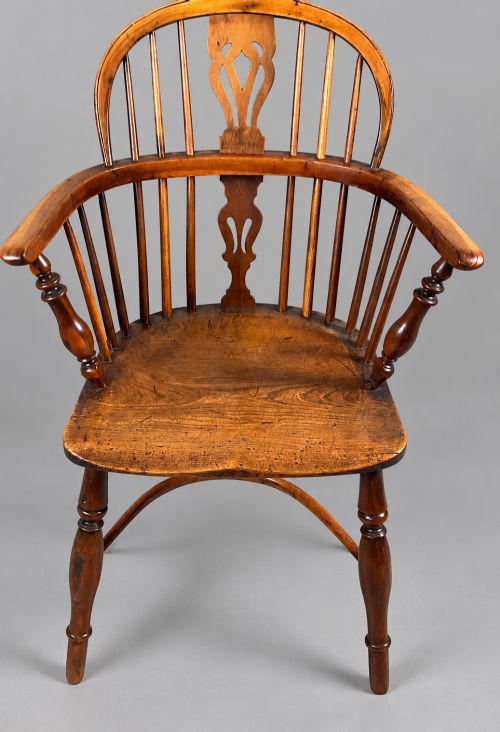
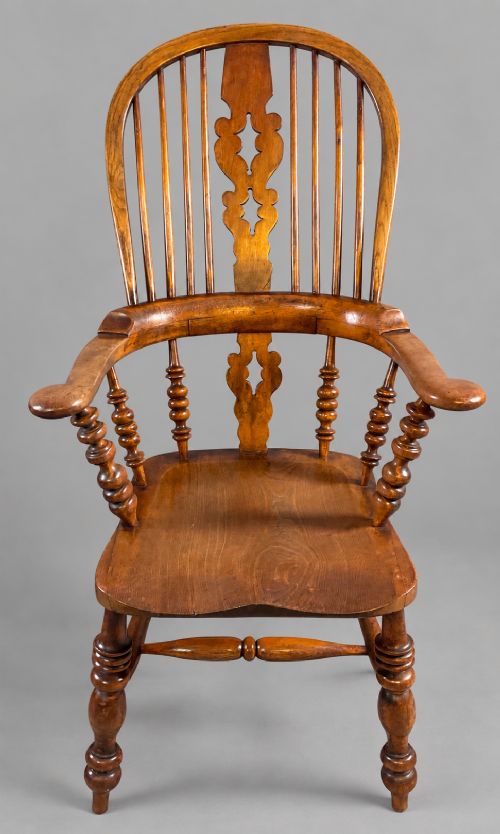
Country seating often combines multiple timbers within a single frame, utilising elm for seats, ash for spindles, and beech for bent parts. Formal seating relies on mahogany and walnut, frequently finished with carved shield backs, pierced splats, or upholstered leather and fabric inserts.
Traditional Brown Chairs Retail Price Guide 2026
Typical asking prices for traditional brown chairs among the pieces listed under this phrase on Sellingantiques today, from the lower quarter to the upper quarter. They describe what is for sale here now, not the wider market.
Listings feature mahogany, oak, elm, beech, ash, yew, and brass across periods spanning the seventeenth century to the 1920s.
Factors separating tiers of quality
Quality separates on the integrity of timber selection and the precision of the joinery. Matched timber sets with coherent grain patterns across all pieces represent higher craftsmanship than assembled sets.
Carved detail and structural robustness distinguish fine library and dining chairs from standard utility seating. Original leather upholstery and intact turned components preserve the authentic character valued by collectors.
Gabbitass of Worksop·M. D. Miller and Sons Nottingham
The Traditional Brown Chairs Glossary
- Windsor chair
- A wooden chair built with a solid saddle-shaped seat into which the legs and back spindles are directly inserted. This form evolved through regional English traditions using mixed woods like elm and ash.
- Carver
- An armchair designed to match a set of smaller side dining chairs, typically placed at the head of a table. These pieces share the stylistic vocabulary of the accompanying dining set.
- Smoker's bow
- A low-backed Windsor armchair with a continuous bentwood rail forming the arms and back. These sturdy chairs originate from vernacular country and tavern contexts.
Traditional Brown Chairs: Frequently Asked Questions
How do I date an oak chair?
Dating relies on examining the tool marks, construction joints, and overall style of the piece. Oak furniture from earlier centuries displays pegged mortise and tenon joints and hand-riven timber surfaces.
Later nineteenth-century interpretations adopt machine-sawn components and standardised hardware while referencing historical vernacular designs.
What is a Windsor chair?
A Windsor chair is a form defined by a solid wooden seat that acts as the central anchor for the legs, back spindles, and bow rail. Regional variations incorporate different combinations of elm, ash, and beech.
These chairs served utilitarian roles in kitchens, farmhouses, and country houses before becoming collected antiques.
Are dining chair sets matched?
Some dining sets survive as true complete sets built together in a workshop, while others are assembled later to match in style and timber. True sets maintain consistent timber grain and wear patterns across every chair.
Examining the underside and joinery reveals whether the seating group originated as a single commission.
How do I care for antique wood?
Antique wood requires stable indoor humidity away from direct heat sources and sunlight to prevent timber shrinkage and cracking. Regular dusting with a dry cloth protects the aged polish and patina.
Application of appropriate wax preserves the surface finish without sealing moisture into the historic timber.