
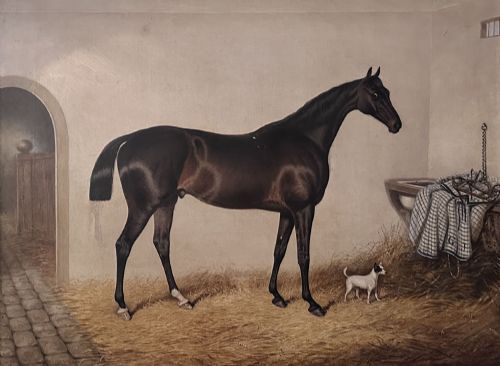


Traditional British Sporting Picture
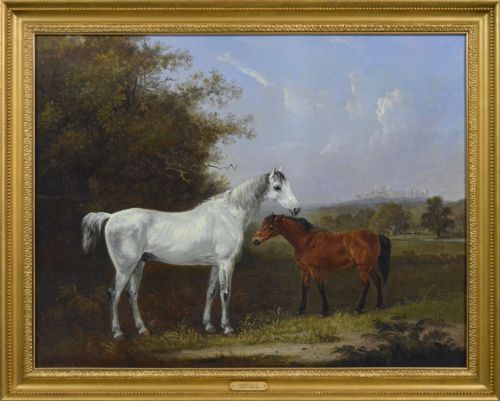
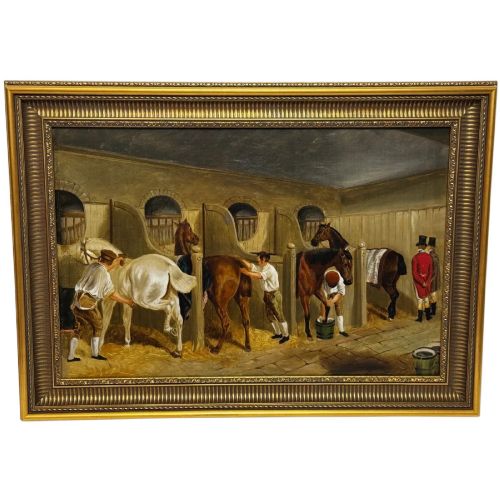
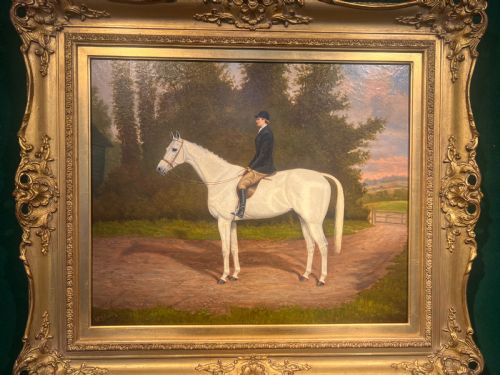
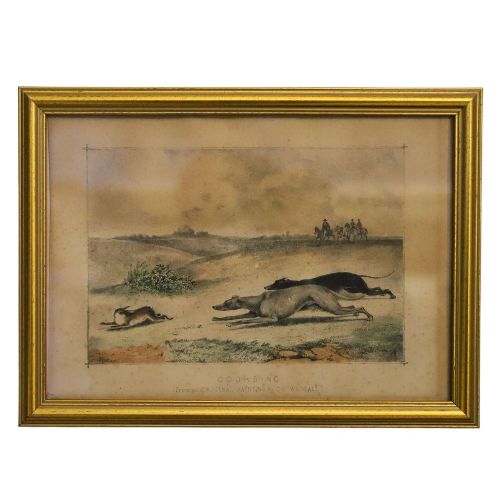
A traditional british sporting picture captures horses, hounds, and the field sports of earlier centuries with vigorous draughtsmanship.
Traditional British Sporting Picture
A traditional british sporting picture records the horses, hounds, hunts, and races that preoccupied country life across the nineteenth and twentieth centuries. Buyers seek these works to bring the motion and pageantry of rural pursuits into a room through oil, watercolour, or print.
The selections available run from expansive oils on canvas depicting famous hunts like the Berkeley, down to intimate watercolours and chromolithographs. Nineteenth-century examples share wall space with Edwardian prints by notable hands, giving a broad view of the genre's development.
How they were made
Artists laid oil paint onto canvas or panel, frequently framed in gilt wood or giltwood, to build up rich scenes of hunters and coaches. Watercolours on paper offer a lighter touch, whilst lithographs and chromolithographs capture graphic detail for wider distribution.
Makers housed these works behind glass within timber frames, protecting the delicate paper prints and watercolours from the moisture of country houses. The integration of pigment, paper, and heavy gilt surrounds defines the physical presence of the genre.
Listings span periods from 1800 through the 1960s, employing oil on canvas, watercolour, and paper.
What varies in quality
Quality rests upon the artist's command of anatomy and movement, separating stiff renderings of horses from works that capture the true strain of a gallop. A master hand like Abraham Cooper or Snaffles renders animal form and rider posture with absolute conviction.
The integrity of the medium dictates value, from a heavily worked original oil on canvas to a faded print. Contemporary framing and the preservation of the paper or canvas surface also influence the standing of any given piece.
William Albert Clarke·C. H. Weigall·John Arthur Lomax·Abraham Cooper RA·John Sanderson-Wells·Charles Clifford Turner·John Atkinson·Charles Johnson Payne Snaffles·Heywood Hardy·Sam. Howitt·Frank Algernon Stewart·Frank Dadd R.I.·Wilfred Bailey
The Traditional British Sporting Picture Glossary
- Chromolithograph
- A multi-colour print method that builds up rich hues through successive stone plates. This technique allowed Victorian publishers to reproduce sporting watercolours with striking fidelity.
- Giltwood
- Timber carved and coated with a thin layer of gold leaf or metallic powder. It provides the traditional reflective border that frames oil paintings and watercolours.
- Lithograph
- A planographic printing process based on the repulsion of oil and water on a limestone slab. It served as the primary vehicle for circulating sporting prints.
- Watercolour
- Pigment suspended in a water-soluble binder, applied to paper to achieve translucent washes. These works depend on careful framing under glass to prevent fading.
Traditional British Sporting Picture: Frequently Asked Questions
What subjects appear in these pictures?
The works focus primarily on equestrian subjects, fox hunting scenes with hounds, coaching inns, horse racing, and hare coursing.
Artists drew directly from the rural sports enjoyed by country gentlemen, documenting specific packs, famous horses, and dramatic moments in the field.
How should I frame an old print?
Original prints and watercolours require preservation under glass to shield the paper from environmental moisture and smoke.
Traditional gilt wood surrounds complement the period aesthetic without overwhelming the delicate linework of lithographs.
Are these works original paintings or prints?
The selection includes both unique oil paintings on canvas and original published prints, such as lithographs and chromolithographs.
Each listing specifies the medium, allowing buyers to distinguish between a hand-painted watercolour and a period printed edition.
How do I identify Victorian sporting art?
Victorian pieces typically display deep earth tones, romantic landscapes, and meticulous attention to horse and hound anatomy.
Signatures, dates, and framing materials often point toward the nineteenth-century origins of the canvas or paper.