




Traditional British Countryside Art
Traditional British countryside art captures rolling hills, river valleys and rural pastoral life through oils and watercolours spanning the nineteenth and twentieth centuries.
Traditional British Countryside Art
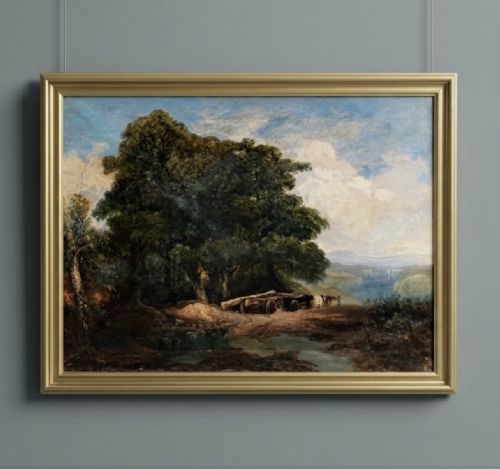
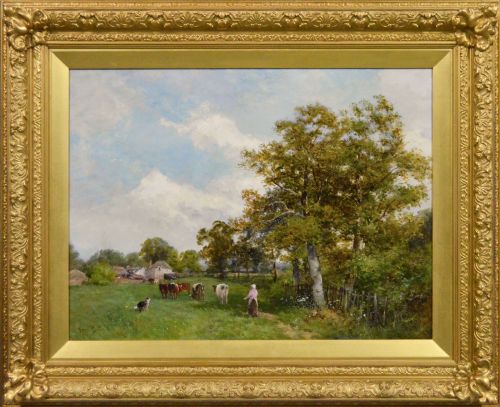
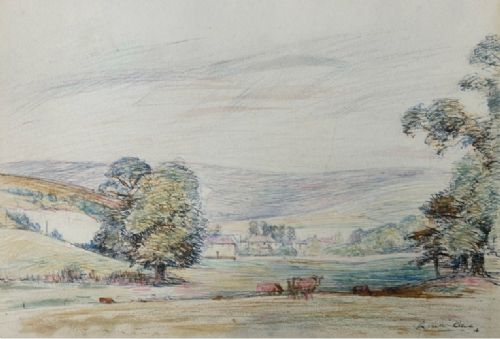
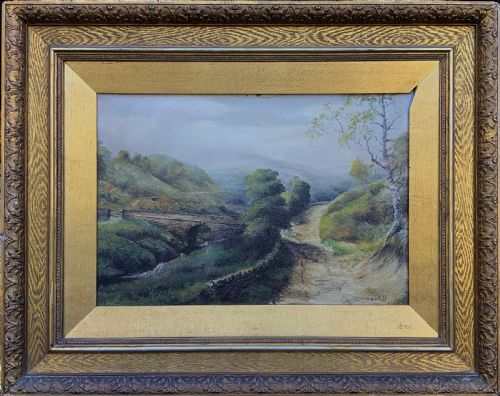
Traditional British countryside art records rural scenes, agricultural life, and natural scenery across England, Wales, and Scotland. Buyers encounter framed oil paintings and watercolours depicting rivers, farmsteads, cattle, and sheep.
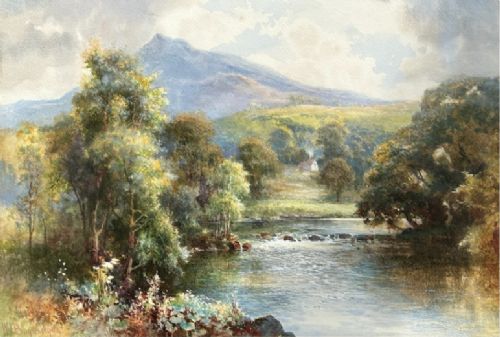
Most pieces date from the nineteenth century through to the mid-twentieth century, capturing shifting styles from Victorian pastoralism to early twentieth-century British impressionism. Common subjects include thatched cottages, riverbanks, and moorland views rendered by regional artists.
The selection ranges from detailed cabinet watercolours to large canvases framed in giltwood. These works reflect a sustained artistic engagement with the changing rural topography of Britain.
Materials and techniques
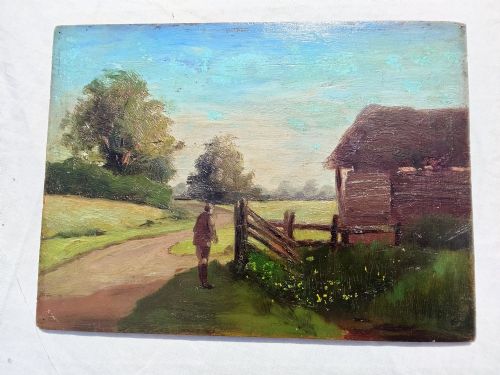
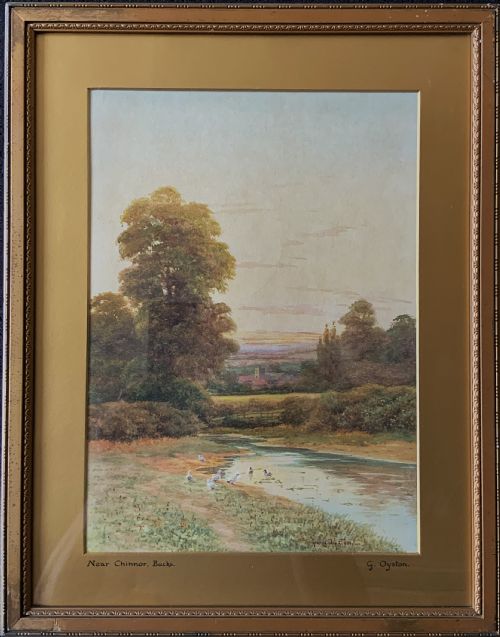
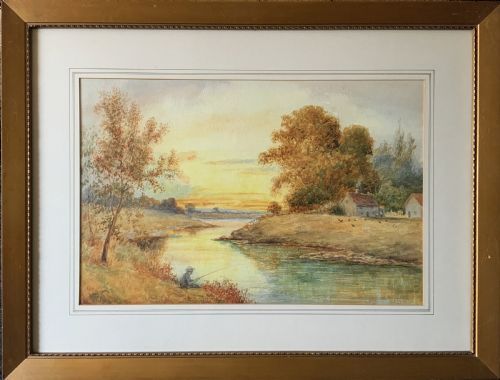
Artists painted primarily with oil paint on stretched canvas or oil paint on wood panels, utilising the medium's opacity and depth to build texture in skies and foliage. Watercolour paint on paper appears frequently, offering a lighter, translucent treatment of river valleys and light.
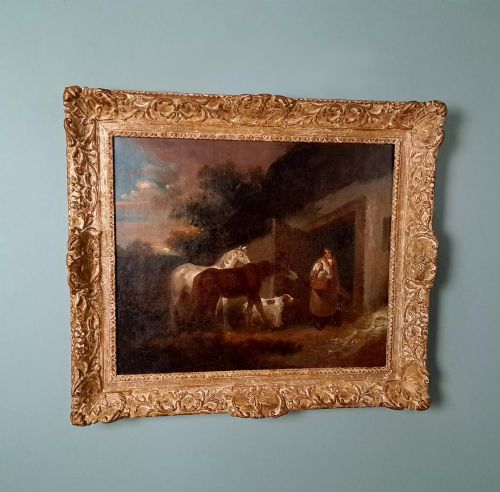
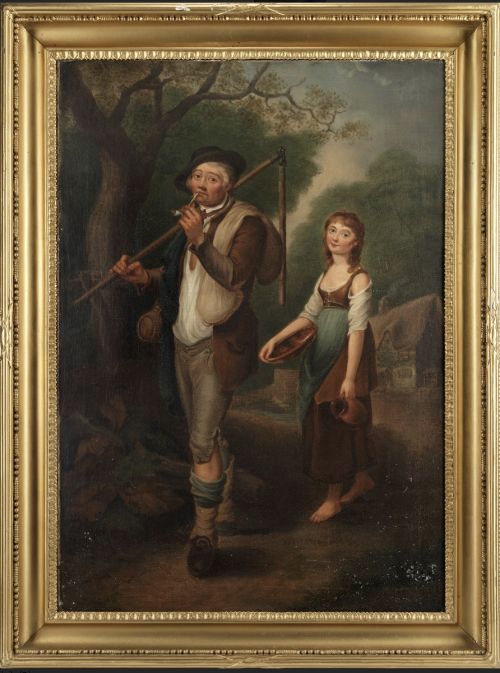
Support materials include canvas, wooden boards, and heavy paper, often housed within period gilt frames. Many works preserve their original wooden framing, showing hand-carved or moulded giltwood details that complement the composition.
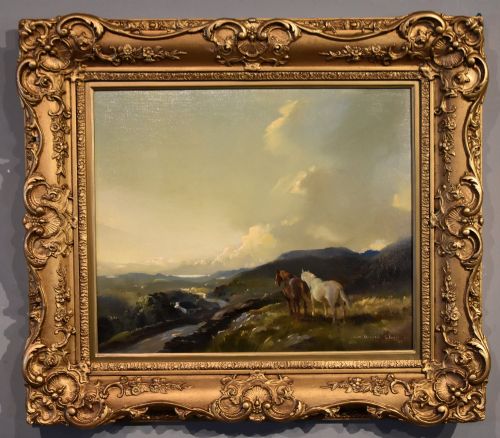
Several canvases faithfully record cows, sheep, and dartmoor ponies pausing for portraits amidst British weather.
Distinctions in quality
Quality rests upon the artist's handling of light, atmosphere, and spatial depth within the rural landscape. Stronger examples display confident brushwork and accurate observation of weather and seasonal changes, rather than mechanical repetition.
The integrity of the original support and pigment condition separates standard decorative works from accomplished regional school paintings. Original framing and clear provenance linked to named painters elevate the standing of a piece.
Richard Sebastian Bond·William H Myers·George Graham·William Joseph Shayer Senior·David Bates·George Oyston·Vernon DeBeauvoir Ward·Hubert Wellington·Charles Walter Simpson·Henry Charles Fox·Herbert Royle·John Sanderson Wells·Reginald Grange Brundrit·Fred Lawson·William Hoggatt·Alfred Augustus Glendening Jnr·William Sydney Cooper·Thomas Spinks·William Mellor
The Traditional British Countryside Art Glossary
- Oil on Canvas
- A painting technique where oil-based pigments are applied to a woven fabric stretched across a wooden frame. This method allows for rich blending and textured impasto application.
- Watercolour Painting
- A work executed with water-soluble pigments on paper, valued for its luminous transparency. Artists often used this medium for capturing fleeting weather and river scenes.
- Giltwood
- Wood carved and coated with a thin layer of gold leaf or metallic gilt powder. Period frames utilise this finish to enhance the visual boundaries of oil paintings.
- English School
- A classification for works produced by artists trained or working within England who shared prevailing academic or regional stylistic approaches. It groups unsigned or lesser-documented pieces by regional origin.
- Pastoral
- A genre of art focusing on rural landscapes, shepherds, and agricultural life. These scenes idealize the simplicity of countryside living.
Traditional British Countryside Art: Frequently Asked Questions
What periods do these rural paintings cover?
The works span from the nineteenth century through the Victorian era and into the mid-twentieth century. This timeline covers shifting rural aesthetics from early pastoral traditions to post-war interpretations.
Most pieces date between the eighteen-nineties and nineteen-forties, capturing both traditional agricultural practices and early modern British landscape movements.
How do I identify a watercolour from an oil painting?
Watercolour paintings use transparent pigments on paper and usually require protective glass framing. They exhibit a delicate, luminous quality where the white paper reflects light through the paint.
Oil paintings use heavier, opaque pigments on canvas or wood panels and lack glass protection. The surface often reveals visible brush texture and dried impasto.
Where were these landscape scenes usually painted?
Artists painted scenes across various British regions, including Welsh river valleys, Dartmoor, Yorkshire, and the Home Counties. Specific locations often appear inscribed on the reverse or within the title.
Local topography dictated the palette and subject, ranging from northern moorlands to southern agricultural farmlands and riverbanks.
Are these artworks typically framed in period settings?
Many pieces retain their original wooden or giltwood frames from the nineteenth or early twentieth century. These frames reflect the mounting styles popular when the artwork was first produced.
Original frames often feature minor wear consistent with age, which collectors value for historical continuity.