



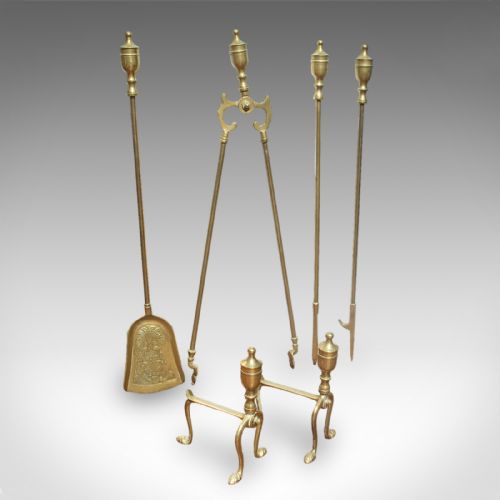


Traditional Brass Fire Tools
Traditional brass fire tools bring warmth and brightness to the hearth, combining polished metal with practical service beside the grate.
Traditional Brass Fire Tools
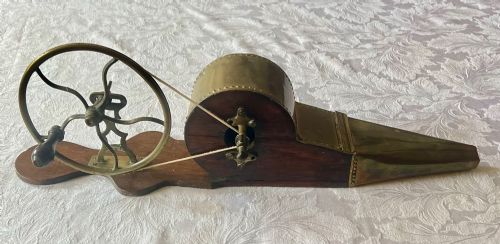
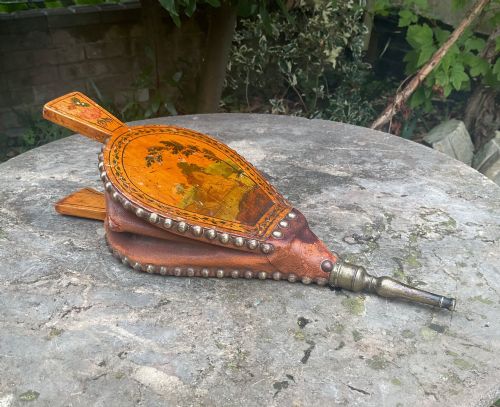
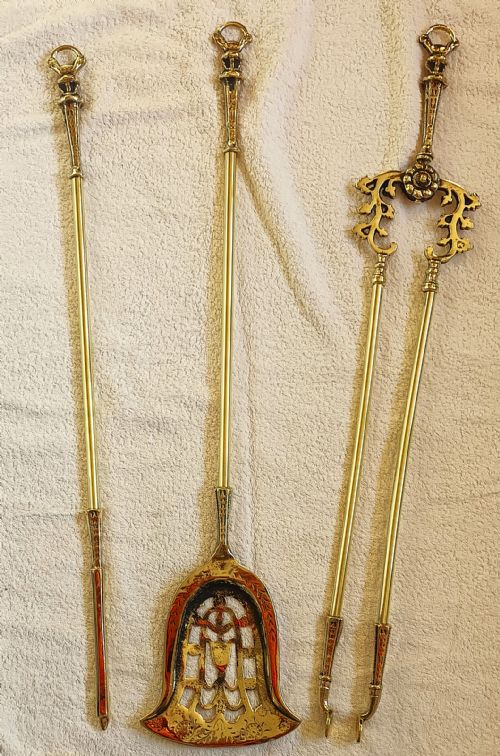
Traditional brass fire tools comprise sets of hearth implements including pokers, tongs, and shovels, often accompanied by fire irons and companion sets. These items serve both functional and decorative roles beside open fireplaces in period interiors.
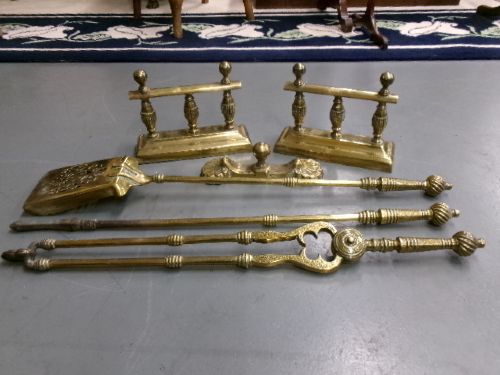
The pieces appearing on this page stem predominantly from the Victorian and Edwardian eras, alongside earlier Georgian examples and later twentieth-century items. Common configurations include three-piece sets of fire irons, companion sets with stands, and pairings with fire dogs or fenders.
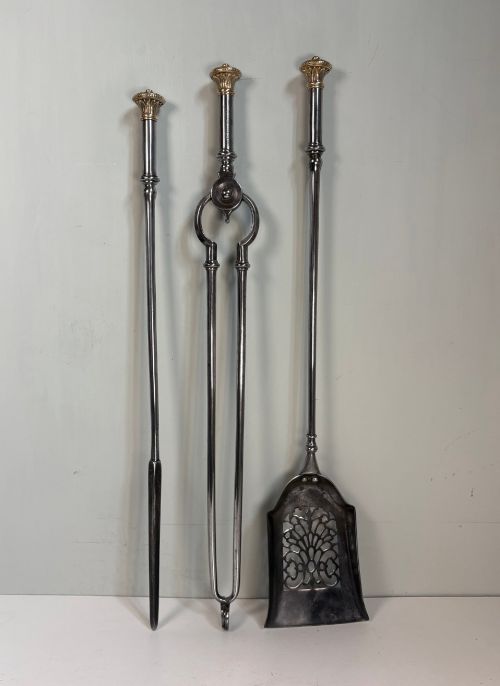
Originating largely from English workshops, these items utilise metals such as polished brass, cast iron, and steel. Buyers frequently encounter complete matched sets featuring shovels, tongs, and pokers designed to maintain a coal or wood fire.
How traditional brass fire tools were made
Craftsmen shaped these implements using durable combinations of brass, steel, and iron, ensuring handles and shafts could withstand daily use near high heat. Polished brass surfaces provided reflective warmth, while iron and steel components lent structural strength to pokers and tongs.
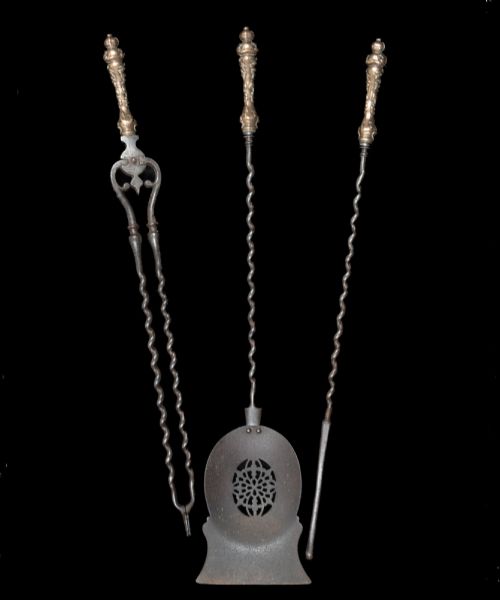
Handles often display detailed turning, casting, or rope twist decoration, showcasing the metalworker's skill in shaping solid brass and gunmetal. Companion sets and fire irons combined bright brass finishes with sturdy steel shafts to balance ornamentation with utility.
Traditional Brass Fire Tools Retail Price Guide 2026
Typical asking prices for traditional brass fire tools among the pieces listed under this phrase on Sellingantiques today, from the lower quarter to the upper quarter. They describe what is for sale here now, not the wider market.
Object types include fireplace accessories, companion sets, chestnut roasters, fenders, and fire dogs alongside standard fire irons.
What varies in quality
Distinctions in quality rest on the weight of the metal and the crispness of cast or turned details on handles and stands. Heavier pieces indicate substantial brass and steel construction rather than hollow or thin sheet metal.
Subtleties in finish, such as well-executed rope twist handles or robust joinery between the tool shaft and grip, separate standard domestic items from finer examples designed for prominent reception rooms.
The Traditional Brass Fire Tools Glossary
- Companion set
- A matched group of fireside implements held together on a stand or resting in a dedicated holder. These typically include a shovel, poker, and tongs.
- Fire irons
- Individual poker, tongs, and shovel implements designed to tend a coal or wood fire. They often stand upright in a fender or rest against fire dogs.
- Fire dogs
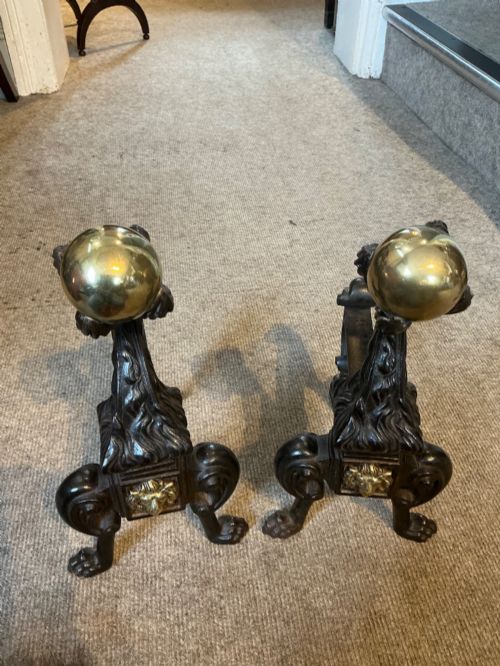
- Support irons placed inside a hearth to hold logs above the floor of the grate. They frequently appear paired with matching sets of fire tools.
- Rope twist
- A spiral decorative pattern carved or cast into metal handles. This texture catches the light and offers a secure grip.
- Chestnut roaster
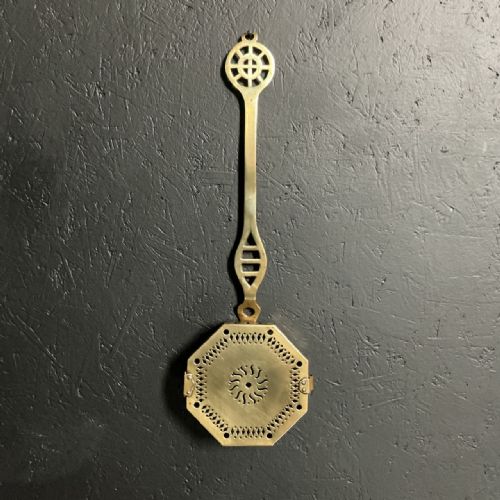
- A long-handled brass utensil with a pierced lid used for roasting nuts over open coals. It forms part of the wider array of hearth accessories.
Traditional Brass Fire Tools: Frequently Asked Questions
What is included in a companion set?
A companion set typically consists of three primary hearth tools: a shovel, a poker, and a pair of tongs. These are held together on a dedicated stand or rack.
Such sets originated to keep hearth maintenance equipment organised and accessible near the fireplace, combining utility with polished display.
How do I date these fire tools?
Dating relies on stylistic clues, manufacturing techniques, and material combinations seen across Victorian, Edwardian, and Georgian periods. Heavier brass castings and specific handle motifs often point to nineteenth-century production.
Examining the wear patterns on the shovel blades and the construction methods of the joints also helps determine the approximate age of the set.
Can these tools be used in an active fireplace?
Most traditional brass and steel fire tools remain robust enough for regular use in working grates. Their durable metal construction handles standard burning wood and coal.
Care should be taken with polished brass finishes to prevent excessive heat tarnishing or scratching during active fire tending.
What is the difference between fire irons and a companion set?
Fire irons refer specifically to the loose pokers, tongs, and shovels that rest against a fender or fire dogs. Companion sets include these same tools but incorporate a central stand or frame.
Both categories serve the same daily hearth functions while offering different ways to arrange the implements beside the fireplace.