

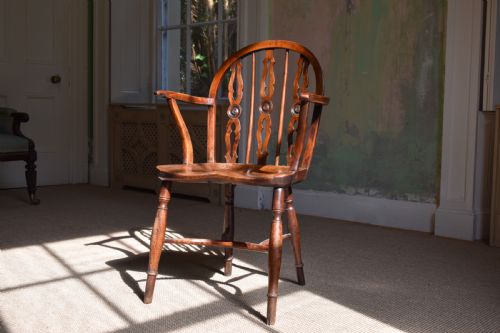
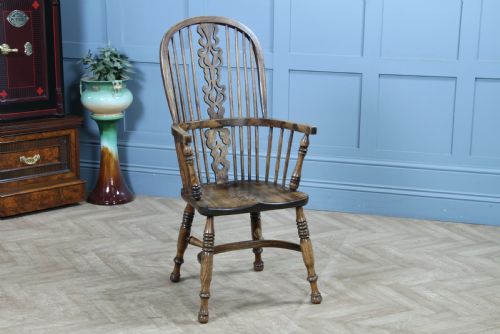
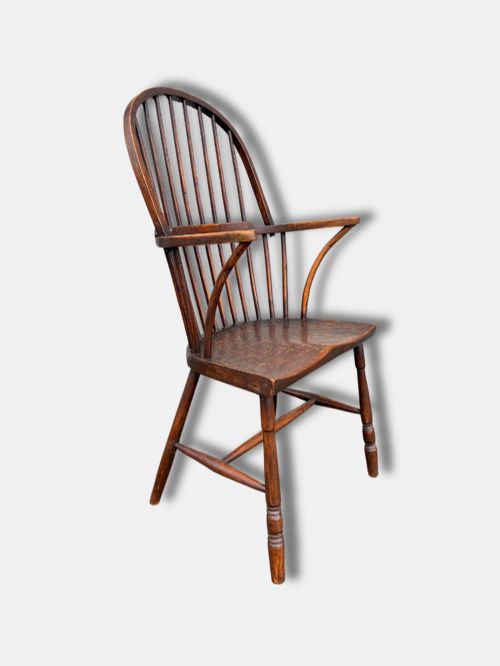
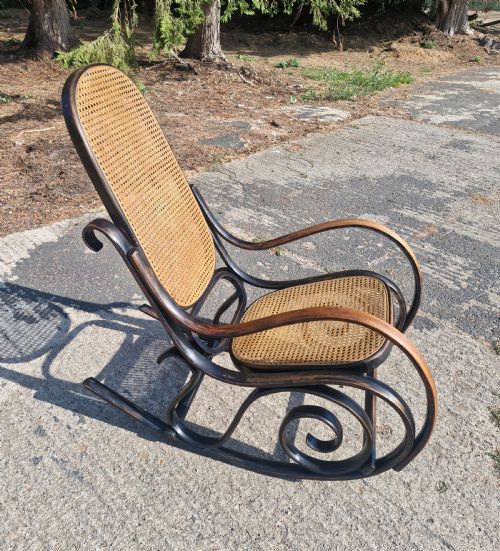
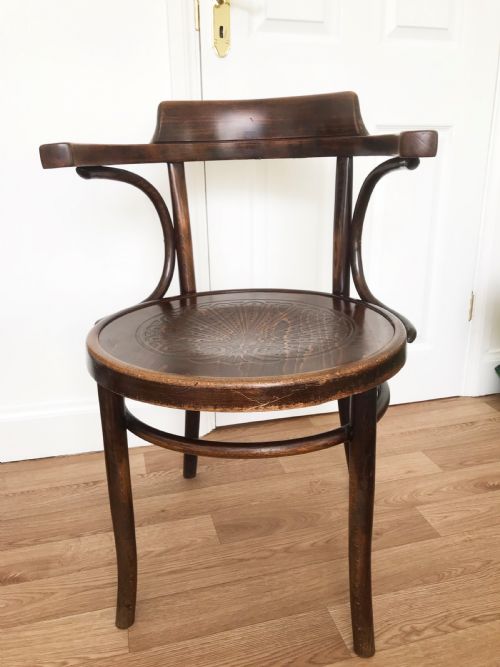
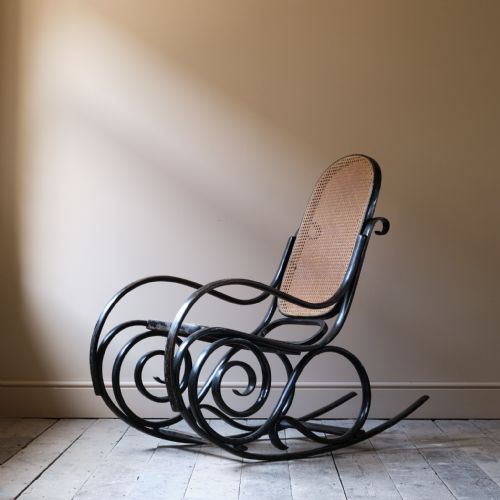


Traditional Bentwood Armchair
These traditional bentwood armchairs offer enduring comfort through curved timber construction, combining practical seating with historic craftsmanship.
Traditional Bentwood Armchair
A traditional bentwood armchair is a seating form defined by steam-bent components that create curved backs, arms, and runners. These chairs range from English country vernacular forms to continental bistro seating and rocking variants.
Buyers encountering this selection will frequently find nineteenth-century examples alongside pieces from the early twentieth century, including Edwardian designs and pieces dated around nineteen-twenty and nineteen-thirty. Forms include both standard armchairs and rocking chairs.
Origins span across English, American colonial, and Italian workshops, reflecting diverse regional interpretations of bentwood and Windsor traditions.
How they were made
Construction relies upon steaming timber until pliable, allowing craftsmen to bend solid wood into continuous loops for backs and arms. Woods such as beech, ash, elm, and yew are shaped while moist and secured as they dry.
Many examples incorporate woven elements like cane and rattan cane for seats and back panels, paired with solid wood frames. Components are frequently joined with traditional stretches, such as cow horn stretchers, ensuring stability.
Traditional Bentwood Armchair Retail Price Guide 2026
Typical asking prices for traditional bentwood armchair among the pieces listed under this phrase on Sellingantiques today, from the lower quarter to the upper quarter. They describe what is for sale here now, not the wider market.
Some chairs incorporate cow horn stretchers, proving that cows sometimes contributed structural engineering to the living room.
What varies in quality
Quality rests in the precision of the timber bending and the selection of the primary woods, where dense yew or figured elm elevate a piece above standard utility versions. The integrity of steam-formed curves without excessive stress fractures marks superior production.
The survival of original woven cane surfaces and the tightness of historical joints distinguish better-preserved examples from those with replacement components.
Fred Walker Rockley
The Traditional Bentwood Armchair Glossary
- Bentwood
- Wood shaped by applying heat and moisture to bend solid timber into curved structural forms. This technique creates lightweight yet robust chair frames.
- Windsor chair
- A chair built with a solid wooden seat into which the legs and back spindles are separately inserted. Traditional versions often feature curved wooden backs and arms.
- Cane
- Woven material made from the peeled bark of rattan palms, utilised for flexible seats and backrests. It provides a resilient and breathable surface.
- Stretcher
- Horizontal timber bracing connecting the legs of a chair to increase structural rigidity. Various designs, including cow horn shapes, reinforce the underframe.
Traditional Bentwood Armchair: Frequently Asked Questions
What defines a traditional bentwood armchair?
These chairs are characterised by steam-bent wooden components that form curved structural elements like backrests and arm supports. They merge historical seating forms with flexible timber engineering.
Craftsmen utilise woods such as beech, ash, and elm to achieve continuous curves without relying solely on traditional joinery.
How do I care for cane seats?
Cane seating requires moderate humidity to prevent the natural fibres from becoming brittle and snapping under pressure. Periodic gentle cleaning helps maintain the material.
Avoid placing these chairs near direct heat sources or in overly dry environments to preserve the woven panels.
Are rocking chairs common in this style?
Rocking variants frequently appear alongside static armchairs, incorporating curved wooden rockers attached to the base frame. These pieces date across the nineteenth and early twentieth centuries.
Both forms utilise similar steam-bending techniques to achieve rounded profiles and comfortable seating angles.
How are different periods identified?
Dating relies upon examining construction marks, timber types, and the specific style of the bending technique used on the frame. Nineteenth-century versions often display heavier vernacular forms, while later pieces show sleeker profiles.
Makers' details and regional variations further assist in placing a chair within a specific decade or era.