

Traditional Bedside Drawers
Traditional bedside drawers bring practical storage and period character to a bedroom, spanning compact chests to tailored cabinets.
Traditional Bedside Drawers
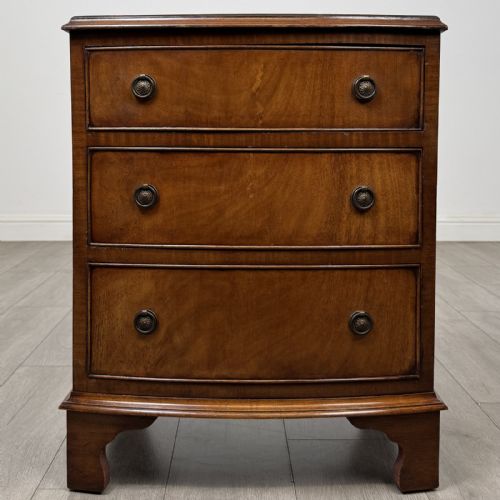
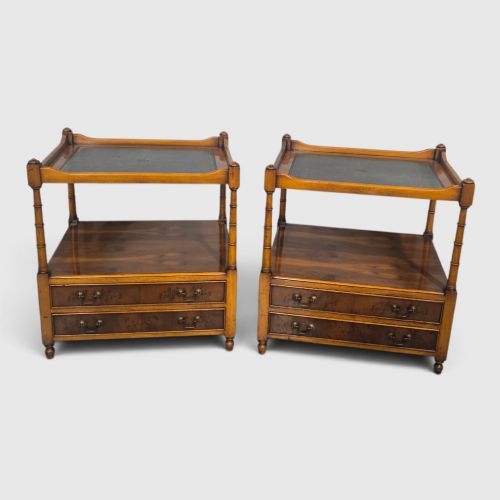
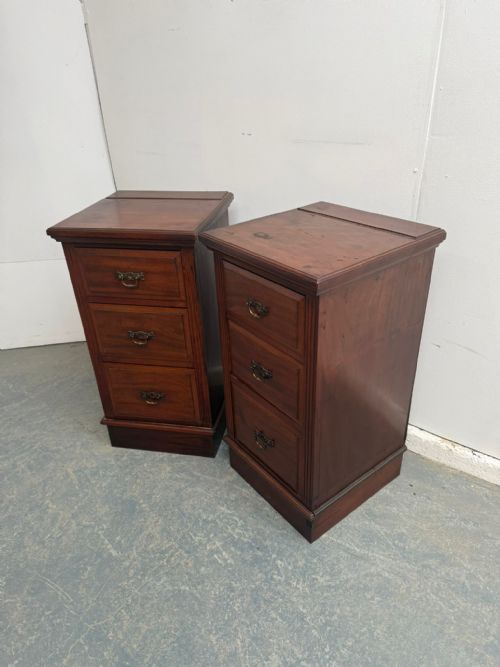
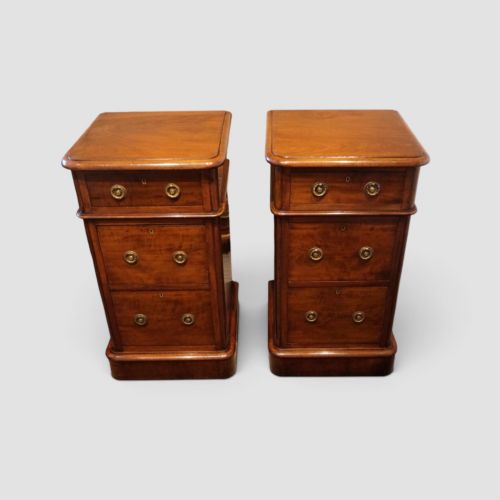
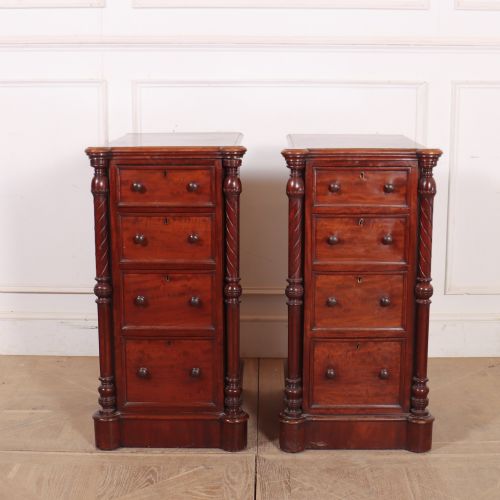
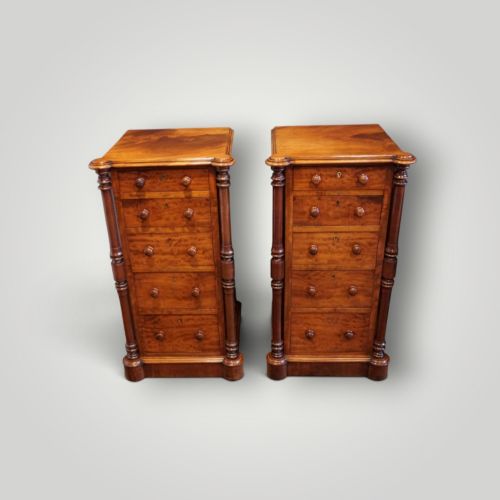
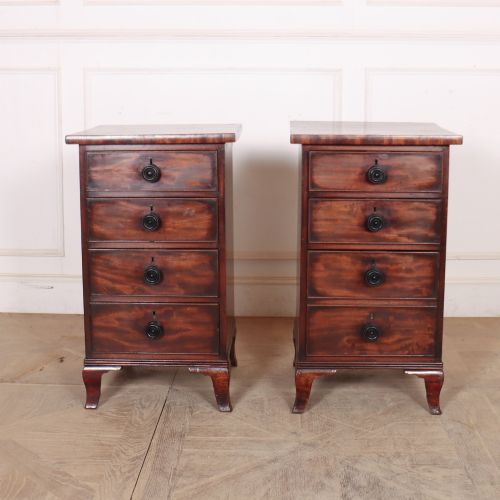
Traditional bedside drawers encompass a variety of compact forms designed for the bedroom, including bedside chests, nightstands, and small cabinets alongside occasional side tables and lamp tables. These pieces emerge from multiple eras, drawing heavily on Georgian, Victorian, and Edwardian periods as well as early twentieth-century interpretations.
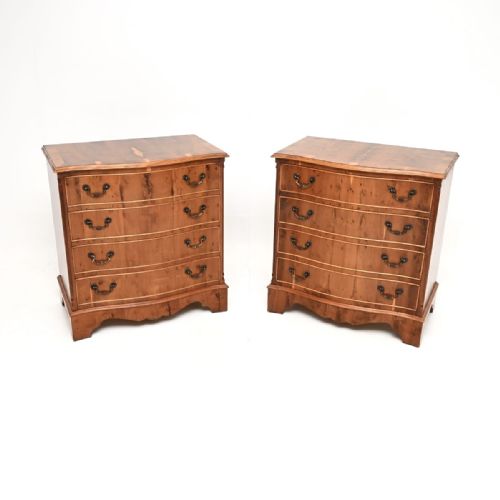
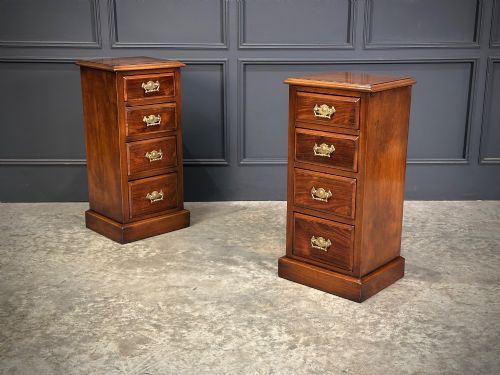
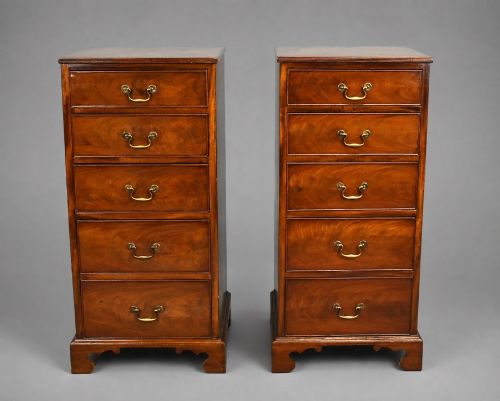
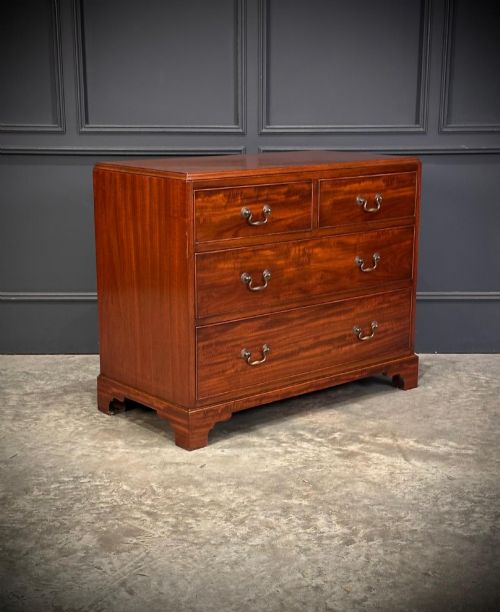
The selections you encounter most frequently on this page are mahogany and oak bedside chests featuring multiple small drawers, often arranged as matched pairs. Makers from the nineteenth and early twentieth centuries adapted larger furniture typologies into these smaller domestic scales to suit period sleeping quarters.
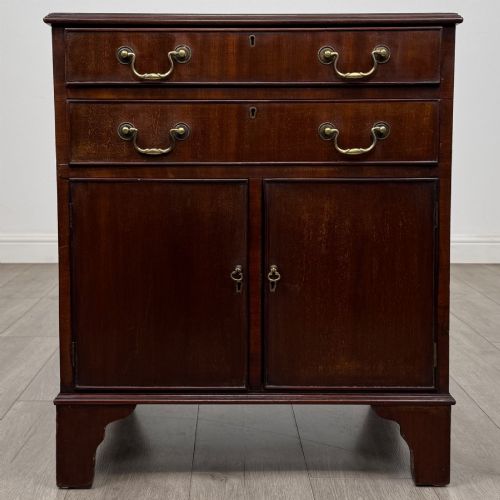
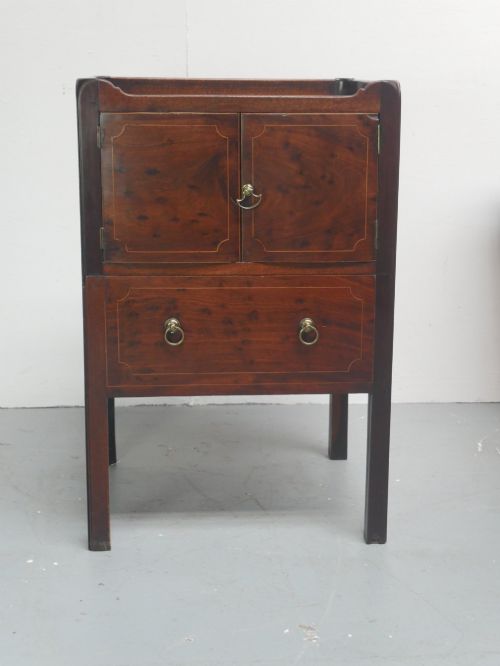
Alongside standard bedside chests, the inventory incorporates specialised forms such as wig stands, apothecary chests, and marble-topped commodes. These diverse pieces demonstrate how historical cabinet makers addressed domestic storage needs well before the standardisation of modern bedroom suites.
Materials and Construction
Cabinet makers relied predominantly on dense hardwoods such as mahogany, oak, walnut, and burr walnut, frequently pairing them with secondary timbers for internal drawer construction. Brass hardware, including handles and key escutcheons, provides functional contrast to the dark wood surfaces.
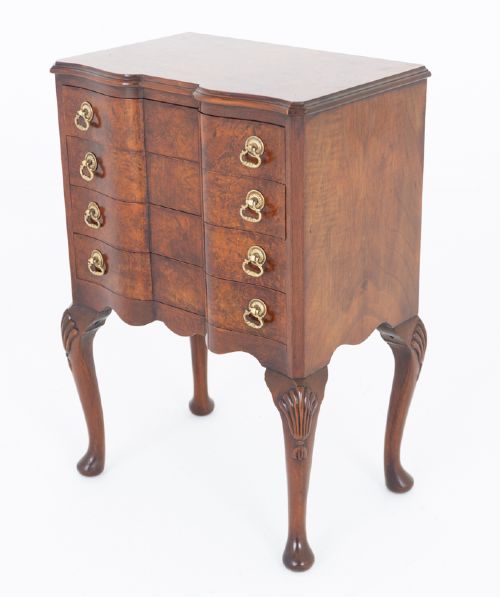
Surface finishes range from traditional wax treatments that highlight the grain to polished or painted treatments depending on the period. Burr walnut veneers and figured mahogany demonstrate precise cutting techniques designed to showcase decorative natural patterns across small drawer fronts and tabletops.
Listings feature items spanning the 18th century through to the 1930s, utilising mahogany, oak, walnut, brass, and leather.
The Measure of Craftsmanship
Quality in these pieces is dictated by the crispness of the joinery and the selection of timber veneers. Superior examples exhibit tightly fitted drawer joints, balanced grain patterns across matching pairs, and well-proportioned mouldings that remain faithful to their designated period style.
The integration of original brass fittings and the preservation of undisturbed patination elevate certain items above standard utilitarian production. Lesser examples may show heavy timber replacement or a lack of harmony in the scale of the hardware relative to the compact carcase.
Warings Liverpool
The Traditional Bedside Drawers Glossary
- Bedside chest
- A miniature chest of drawers scaled specifically for placement beside a bed. These units typically incorporate three or more working drawers within a compact footprint.
- Nightstand
- An alternative term for a small bedside table or chest designed to hold nighttime essentials. In historical contexts, these often mirror the prevailing stylistic traits of larger bedroom suites.
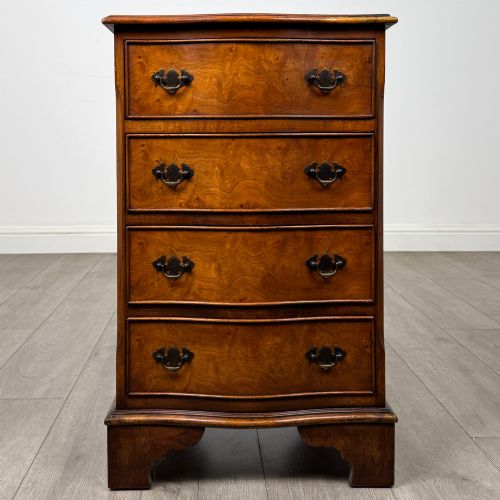
- Serpentine
- A furniture front characterised by a wavy or undulating line, curving outward at the centre and inward at the sides. This shape requires advanced woodworking skill to execute cleanly on small drawer fronts.
- Commode
- A low cabinet or chest of drawers, often featuring doors or multiple drawers. European examples frequently incorporate marble tops above wooden storage compartments.
- Escutcheon
- A protective plate surrounding a keyhole, usually fashioned from brass. These small hardware elements help date a piece based on their specific period profile and fixing method.
Traditional Bedside Drawers: Frequently Asked Questions
Are these drawers sold as pairs?
Many of the listed bedside chests and cabinets appear as matched pairs, though single tables also feature prominently in the selection. Buyers seeking symmetry for a double bed often focus specifically on these paired listings.
Matching pairs usually share identical timber grains, hardware styles, and overall dimensions, having originated from the same domestic setting or workshop production run.
What woods were used for these?
The primary timbers recorded across these pieces are mahogany, oak, walnut, burr walnut, fruitwood, and yew. Mahogany and oak appear most frequently in nineteenth-century and Georgian items.
Cabinet makers also utilised decorative veneers like burr walnut to create striking visual patterns on drawer fronts, occasionally complemented by brass handles and leather inserts.
How do I date a bedside chest?
Dating relies on observing construction methods, timber choices, and stylistic cues associated with periods such as the Georgian, Victorian, and Edwardian eras. Secondary woods inside the drawers and the style of brass hardware offer reliable chronological clues.
Proportions also shift over time, moving from the heavy timber construction of Victorian pieces to lighter Edwardian formats and 1930s revival styles.
What is the difference between a table and a chest?
Bedside tables generally offer an open surface with perhaps a single drawer or lower shelf, prioritizing a lighter visual weight. Bedside chests incorporate multiple stacked drawers designed for enclosed storage.
Both forms fulfill the same bedside role, but chests provide significantly more internal capacity for personal items.