


Bracket Foot Bedside Chests
Bracket foot bedside chests offer compact proportions and classic character, bringing historical utility and timber warmth beside the bed.
Bracket Foot Bedside Chests
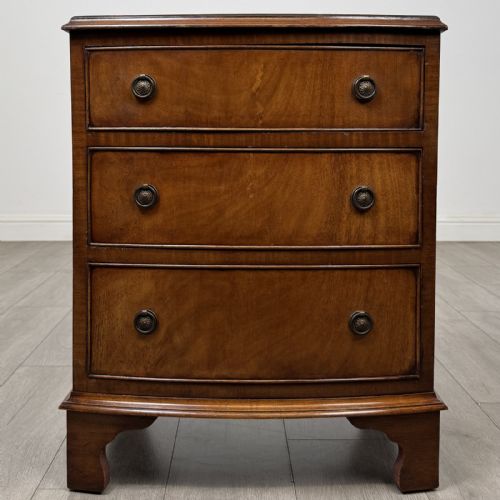
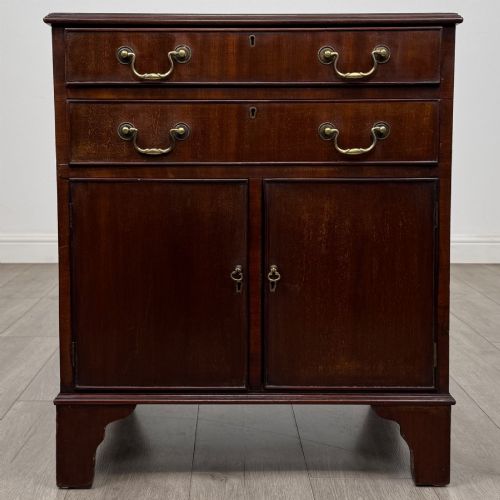
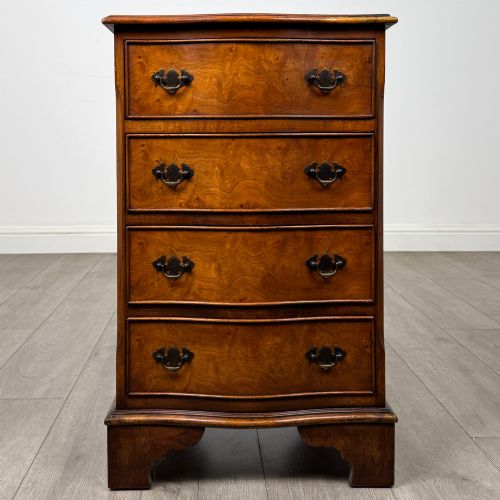
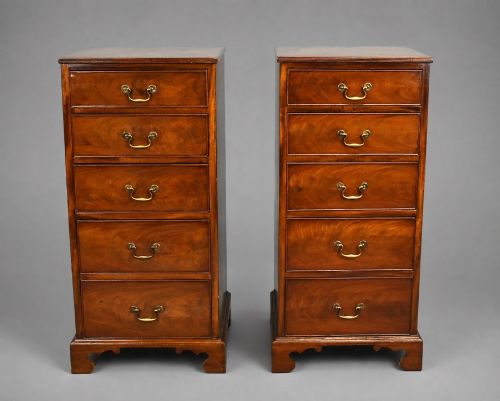
When you search for bracket foot bedside chests, you are looking at compact storage pieces raised on shaped bracket feet, typically designed for smaller rooms or bedside placement. The examples found here span several centuries, encompassing periods from the eighteenth century through to the twentieth century.
The forms vary across this selection, including small low chests of drawers, pairs of bedside cabinets, side cupboards, and commodes. You are most likely to meet mahogany and walnut pieces drawing upon Georgian and Victorian design idioms, alongside occasional oak and elm examples.
Makers and craftsmen of the eighteenth, nineteenth, and early twentieth centuries built these chests to serve domestic needs in bedrooms and parlours. Their modest scale makes them adaptable for modern homes while retaining genuine period presence.
Materials and Construction
Cabinet makers utilised dense hardwoods such as mahogany, oak, and walnut, often applying burr walnut veneer or flame mahogany to principal surfaces for visual depth. Timber selection dictated both the structural stability and the finished appearance of each chest.
Construction techniques relied on traditional joinery to form the carcase and drawers, complemented by brass hardware such as handles and escutcheons. Bracket feet were integrated directly into the base structure, supporting the weight of the chest while providing an elevated profile.
Listings feature periods from the eighteenth century to the twentieth century, constructed primarily in mahogany, oak, and walnut.
Judging Quality and Proportion
The distinction between ordinary and exceptional pieces rests in the quality of the timber figures, the sharpness of the bracket foot profiles, and the integrity of the original surfaces. Finer chests display carefully matched veneers and uncompromised proportions that maintain visual balance across small dimensions.
Secondary elements such as drawer linings, backboards, and brass fittings contribute significantly to a piece's standing. Honest patination and minimal structural intervention separate well-preserved examples from those with heavy restorations.
The Bracket Foot Bedside Chests Glossary
- Bracket foot
- A corner foot shaped like a bracket, commonly used on case furniture from the seventeenth century onwards. It lifts the carcase slightly off the floor while maintaining a stable, solid base.
- Brushing slide
- A pull-out shelf integrated into the upper section of a chest, historically used for folding clothes or writing notes. It slides flush into the cabinet when not in use.
- Serpentine
- A front profile that curves outward in the centre and inward at the sides. This contour requires precise woodworking skill to execute cleanly.
- Burr walnut
- Timber taken from a walnut tree outgrowth, featuring swirling, highly decorative grain patterns. It is typically sliced into veneers for fine cabinet work.
- Patina
- The surface sheen and colour developed by wood and metal over decades through age, handling, and polishing. It serves as an indicator of authenticity.
Bracket Foot Bedside Chests: Frequently Asked Questions
What are bracket foot bedside chests?
These pieces are small-scale storage chests raised on bracket feet, designed to fit beside a bed or within compact spaces. They combine utilitarian drawer or cupboard space with traditional cabinet making styles.
Originating across multiple centuries, they appear in woods like mahogany, oak, and walnut, reflecting the domestic requirements of their respective eras.
How were small bedside chests used historically?
Historically, small chests and cupboards served to keep night-time essentials, personal items, or chamber equipment close at hand in bedrooms. Some variants included brushing slides for auxiliary workspace.
Their modest dimensions allowed them to occupy tight corners or bedside positions where full-sized wardrobes and tallboys would not fit.
How do I date a mahogany chest?
Dating relies on examining the timber grain, construction methods of the drawers, handle types, and overall stylistic cues. Eighteenth-century pieces often show hand-cut dovetails and native timber usage.
Later Victorian and Edwardian interpretations adopt machine assistance while mimicking earlier Georgian proportions, making detail inspection essential.
Are these chests suitable for modern bedrooms?
Their compact footprints make them practical as bedside tables or small accent units in contemporary rooms. They offer enclosed storage for modern accessories while adding historical character.
Placing them in a modern setting requires simply matching the wood tone and scale to your existing room layout.