
Traditional Settee
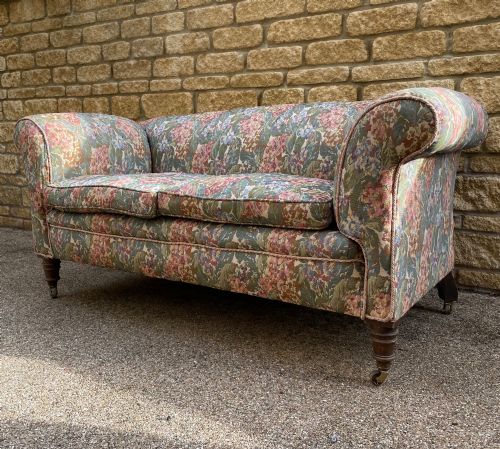
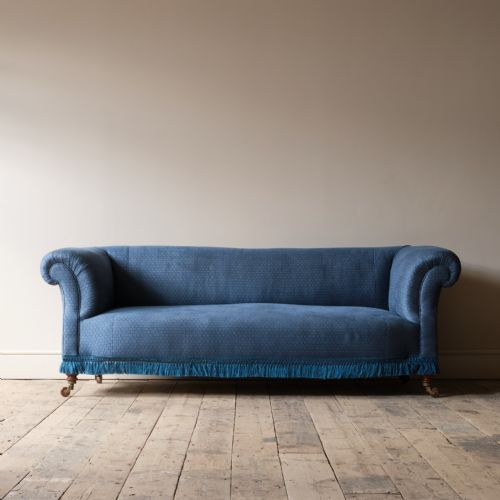
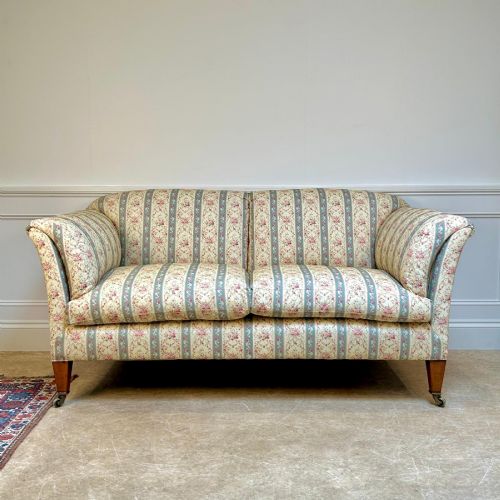
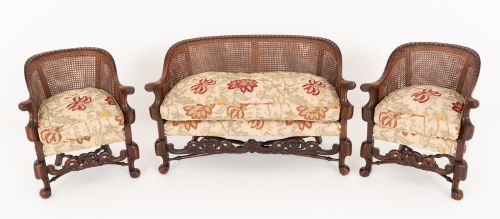
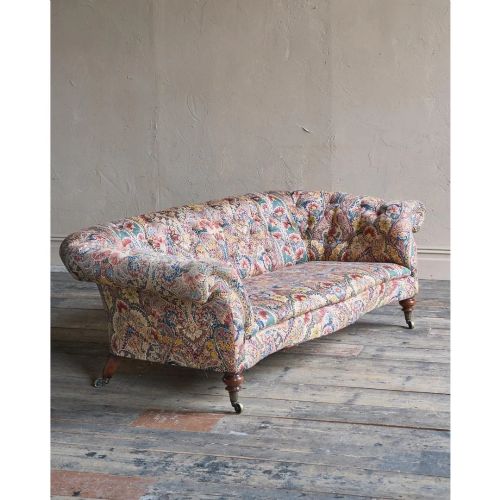
A traditional antique settee brings enduring seating and structural character to a room, spanning 19th-century Chesterfields and Edwardian camel backs.
Traditional Settee
When you search for a traditional antique settee, you are looking at upholstered seating spanning the nineteenth and early twentieth centuries. The selection here leans heavily towards Victorian and Edwardian examples, alongside Georgian styles and later revivals.
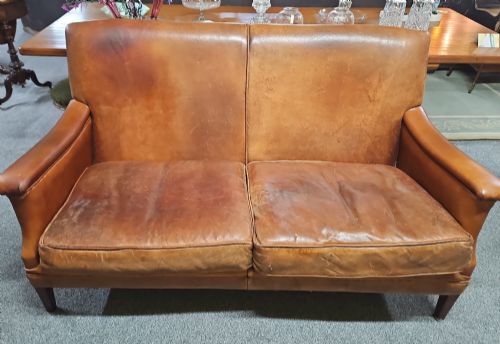
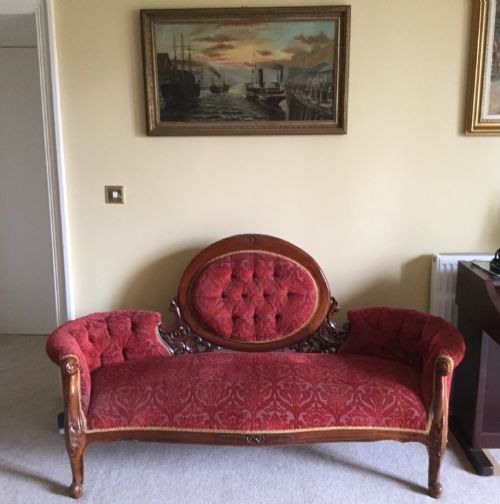
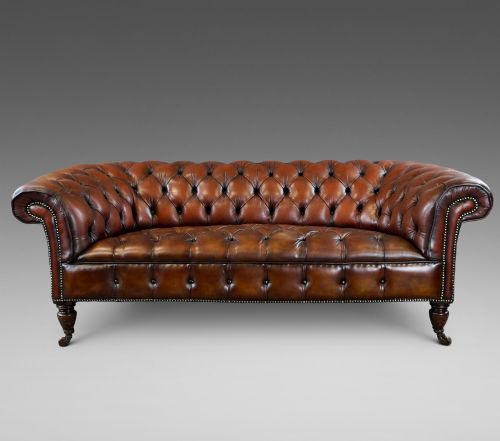
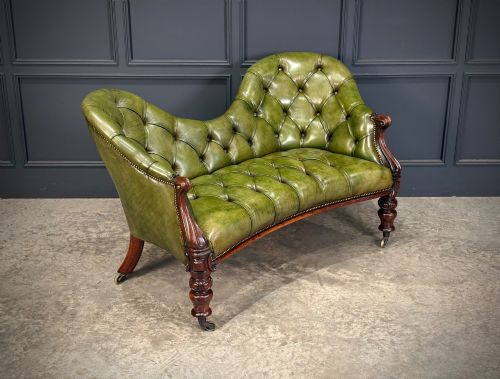
You will encounter distinct forms ranging from buttoned leather Chesterfields and drop-arm settees to deep-seated country house sofas and carved mahogany scroll-end frames. These pieces originate from periods including the Victorian era, William IV, and the early twentieth century.
Makers such as Howard and Sons and Hampton and Sons appear alongside unbranded vernacular pieces. Buyers select these settees for their deep comfort, generous proportions, and the distinct presence they lend to a drawing room or hallway.
Materials and Construction
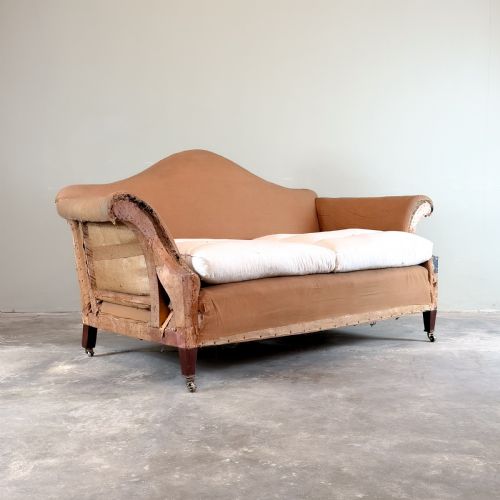
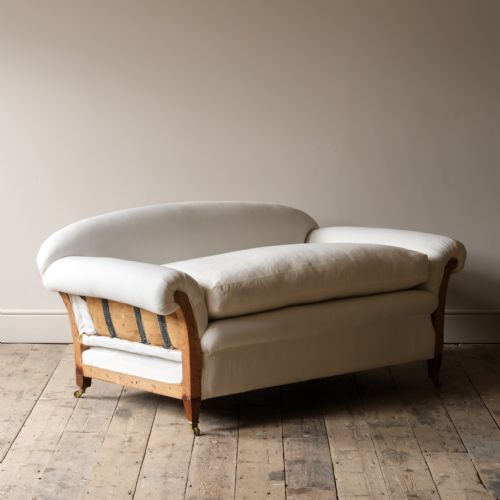
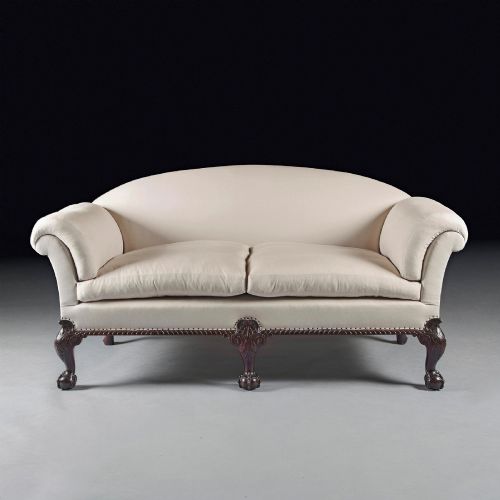
Frames rely on solid timbers such as mahogany, walnut, and general hardwoods to provide a robust structural skeleton. Carved details, ball and claw feet, and fluted elements display the hand of skilled cabinet makers.
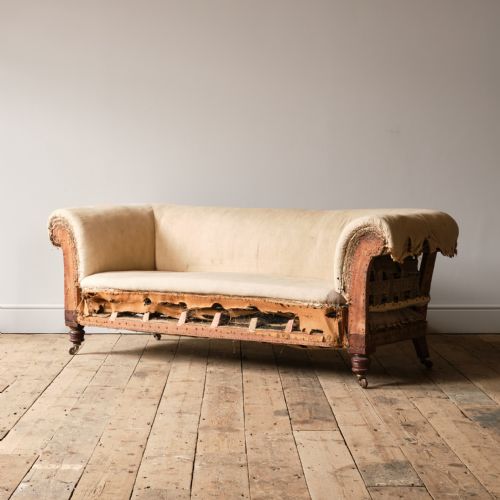
Brass castors and detailing frequently finish the legs, allowing these heavy timber and sprung frames to be moved across carpets and floorboards without damaging the wood.
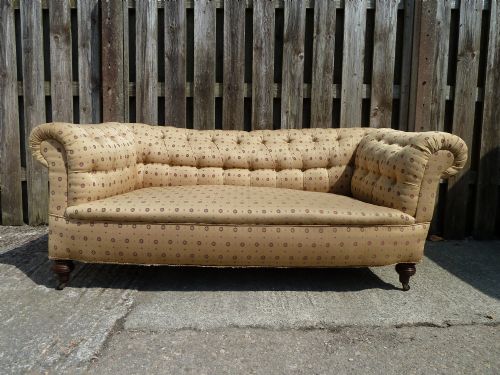
Listings feature woods like mahogany and walnut alongside upholstery in leather, hessian, and fabric across Victorian and Edwardian periods.
Assessing Quality and Build
The distinction between standard examples and the finest pieces often rests in the integrity of the underlying timber frame and the ambition of the carving. Heavier mahogany or walnut frames with crisp, hand-carved details command greater respect than simpler softwood or altered structures.
Upholstery standards also dictate value, particularly where makers utilised traditional springing, horsehair, and quality calico or leather linings. Pieces bearing signatures or stamps from esteemed workshops demonstrate superior workshop provenance.
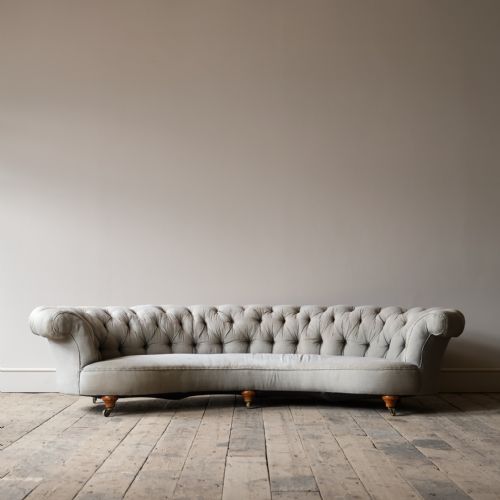
Proportion and comfort remain central to a settee's standing, with well-balanced serpentine or camel backs offering a more harmonious visual silhouette than awkward or heavy-handed reproductions.
Howard and Sons·Hampton and Sons
The Traditional Settee Glossary
- Chesterfield
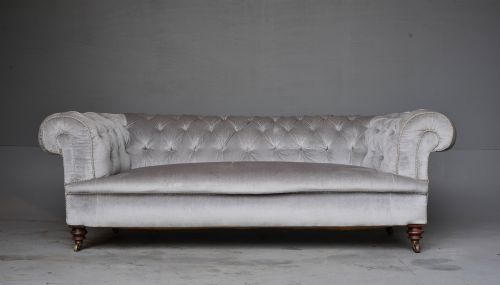
- A large upholstered sofa characterised by equal height arms and back, traditionally featuring deep button tufting. This style remains a cornerstone of British seating history.
- Bergere
- An enclosed armchair or sofa with cane or wicker work sides and back panels. These frames often incorporate exposed wooden show-wood borders.
- Drop-arm
- A movable or hinged sofa arm that can be lowered horizontally to create a daybed or day-lounge. This mechanism offers versatile seating arrangements.
- Camel back
- A sofa back featuring a graceful, continuous convex curve that resembles a camel's hump. It is frequently seen on Georgian and Edwardian upholstered frames.
- Scroll-end
- A sofa or settee termination where the timber arm rolls outwards in a tight or sweeping scroll. This decorative terminal is typical of William IV and Victorian cabinet making.
Traditional Settee: Frequently Asked Questions
How do I identify a Victorian Chesterfield?
Look for a low seat height, deep buttoned leather or fabric upholstery, and turned wooden legs often fitted with brass castors. The internal frame should demonstrate heavy timber construction.
Victorian examples frequently display hand-stitched horsehair stuffing and robust webbing rather than modern foam fillings.
What is a drop-arm settee used for?
A drop-arm settee allows one end of the sofa to be lowered flat, transforming the seating into a surface suitable for resting or reading. This mechanism provided flexibility in nineteenth-century drawing rooms.
Mechanisms vary from simple ratchets to hinged wooden brackets concealed beneath the upholstery fabric.
Are these settees comfortable for daily use?
Many antique settees feature deep seats and traditional sprung bases designed for genuine lounging. Country house and Chesterfield models are specifically built for sustained comfort.
Upholstery can be re-sprung or re-webbed by traditional restorers without compromising the historic timber frame underneath.
How do I distinguish Edwardian from Victorian styles?
Edwardian sofas often display lighter framing, inlaid mahogany details, and influences from earlier Georgian periods. They tend to feel less heavy and austere than their Victorian predecessors.
Victorian pieces lean towards heavier proportions, darker woods, and intense buttoning or velvet brocades.