


Traditional Animal Landscape Art
Traditional animal landscape art brings the pastoral life of the nineteenth century into the room through oil paintings of livestock, working dogs and farmyard scenes.
Traditional Animal Landscape Art
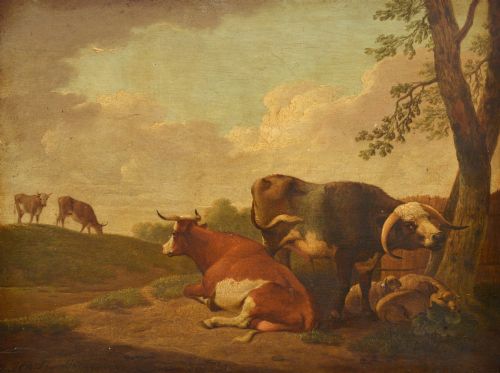
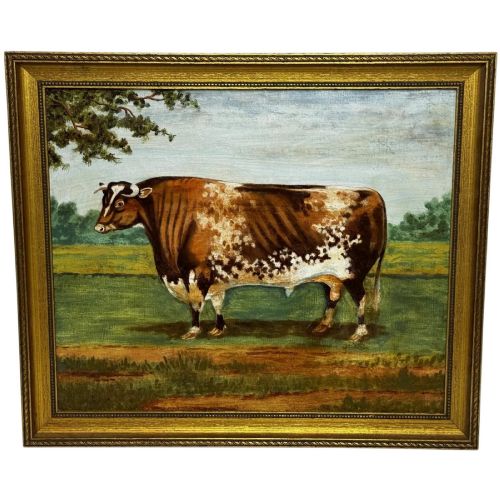
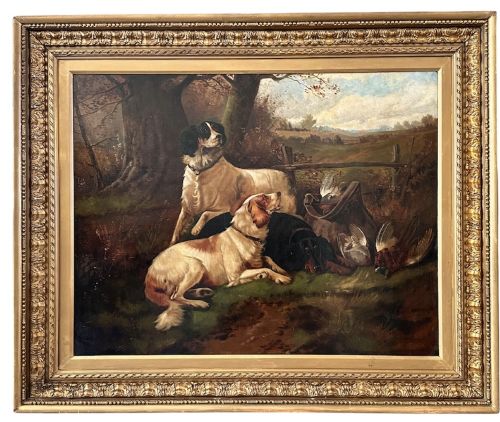
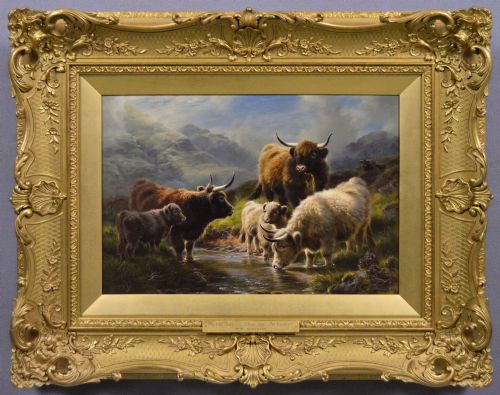
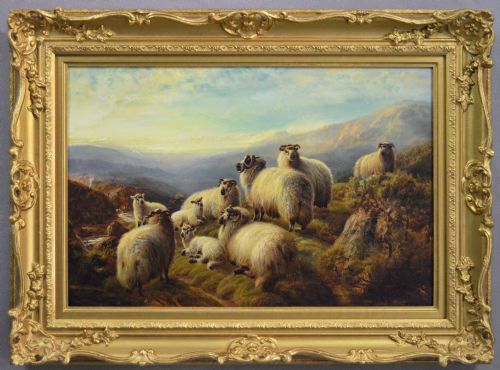
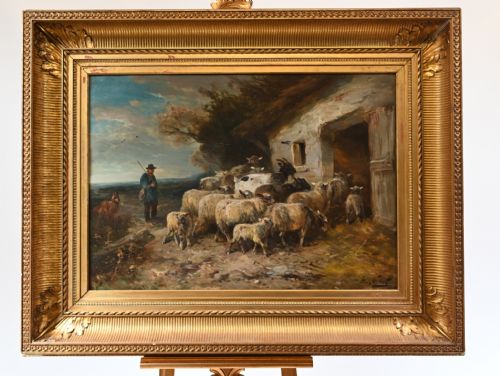
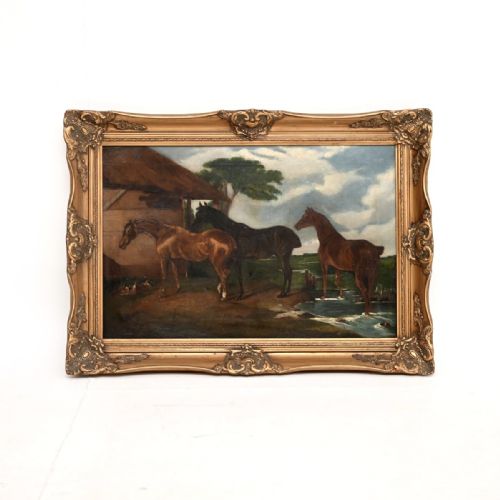
Traditional animal landscape art depicts cattle, sheep, horses and dogs integrated into rural or highland scenery. The versions met on this page date predominantly from the nineteenth century and the Victorian era, spanning pastoral settings, farmyards and winter landscapes.
Subjects range from prized shorthorn bulls and highland cattle by lochs to hunting hounds, sporting dogs and poultry by rivers. Painters placed domestic animals and wildlife into carefully composed British, Scottish, Belgian and Dutch countryside views.
Materials and construction
These works are executed in oil paint on canvas, utilising the rich texture of the medium to render animal coats, feathers and landscape lighting. The physical support relies on wooden stretchers held within period frames constructed from wood, gesso and gilded wood.
Artists built up the compositions through layered oil techniques, applying pigments to capture the natural details of livestock, foliage and water. The framing often incorporates gesso ornamentation finished in giltwood to complement the oil paintings.
Listings feature oil paintings on canvas executed during the nineteenth century, Victorian era and early twentieth century.
Distinctions in quality
Quality rests upon the anatomical precision of the animals, the handling of light and atmosphere across the landscape, and the reputation of the artist. Works by recognised Victorian and continental painters demonstrate superior brushwork in rendering textures like wool, fur and plumage.
The integration between the animal subject and the surrounding countryside defines the standard of the piece. Stronger examples balance the portrait of the livestock or hound with a coherent, luminous rural or river backdrop.
Hendrik Willem Schweickhardt·John Sargent Noble·William Watson Jnr·Robert Watson·Henry Schouten·Henry Robinson Hall·William Henry Mander·Thomas Sidney Cooper·John Frederick Herring Jnr·William Barraud·Samuel Joseph Clark·George Armfield·Eugene Joseph Verboeckhoven·Percival Glenfern·John Frederick Herring·Fannie Moody·Pierre Emmanuel Dielmans·Charles Jones·Claude Cardon·John W Morris·Constant Ludovic Artz·Henry Brittan Willis·J L VAN Leemputten·Henry Cheadle·William Sidney Cooper
The Traditional Animal Landscape Art Glossary
- Gesso
- A plaster-like mixture applied to wooden frames as a base for gilding. It provides a smooth surface that accepts gold leaf or paint.
- Giltwood
- Wood that has been carved and covered with a thin layer of gold leaf or metal powder. It frames many nineteenth-century oil paintings.
- Pastoral
- A genre of art depicting country life, specifically involving shepherds, flocks and tranquil rural scenery. It emphasises an idealized view of agricultural existence.
- Canvas
- A heavy woven fabric used as a surface for oil painting. It is stretched tightly over a wooden frame before pigment is applied.
Traditional Animal Landscape Art: Frequently Asked Questions
What periods do these paintings date from?
The available works span the nineteenth century, with strong representation from the Victorian era and the decades around eighteen-eighty to nineteen-twenty.
Dates on these canvases stretch from the late eighteenth century through to the early twentieth century, reflecting academic and realist traditions.
How were these animal paintings used?
Landowners, farmers and urban collectors hung these oil paintings in townhouses and country estates to celebrate prize livestock, working dogs and rural property.
They served as both decorative furnishings and status symbols that recorded agricultural achievements and sporting pursuits.
How do I live with an oil painting on canvas?
Keep the canvas away from direct sunlight and damp environments to protect the oil paint and the underlying wooden stretcher from warping or fading.
Display the artwork on a stable interior wall and dust the giltwood frame gently with a dry, soft cloth.
How do I tell different nineteenth-century schools apart?
British and Scottish works often feature highland cattle, sporting dogs or farmyard scenes with specific regional terrain and livestock breeds.
Continental European paintings from Belgian and Dutch artists frequently emphasise domestic animals by waterways, utilising distinct palettes and lighting conventions.