


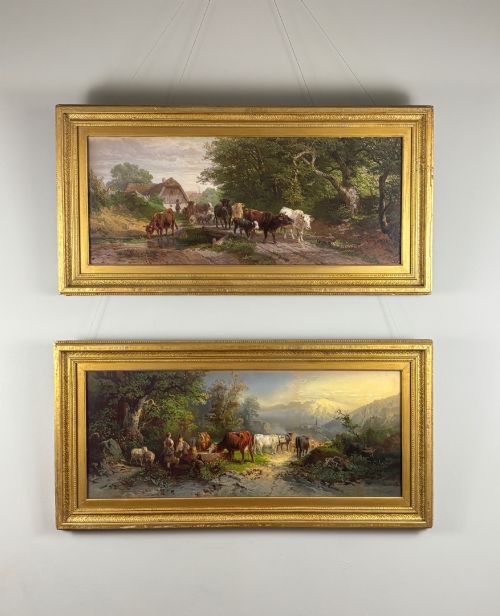


Framed Cattle Canvas Art
Framed cattle canvas art brings the pastoral life of the nineteenth and early twentieth centuries directly into a room through oil and canvas.
Framed Cattle Canvas Art
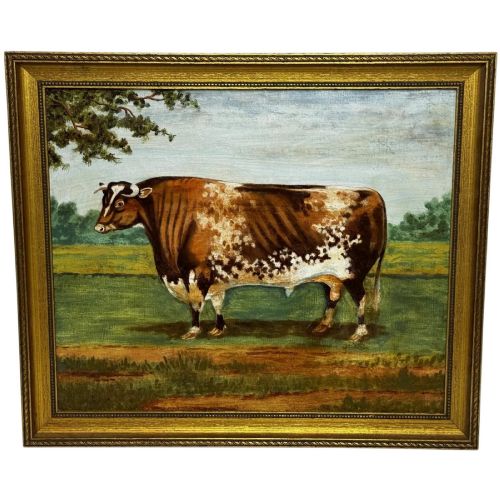
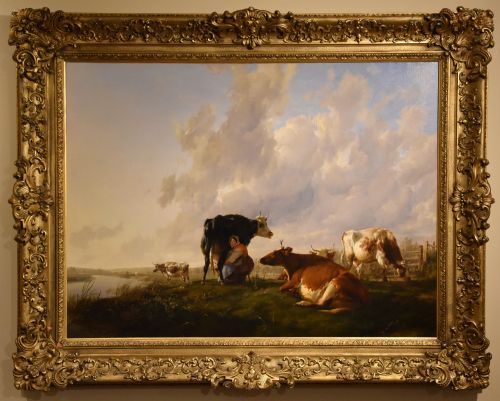
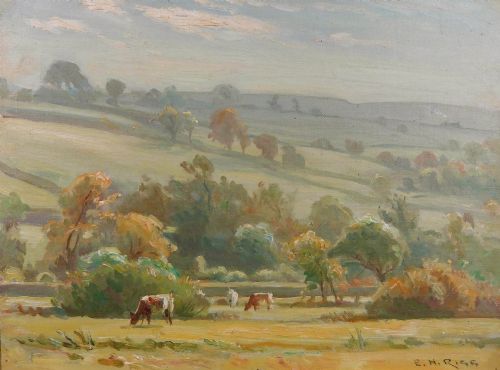
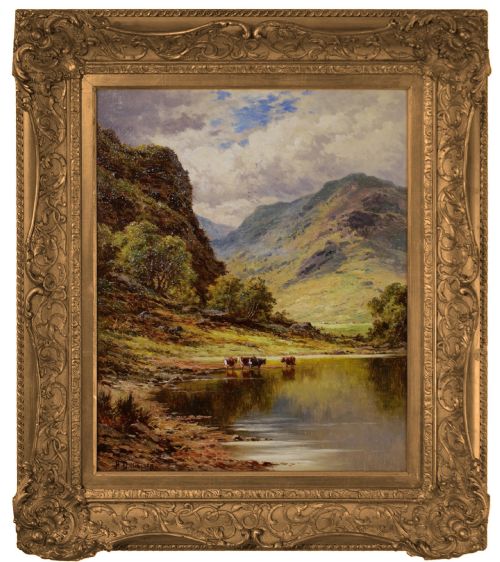
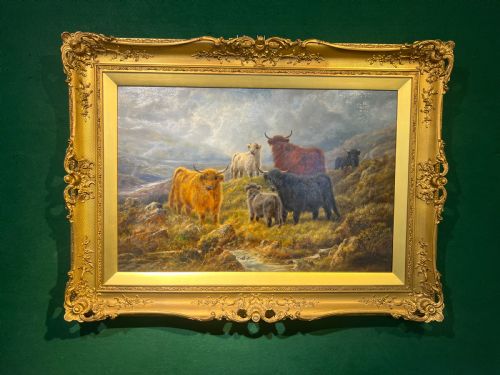
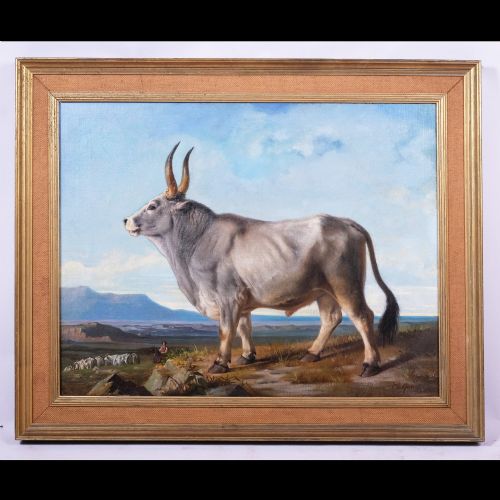
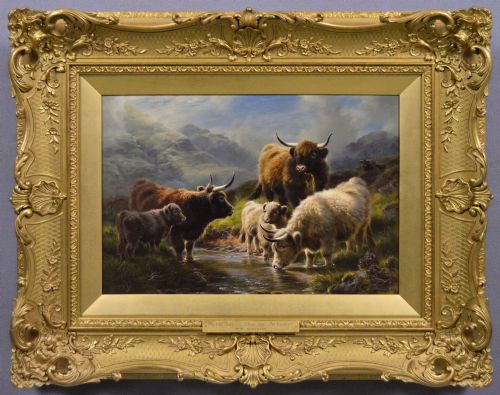
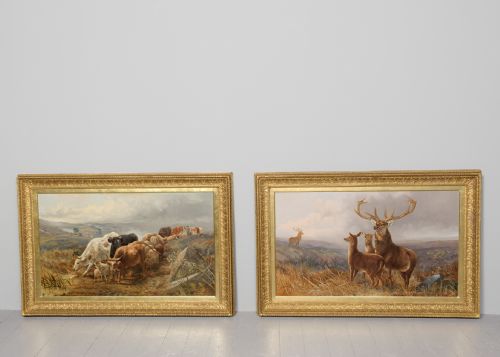
When you search for framed cattle canvas art, you are looking at oil paintings on canvas that capture rural scenes, farmyards, and Highland landscapes populated by cattle, bulls, and cows. These works document a agrarian past through the eyes of Victorian and Edwardian painters who recorded the British and European countryside.
The version you are most likely to meet on this page is a nineteenth-century or early twentieth-century oil painting, frequently housed in its original gesso and giltwood frame. These pieces range from intimate pastoral studies of shorthorn bulls to expansive Scottish loch scenes featuring Highland cattle.
Makers and artists from the British School dominate these selections, alongside continental European painters who shared a fascination with realist animal portraiture. The subjects span tranquil riverbanks, milking scenes, and dramatic mountain weather.
Materials and construction
These works are painted in oil paint on woven canvas substrates, utilising the rich texture of the medium to render the dense coats of cattle and the atmospheric light of rural landscapes. The pigments were layered to create depth in skies, water, and animal forms.
Frames play a crucial role in the survival of these canvases, typically constructed from wood finished with moulded gesso and gilt layers. Many retain their original period framing, which protects the edges of the canvas and completes the aesthetic of the nineteenth-century school.
Listings feature works spanning the nineteenth century through the Edwardian era, rendered in oil paint on canvas and housed in wood and gesso frames.
Judging quality in pastoral oils
The distinction between ordinary and exceptional works rests on the anatomical accuracy of the animals and the handling of light across the landscape. Master painters captured the bone structure and weight of a shorthorn bull or Highland cow with precision, whereas weaker hands produced stiff or generic silhouettes.
Composition and atmospheric depth also set the better pieces apart, separating routine commercial production from accomplished studio output. A strong work draws the eye through a considered balance between the livestock, the human figures, and the surrounding terrain.
Thomas Sidney Cooper·Henry Hillier Parker·Robert Watson·Sidney Richard Percy·Eugene Verboeckhoven
The Framed Cattle Canvas Art Glossary
- Giltwood
- Wood carved and covered with a thin layer of gold leaf or gilt. This material formed the standard luxurious framing for nineteenth-century oil paintings.
- Gesso
- A paint mixture consisting of a binder mixed with chalk, gypsum, or pigment. It was applied to wooden frames and moulded into decorative reliefs before gilding.
- Pastoral scene
- A genre of art depicting the rural life of shepherds, drovers, and farm animals. These compositions romanticised the peace and labour of the countryside.
- British School
- A loose grouping of artists working in Britain from the seventeenth century onwards. It includes the prominent landscape and animal painters of the Victorian era.
- Stretcher
- The wooden framework that holds a canvas taut. Historic stretchers often bear artist inscriptions, titles, or gallery stamps on the reverse.
Framed Cattle Canvas Art: Frequently Asked Questions
What is framed cattle canvas art?
These pieces are original nineteenth and early twentieth-century oil paintings on canvas depicting cows, bulls, and rural landscapes.
They serve as historical records of agricultural life and animal husbandry during the Victorian and Edwardian periods.
How were these paintings displayed originally?
Victorian and Edwardian households hung these rural scenes in substantial giltwood and gesso frames to project status and a love of nature.
The heavy frames were designed to isolate the canvas from the wall and catch the flickering light of gaslamps or daylight.
How do I care for an antique oil painting?
Keep the canvas away from direct sunlight, extreme temperature shifts, and high humidity to prevent the oil paint from cracking or warping.
Dust the giltwood frame gently with a dry, soft brush and avoid using chemical cleaning agents on the painted surface.
How can I tell the period of a canvas?
Look to the stretcher construction, the style of the giltwood frame, and any inscriptions or signatures left by the artist.
Victorian and Edwardian works often feature specific canvas stampings from period art suppliers and distinct realist brushwork.