




Tortoiseshell Inlaid Cabinet
A tortoiseshell inlaid cabinet brings dramatic contrast and intricate metallic sheen to a room, combining dark woods with luminous tortoiseshell and brass inlay.
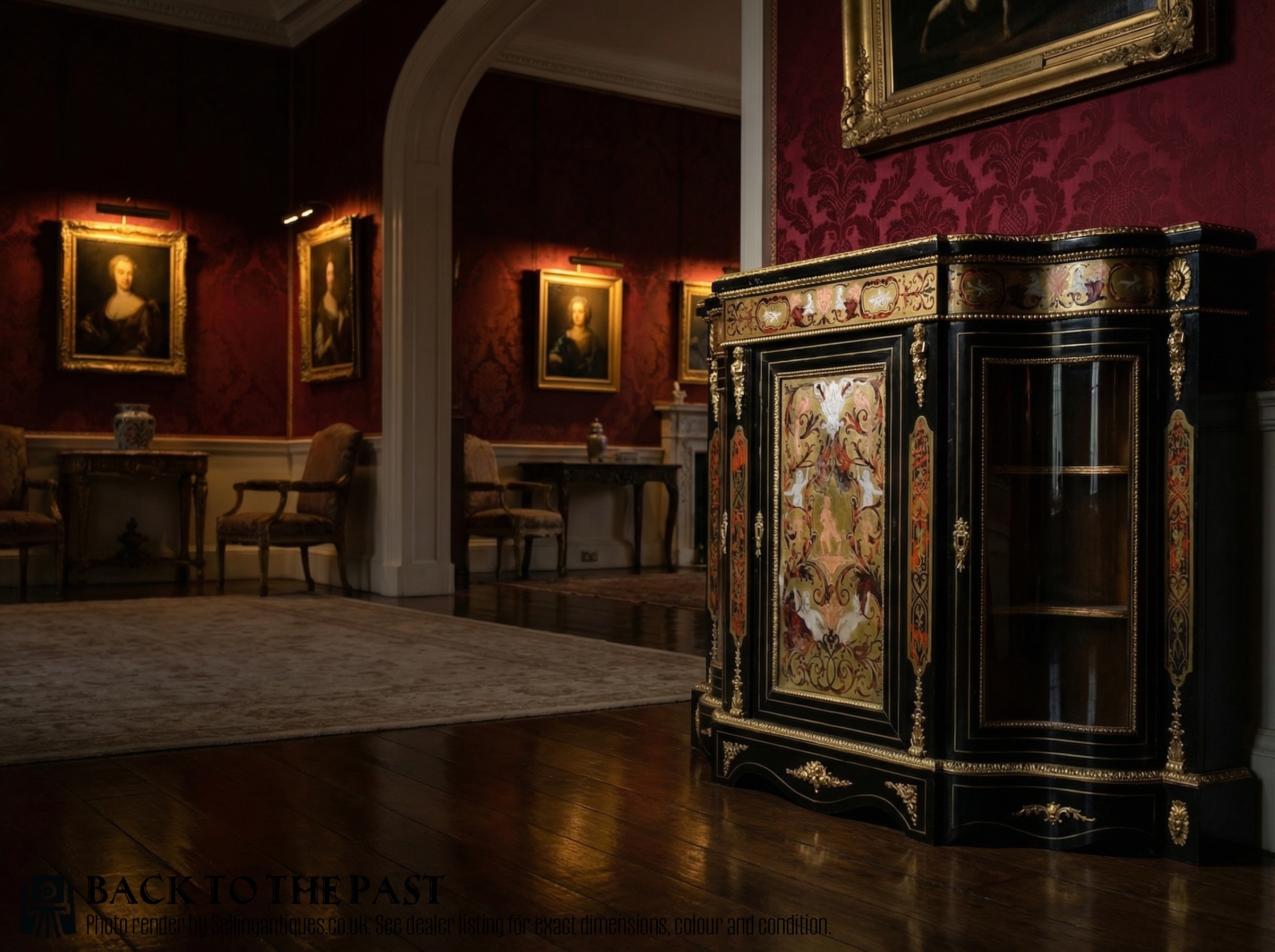
Tortoiseshell Inlaid Cabinet
When searching for a tortoiseshell inlaid cabinet, buyers encounter pieces spanning from the seventeenth century up to the nineteenth century. These forms include side cabinets, credenzas, pier cabinets, and cabinets on stands designed to display or store treasured objects.
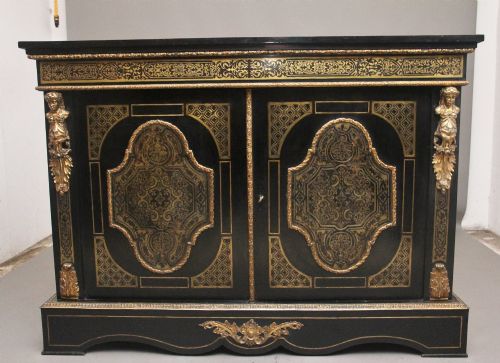
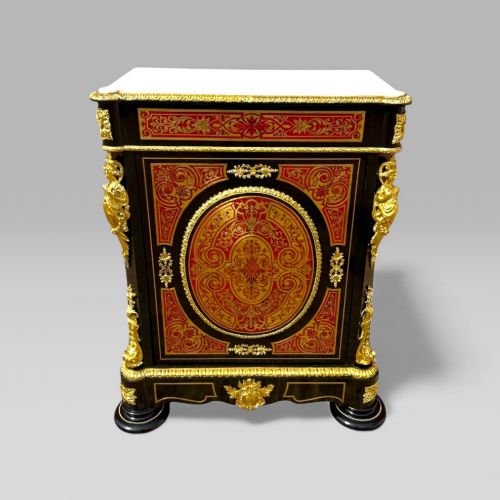
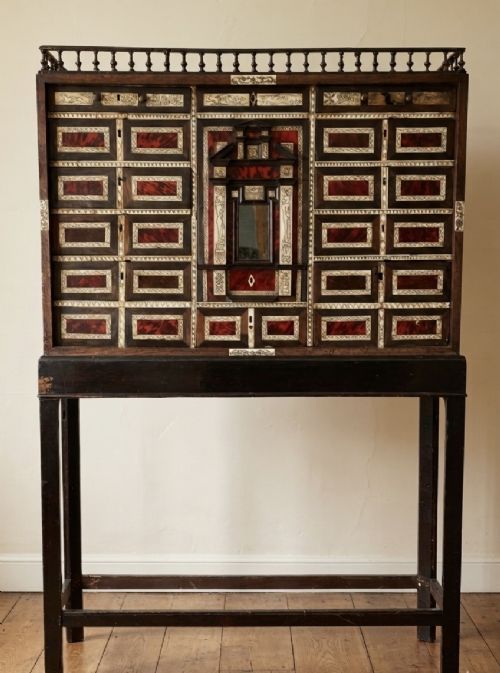
The nineteenth-century French Napoleon III and Victorian revivals dominate the current selection, often incorporating intricate boulle work alongside ebonised wood. Earlier seventeenth-century examples from Flanders, Italy, and Portugal appear less frequently, utilising ebony and bone alongside tortoiseshell in table cabinet formats.
Buyers will find a diverse range of functional formats on this page, from large breakfront sideboards and display cabinets to compact writing desks and bibliotheques. Each piece showcases the enduring appeal of contrasting dark carcases highlighted by metallic and tortoiseshell patterns.
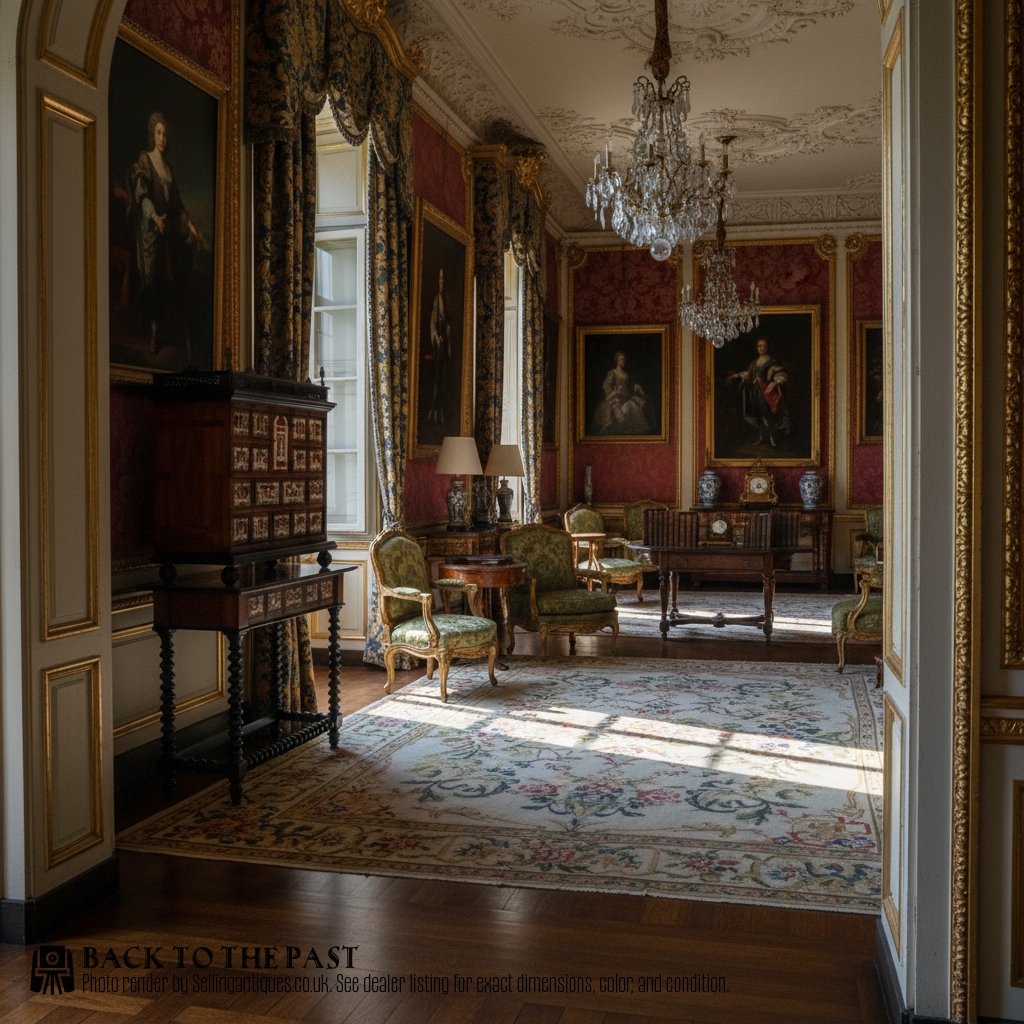
Materials and construction techniques
The construction relies heavily on ebonised wood, ebony, and rosewood as dark foundations that accentuate the warm, translucent amber tones of tortoiseshell. Artisans embed brass and gilt bronze, frequently styled as boulle marquetry, into the wooden carcase to create intricate floral or geometric motifs.
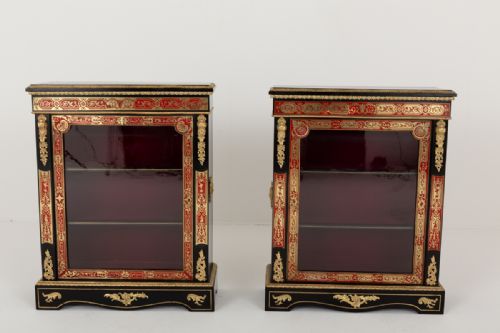
Many examples feature applied ormolu mounts that frame doors, corners, and panels, adding structural definition and sculptural weight. Marble tops frequently complete the upper surface of nineteenth-century pier cabinets and credenzas, providing a contrasting cool stone texture.
Bone and ivory appear in specific seventeenth-century pieces, providing sharp white linear details against dark ebony and tortoiseshell grounds. Joinery techniques connect these dense tropical hardwoods with precise inlay channels cut for the delicate metal and shell veneers.
Listings span from the seventeenth century through to the Victorian era, with nineteenth-century French Napoleon III pieces forming the majority.
Factors separating cabinet grades
Quality rests upon the precision of the marquetry cutter and the complexity of the brass and tortoiseshell integration. Crispness in the engraved lines of the metal inlay and the depth of the shell figure distinguish finer workshops from standard production.
The richness of the surrounding mounts and the selection of secondary timbers indicate the original investment in a piece. Heavy, finely chased ormolu mounts and substantial marble tops elevate the architectural presence of nineteenth-century side cabinets.
The integrity of the underlying ebonised carcase and the stability of the veneered surfaces dictate the longevity of the cabinet. Pieces retaining balanced proportions and harmonious panel compositions demonstrate superior design execution.
The Tortoiseshell Inlaid Cabinet Glossary
- Boulle
- A method of marquetry using brass and tortoiseshell cut together in matching countersunk patterns. This technique is named after the French cabinetmaker André-Charles Boulle.
- Ebonised
- Wood treated with a dark stain or finish to imitate ebony. This dark finish provides a high-contrast background for tortoiseshell and brass inlay.
- Ormolu
- Gilded bronze used for decorative mounts and feet on furniture. It adds metallic highlights to the edges and corners of cabinets.
- Pier cabinet
- A tall, narrow cabinet designed to fit against the wall space between windows. These pieces often feature glass doors for display.
- Credenza
- A low-profile side cabinet featuring multiple doors used for storage and display. They frequently incorporate serpentine fronts and marble surfaces.
Tortoiseshell Inlaid Cabinet: Frequently Asked Questions
What is boulle work?
Boulle work is a decorative marquetry technique where brass and tortoiseshell are cut simultaneously, creating two matching reverse patterns.
Artisans then apply these contrasting panels to the wooden carcase of cabinets and desks.
How do seventeenth-century cabinets differ?
Seventeenth-century pieces are typically smaller table cabinets originating from centres like Antwerp, Italy, or Portugal.
They frequently combine ebony, bone, and ivory with tortoiseshell in architectural drawer configurations rather than large freestanding formats.
Where should I place a pier cabinet?
Pier cabinets fit naturally against narrow wall spaces, particularly between tall windows in principal reception rooms.
Their shallow depth makes them suitable for displaying collections without dominating the floor area.
How do I identify Napoleon III styles?
Napoleon III pieces reflect a nineteenth-century revival of seventeenth-century aesthetics, notably Louis XIV and boulle designs.
They combine ebonised frames with elaborate brass inlay, tortoiseshell, and cast ormolu mounts.