



Topographical Landscape Painting
Topographical landscape painting captures specific places with documentary precision, offering a direct window into past towns, rivers, and architecture.
Topographical Landscape Painting
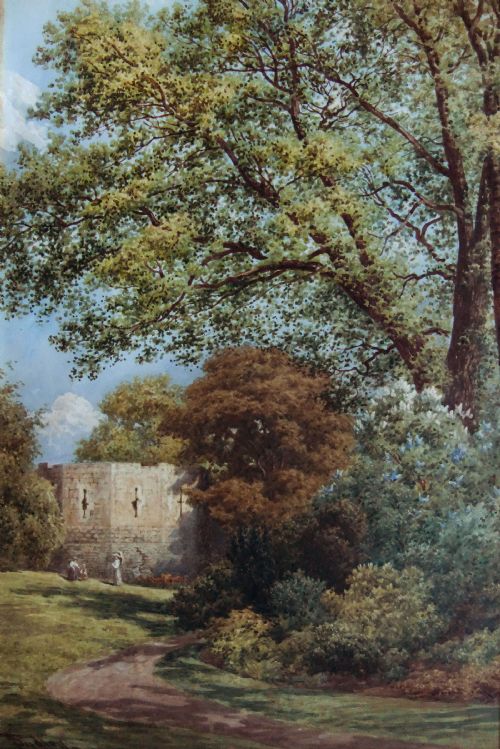
Topographical landscape painting depicts recognisable real-world locations, ranging from Welsh mountain passes and Yorkshire towns to Venetian palazzos and London bridges. These works serve as visual records of specific sites, often commissioned to document particular buildings, estates, or famous views.
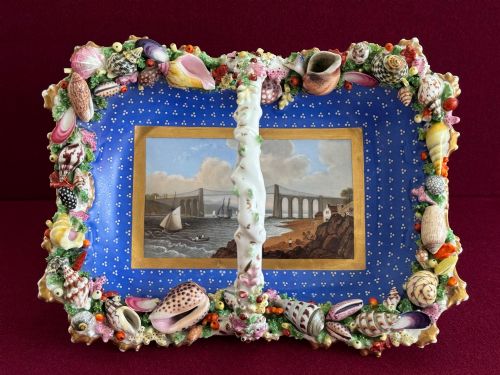
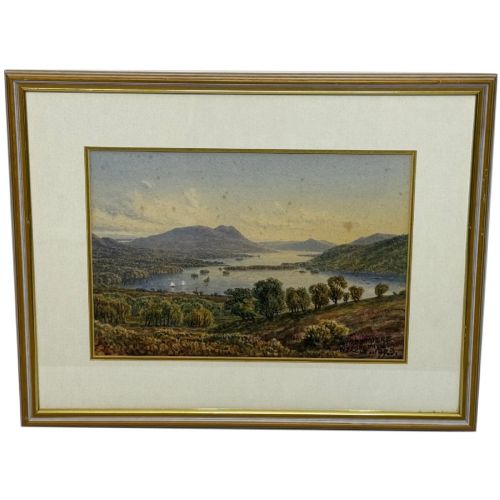
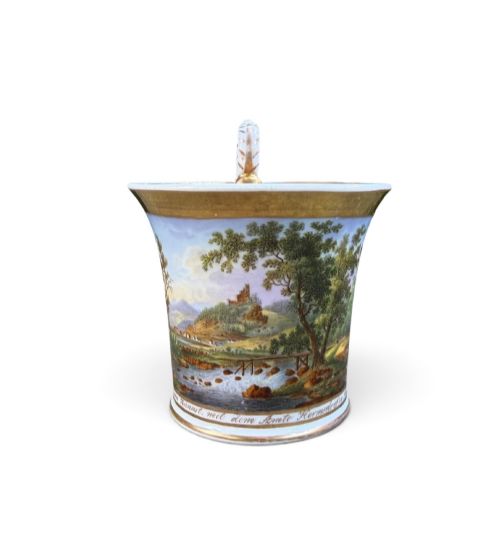
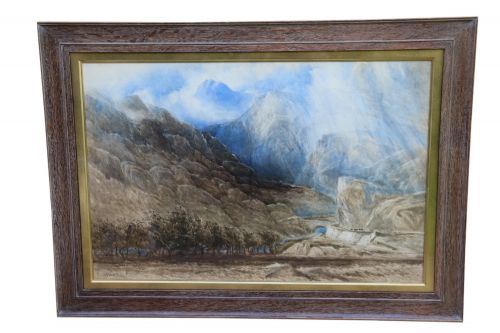
On this page, watercolours on paper predominate, supplemented by oils on canvas, oils on board, and hand-painted porcelain such as cabinet cups and vases. Artists applied these mediums to capture accurate topographical details of British and international landmarks across the eighteenth, nineteenth, and twentieth centuries.
Materials and Techniques
Watercolour pigment on paper constitutes the primary technique for these topographical views, allowing artists to record fine architectural lines and subtle atmospheric conditions on location. Watercolour pigment was frequently applied to board or heavy paper stock to create portable, highly detailed finished works.
Oil on canvas and oil on board provide richer, heavier textures for larger topographical scenes, often framed in gilt wood and protected under glass. Porcelain manufacturers also utilised these precise landscape scenes to hand-paint decorative wares like Worcester vases and Berlin cabinet cups.
Materials utilised across the collection include paper, watercolour pigment, oil, canvas, wood, glass, gilt, and porcelain.
Judging Quality and Execution
The distinction between standard topographical work and superior quality lies in the draughtsmanship and the artist's ability to render perspective and architectural proportion accurately. Works by accomplished painters demonstrate confident brushwork and precise handling of light that bring a specific townscape or castle to life.
Henry Martin Pope·Thomas Cooper Moore·A. G. Hayward·H.E. Tidmarsh·Joseph Farrington·Flight Barr and Barr·Amos Green·Tom Dudley·Jane Vivian·Claude Muncaster·William A. Macdonald·George De Paris·Herbert John Finn·J.D. Walker·Joseph William Carey·William Marlow·T Fairfax
The Topographical Landscape Painting Glossary
- Watercolour
- A painting method in which the pigments are suspended in a water-based solution. Artists use translucent washes on paper to build up light and shade.
- Cabinet piece
- A small, highly finished work of art intended for display in a cabinet or small room rather than on a large wall. Porcelain cups and vases often fall into this category.
- Gilt
- A thin layer of gold applied to wood framing or porcelain surfaces to provide a decorative border. This finish enhances the presentation of antique watercolours and oil paintings.
Topographical Landscape Painting: Frequently Asked Questions
What is a topographical landscape painting?
A topographical landscape painting is an artwork that depicts a real, identifiable place with a focus on accurate geographical and architectural details. These pieces function as historic visual documents of towns, rivers, and buildings.
Artists ranging from Georgian folk painters to twentieth-century watercolourists produced these views to record specific locations across Britain and Europe.
How do I date a topographical painting?
Dating these works involves examining the paper type, framing style, costume of any figures in the foreground, and the architectural state of the buildings shown. Signed pieces often correspond to known active dates of the artist.
Many listings provide specific period attributions, ranging from eighteenth-century naive works to Edwardian and mid-twentieth-century watercolours.
Were these paintings made on location?
Many artists created initial sketches and watercolours outdoors on location to capture the exact proportions of a landscape or structure. They often worked these studies into finished watercolours or oil paintings back in the studio.
The inclusion of accurate topographical landmarks demonstrates firsthand observation of the site.
How should I frame and display watercolours?
Watercolours require conservation framing behind glass with acid-free mounts to protect the paper and pigment from ultraviolet light damage and humidity. Direct sunlight causes fading in antique watercolours over time.
Displaying them on interior walls away from direct heat sources helps preserve the integrity of the paper and any gilt framing.