


Green Field Landscape Painting
A green field landscape painting captures the pastoral calm of rural British and European countryside, offering buyers an enduring window into traditional agricultural life.
Green Field Landscape Painting
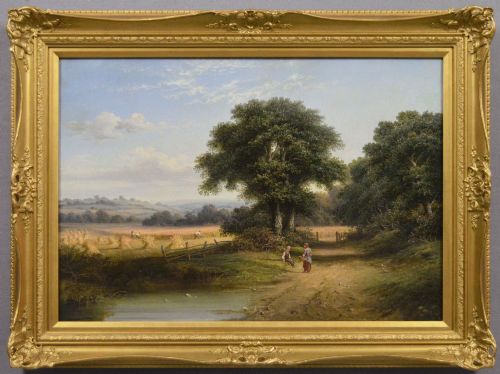
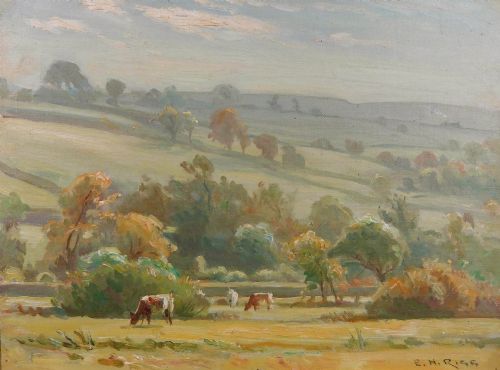
A green field landscape painting portrays agricultural vistas, harvest scenes, and pastoral settings, capturing the quiet rhythm of the British and European countryside. When searching for a green field landscape painting, buyers encounter works spanning from the nineteenth century through the mid-twentieth century, reflecting changing artistic interpretations of rural life. The selection ranges from Victorian pastoral watercolours to early twentieth-century British impressionist canvases.
Most examples found here date from the late nineteenth century to the mid-twentieth century, created during periods when artists frequently turned to agrarian subjects. These pieces include topographical watercolours, detailed oil paintings on canvas, and expressive gouache studies of meadows, farms, and riverbanks. The focus remains consistently on open fields, livestock, and seasonal harvesting.
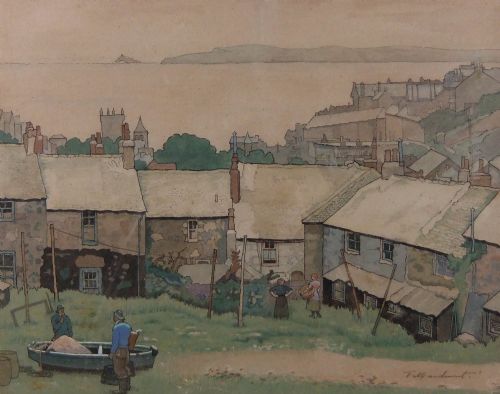
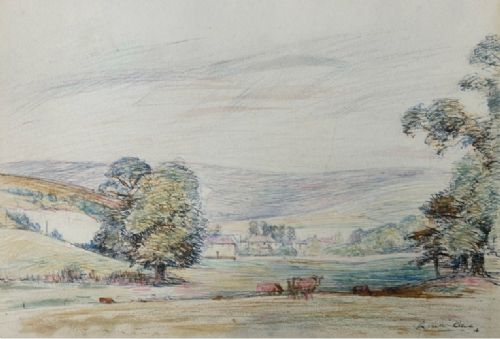
The aesthetic of a green field landscape painting shifts from the precise detail of Victorian academic works to the looser brushwork of British Impressionism and the St Ives School. Buyers find everything from intimate framed watercolours of Yorkshire dales to large oil paintings depicting harvest time in southern England and rural France. Each piece records a specific topography, from northern country fairs to southern river valleys.
Materials and technique
Artists working within this genre primarily utilised oil paint on canvas or watercolour applied to paper, occasionally turning to gouache for richer opacity. Oil paintings often arrived on stretched canvas housed within wood or giltwood frames, lending substantial presence to farm and harvest scenes. Watercolours on paper relied on transparency and fluid washes to capture the changing light of northern and southern landscapes.
Techniques varied from the tight, illustrative brushwork of the nineteenth century to the broken colour and visible application favoured by early twentieth-century impressionists. Painters built their compositions using layered pigments to render fields, skies, and livestock with careful attention to natural illumination. Ebonised or gilt frames completed the works, serving as contemporary enclosures that defined the boundaries of each pastoral view.
Listings feature works created across multiple eras, including the nineteenth century, Edwardian period, and the 1950s.
Assessing quality
Quality in these pastoral works rests upon the artist's ability to handle light, atmosphere, and spatial depth within an open countryside setting. Superior examples demonstrate confident brushwork and a sophisticated palette that convey the specific mood of a harvest field or riverbank, rather than relying on formulaic topographical recording. The handling of natural elements, such as cattle, figures, and shifting skies, distinguishes a master hand from a competent amateur.
Condition and originality play a significant part in the standing of a piece, particularly the preservation of the paper in watercolours or the stability of the canvas in oils. Works retaining their original giltwood or ebonised frames offer greater historical integrity, connecting the painting directly to its period of creation. The strength of the signature and the documented provenance further elevate the standing of individual landscapes.
Walter Heath Williams·Ernest Higgins Rigg·Thomas Maidment·Russell Sidney Reeves·Oswald Garside·William Greaves·Thomas Hunn·William Grant Murray·James William Booth·John Atkinson·Henry H Parker·Herbert Royle·Frederick J Knowles·Arthur Claude Strachan·Walter Duncan·George Faulkner Wetherbee·Claude Muncaster·J D Walker·W E Atkinson·Alastair Flatterly·Thomas E Francis·Dean Wolstenholme·Reginald Mills
The Green Field Landscape Painting Glossary
- Watercolour
- A painting method where fine pigment is suspended in a water-based, translucent solution applied to paper. It allows artists to achieve luminous washes of light across pastoral skies and open meadows.
- Giltwood
- Wood carved and coated with a thin layer of gold leaf, commonly used for framing fine art during the nineteenth and early twentieth centuries. These ornate borders enhance the visual depth of oil paintings.
- British Impressionism
- An artistic movement focusing on light, fleeting moments, and everyday rural subjects painted with visible brushstrokes. Practitioners often moved outdoors to capture the shifting colours of harvest fields directly from nature.
- Gouache
- An opaque water-based paint that includes a binding agent and white pigment to create solid, flat colour fields. It appears frequently in twentieth-century works requiring stronger tonal contrast than traditional watercolour.
- Ebonised frame
- Timber treated with a dark chemical finish or stain to resemble ebony, providing a sharp, contrasting border for nineteenth-century canvases. This framing style was popular for imparting a serious, finished aesthetic to landscape paintings.
Green Field Landscape Painting: Frequently Asked Questions
What defines a green field landscape painting?
A green field landscape painting depicts rural vistas, agricultural fields, and pastoral scenes created by British and European artists. These works focus primarily on the countryside, featuring subjects like hay harvesting, livestock grazing, and rolling meadows.
The genre spans multiple decades and movements, capturing both the detailed realism of the Victorian era and the looser interpretations of twentieth-century impressionism. Each piece serves as a visual record of changing rural topography.
How do I care for an antique watercolour?
Antique watercolours require protection from direct sunlight to prevent the pigments from fading over time. Framing them behind conservation-grade glass helps shield the paper from ultraviolet light and atmospheric pollutants.
Keeping the works in rooms with stable humidity prevents foxing and paper degradation. Regular inspection of the backing board ensures the paper remains free from moisture damage.
Are these paintings signed by the artists?
Many examples feature signatures or monograms applied by the artist, often placed neatly in the lower corner of the canvas or paper. Signatures help attribute works accurately and connect them to recorded biographical details.
Unsigned pieces still appear frequently, often attributed through stylistic similarities or gallery labels on the reverse. Documentation and frame inscriptions frequently assist in identifying the creator.
How do oil paintings differ from watercolours here?
Oil paintings utilise pigment suspended in drying oil on canvas or wood panels, offering rich texture and deep colour saturation. They generally possess greater durability and present a heavier visual weight within a room.
Watercolours rely on translucent washes on paper, creating a lighter, more luminous atmosphere. They require protective glass framing, whereas oil canvases remain open to the air.
What periods do these landscape artworks represent?
The available works cover a broad chronological span from the nineteenth century through the mid-twentieth century. Victorian pastoral and academic traditions represent the earlier decades of this timeline.
Later pieces reflect the emergence of early twentieth-century British art and impressionist movements. Edwardian and mid-century topographical studies complete the historical sequence.