


Vintage Fine Art Watercolour
These vintage fine art watercolour pieces offer hand-painted scenes and portraits that bring historical atmosphere directly to your walls.
Vintage Fine Art Watercolour
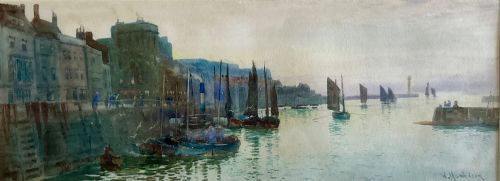
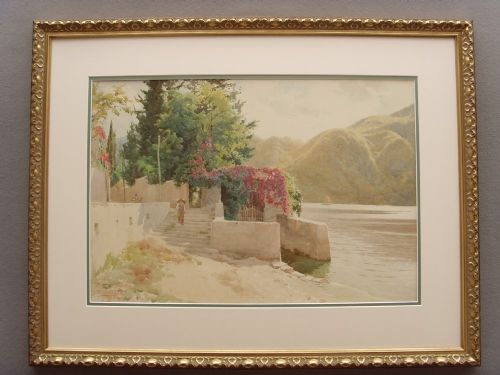
When you search for vintage fine art watercolour, you encounter original painted works spanning from the nineteenth century through the mid-twentieth century. The selection includes topographical landscapes, coastal views of Venice, rural pastoral scenes, and intimate portrait miniatures.
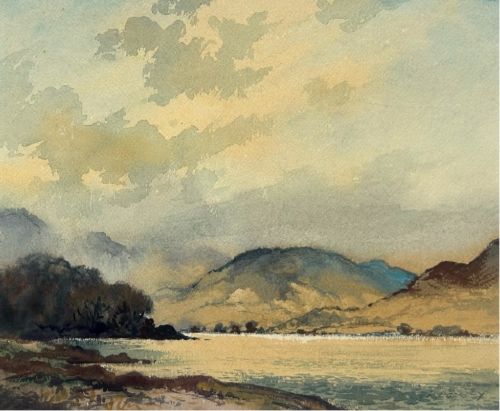
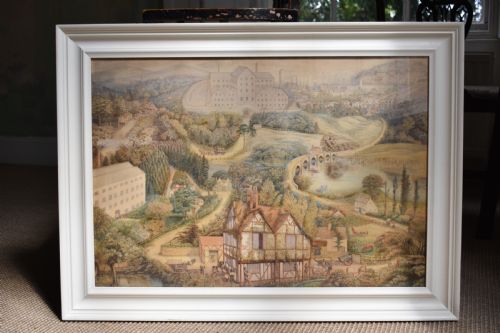
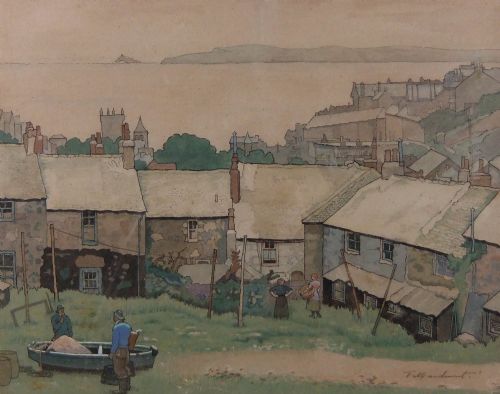
You are most likely to meet landscape watercolours depicting English countryside views, northern horse fairs, and architectural studies framed behind glass. Works often bear signatures from recognised regional painters and Academicians working within British and European traditions.
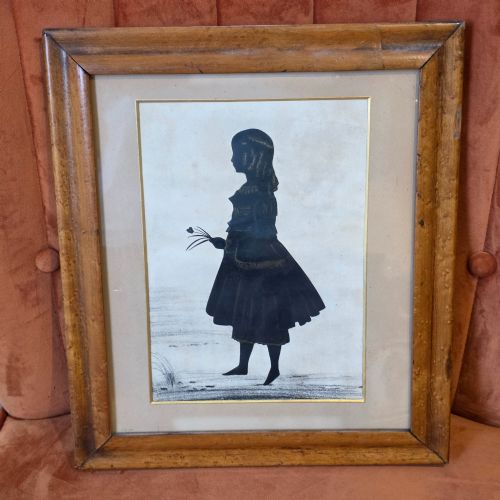
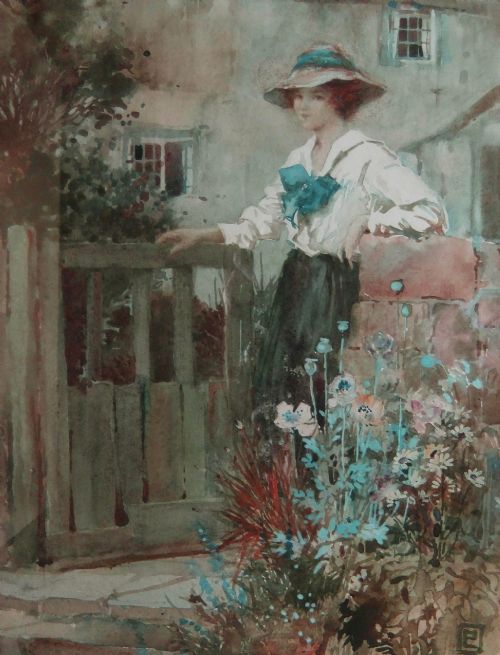
The assortment reaches from Regency-era cut-paper silhouette portraits to Mid-Century Modern compositions and Edwardian garden studies. Each piece preserves the fluid handling of pigment upon paper characteristic of its specific period.
How They Were Made
Artists applied watercolour paint and pigment onto paper supports, frequently combining washes with detailed ink drawing or subtle touches of bodycolour to heighten highlights. Selected works incorporate delicate gold leaf details or originate as miniature portraits painted on specialised grounds.
Finished sheets were protected behind glass and housed within timber frames, sometimes accompanied by cut-paper silhouettes or ink underdrawing. The physical materials reflect traditional studio practices spanning the Victorian era into the twentieth century.
Listings feature watercolours spanning the 19th century through the 1960s, executed on paper supports using traditional pigment and watercolour paint.
What Varies in Quality
The distinction between works rests upon the surety of the brushwork, the depth of composition, and the artist's command of light and atmosphere. Stronger examples display confident pigment handling and tonal balance that capture a specific location or subject with immediacy.
Provenance and documentation also separate pieces, as signed works by established painters command greater attention than anonymous topographical sketches. The preservation of the paper support and the clarity of the underlying watercolour pigment further influence the standing of an individual artwork.
Robert Leslie Howey·Thomas Maidment·William Matthison·Arthur Dudley·Percy Lancaster·Robert George Talbot Kelly·Raoul Millais·Alfred Grey·John Atkinson·Susie Lassam·Walter Follen Bishop·Sir William Russell Flint·Nora Cundell·Augustus Jules Bouvier·Vittore Zanetti Zilla·George Kilburne·B Kaufmann·Fred Lawson·Frank Wasley·Frank W Scarborough·Hirst Walker·David Law·Fernand Toussaint·William Knox·Beatrice Parsons
The Vintage Fine Art Watercolour Glossary
- Watercolour
- A painting method where fine pigment is suspended in a water-soluble binder and applied to paper. This medium allows for transparent washes and luminous effects.
- Bodycolour
- Watercolour paint mixed with white pigment to make it opaque. Artists utilise this technique to add highlights and solid areas of colour to a transparent wash.
- Portrait Miniature
- A small, highly detailed painting, typically a portrait, executed on a reduced scale. These works frequently date from the Regency and Victorian periods and sit behind protective glass.
- Topographical Landscape
- A detailed view depicting a specific physical location or building. These watercolours served as visual records of towns, rivers, and architectural monuments.
- Cut-Paper Silhouette
- A profile portrait cut from dark paper and mounted against a contrasting background. Examples often combine this silhouette technique with detailed watercolour painting.
Vintage Fine Art Watercolour: Frequently Asked Questions
How should I hang vintage watercolours?
Keep framed watercolours away from direct sunlight to prevent the pigments from fading over time. Maintaining stable indoor humidity levels also protects the antique paper supports.
Ensure pieces hang securely on sturdy picture hooks away from damp exterior walls. Professional framing with acid-free backing materials preserves the longevity of the paper.
Are these watercolours all original works?
Every piece recorded in the listings is an original hand-painted artwork rather than a modern reproduction. Artists applied pigment directly to paper during the nineteenth and twentieth centuries.
Signatures, dates, and inscriptions often appear on the face of the sheet or upon the reverse. These marks help attribute the paintings to named historical artists.
What subjects are most common?
Landscapes and architectural views form a large portion of the available watercolours. Scenes range from English rural rivers to Venetian canals and Italian monuments.
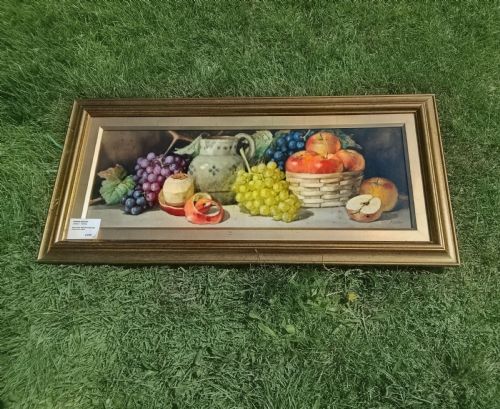
Portrait miniatures and still life compositions also appear regularly. These diverse subjects reflect the varied interests of British and European painters across different eras.
How can I tell the period of a painting?
Stylistic cues, clothing in portraits, and framing materials offer strong indicators of a piece's age. Victorian and Edwardian works often feature distinct framing styles and subject matter.
Artists' signatures and dated inscriptions provide definitive chronological markers. Comparing handling techniques to known periods helps place unsigned topographical pieces.