




Tipping Top Table
A tipping top table offers a clever folding mechanism that saves space when the top drops flat against the base.
Tipping Top Table
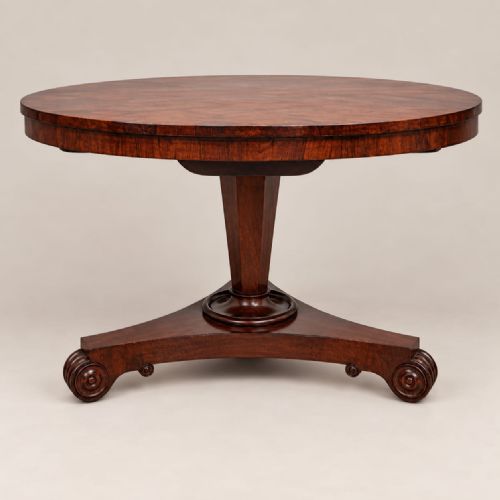
A tipping top table is a versatile surface designed to tilt vertically for storage or display when not in use. These pieces appear in forms such as occasional tables, dining tables, candlestands, and writing tables.
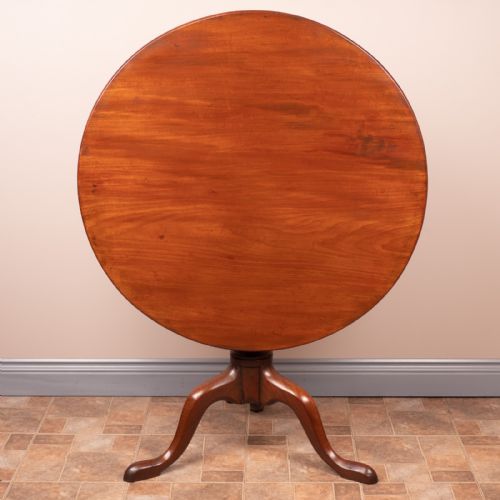
You are most likely to meet mahogany examples from the Georgian and Victorian periods, often featuring circular tops supported by tripod bases or pedestals. Other variations include rustic pine, rosewood, walnut, and teak woods spanning the eighteenth century through to the early twentieth century.
The selection ranges from grand dining pieces to compact wine tables and carved Anglo-Burmese side tables. Regional styles encompass Georgian Revival, Regency, William IV, and Louis XVI influences.
How they were made
Cabinet makers utilised dense hardwoods like mahogany, rosewood, and walnut alongside country timbers such as pine. Construction often incorporated birdcage mechanisms that allowed the top to both tilt and revolve.
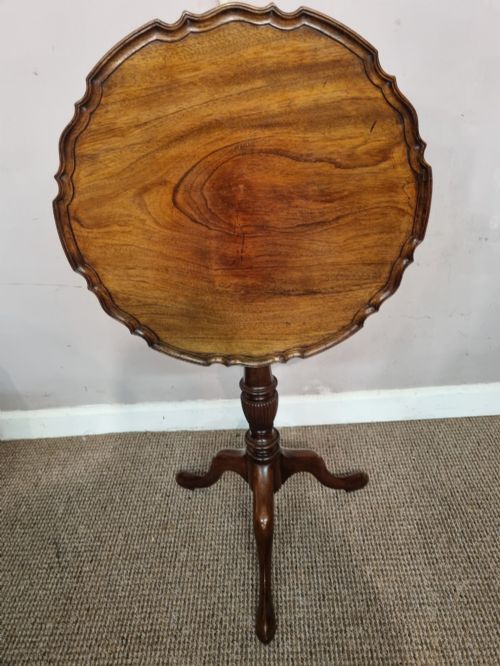
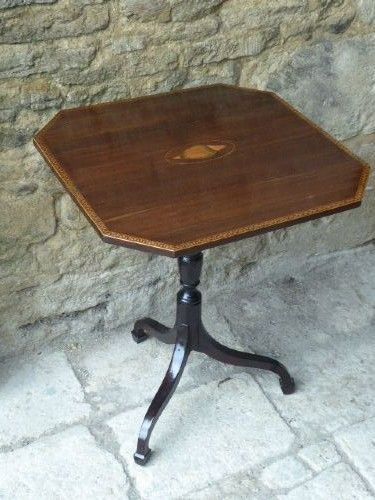
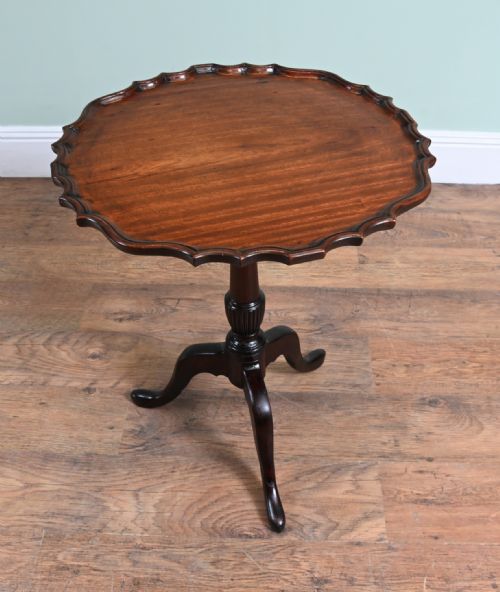
Surfaces display decorative techniques including fine wood inlay, pie crust edges, and carved detailing. Bases frequently employ sturdy tripod legs with brass fittings or leather inset tops on writing variants.
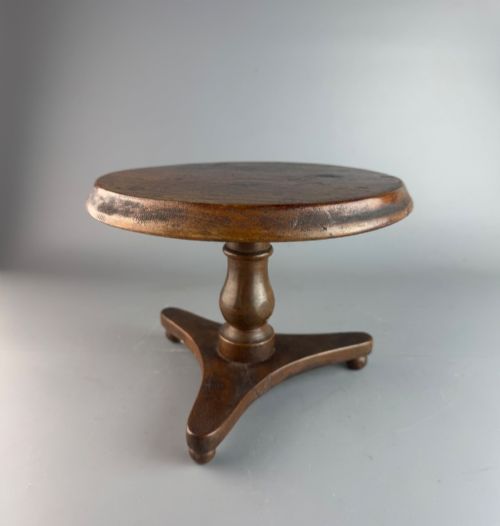
Several miniature treen candlestands mimic full-sized tip-top tables so faithfully that they appear ready to host a very small tea party.
What varies in quality
The sophistication of the timber selection and the precision of the tilting mechanism set finer examples apart from simpler utilitarian pieces. Mahogany and rosewood grain configurations show greater depth on tables commissioned for formal reception rooms.
Refinement in the carving of the pedestal and legs, such as pie crust moulding or detailed tripod shaping, indicates higher workshop standards. The tightness of the birdcage pivot ensures the top remains stable when horizontal.
The Tipping Top Table Glossary
- Tilt-top table
- A table with a hinged top that rotates to a vertical position when not in use. This design allowed furniture to be stored against walls to clear floor space.
- Birdcage
- A timber framework beneath the table top that enables it to tilt and swivel. It consists of small spindles connecting two parallel platforms.
- Pie crust edge
- A raised, decorative carved border shaped in undulating curves resembling pastry crust. This technique appears on fine occasional and wine tables.
- Tripod base
- A three-legged support structure commonly found beneath occasional and candlestand tables. It provides stability on uneven floors.
- Treen
- Small domestic wooden objects and turned items. Candlestands in this category often replicate the form of larger tip-top tables in miniature.
Tipping Top Table: Frequently Asked Questions
What is a tipping top table used for?
These tables served multiple functions in historic homes, acting as dining surfaces, tea tables, or reading desks when lowered. Their primary advantage was the ability to tilt upward, freeing up valuable floor space in smaller rooms.
Today, they function well as decorative side tables or wine stands in living areas and hallways. The tilting mechanism remains fully functional on many surviving examples.
How do I identify a Georgian tilt-top table?
Georgian examples frequently feature rich mahogany timber, circular tops, and birdcage mechanisms beneath the surface. Look for hand-turned pedestals and tripod legs that end in pad or spade feet.
Pie crust edges and carved tripod bases also point toward the eighteenth century. Construction methods should display traditional joinery appropriate for the period.
What woods were used for tip-top tables?
Makers predominantly selected mahogany and rosewood for formal reception furniture throughout the Georgian and Victorian eras. These dense hardwoods allowed for sharp carving and took a high polish.
Country workshops utilised native pine and walnut, while occasional pieces imported from Burma introduced teak and exotic hardwoods. Each material influences the overall weight and colour tone of the table.
How do I care for a wooden tip-top table?
Keep the timber away from direct heat sources and strong sunlight to prevent the wood from drying out or warping. Regular dusting with a dry, soft cloth maintains the finish without needing heavy polishes.
Take care when operating the tilting mechanism to support the weight of the top. Ensure the locking catch is engaged securely if the table remains in a horizontal position.