

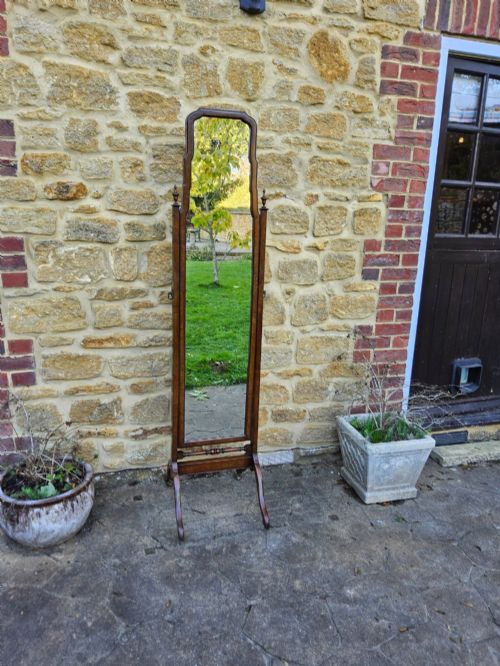
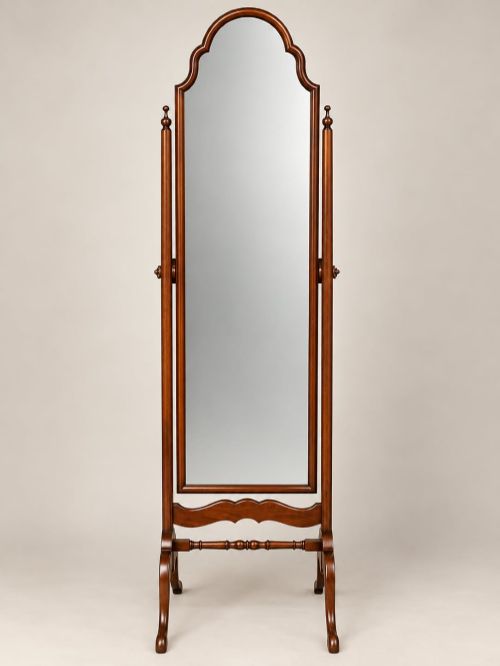
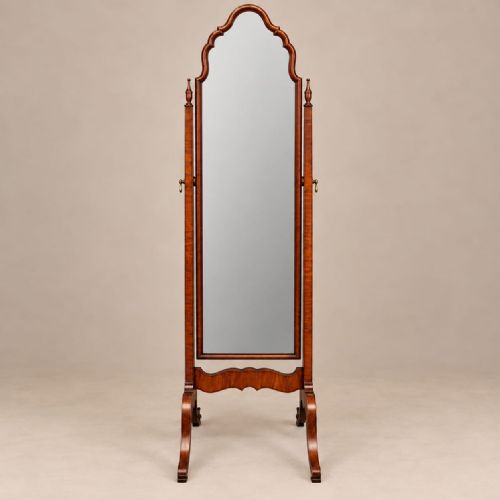

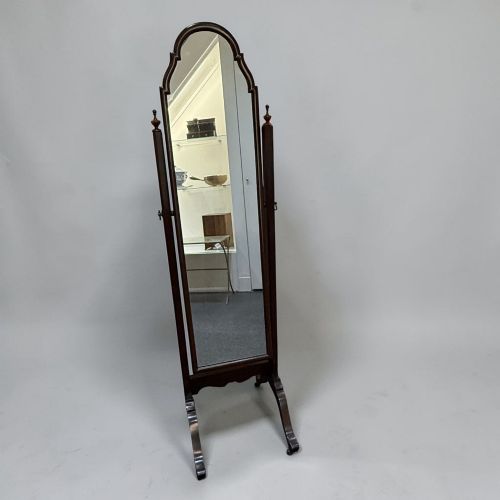
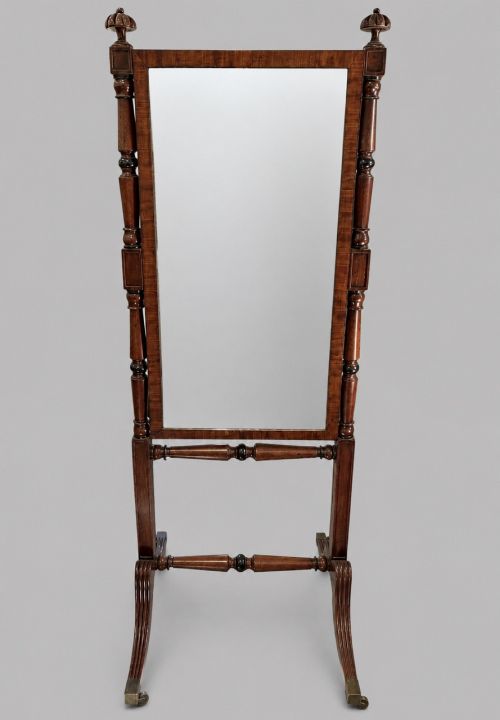

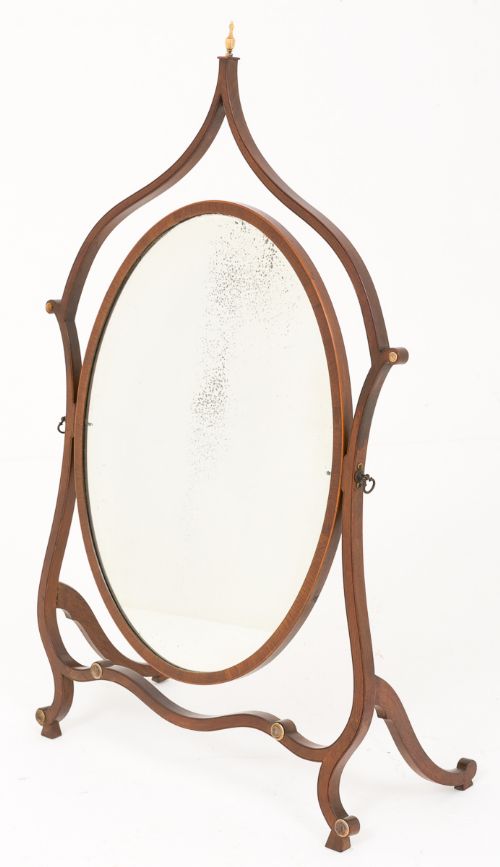


Timber Cheval Mirror
A timber cheval mirror gives you a full-length reflection framed in classic wood, offering a practical centrepiece for any bedroom or dressing room.
Timber Cheval Mirror
A timber cheval mirror is a freestanding full-length looking glass mounted in a pivoting frame between two upright pillars. When you search for a timber cheval mirror, you encounter pieces originating from the nineteenth and early twentieth centuries, spanning periods from the Victorian era up to the 1920s.
These pieces serve as both functional dressing items and substantial decorative furniture for the bedroom or hallway. Most examples rely on brass mounts and hardware to support the pivoting mirror plate within its wooden stand.
How they were made
Cabinet makers constructed the frames using solid timbers and decorative veneers such as mahogany, satinwood, and burr walnut. These woods were shaped and polished to highlight the natural grain, often incorporating marquetry inlay for ornamental detail.
The pivoting mechanism typically utilises brass fixings inset into the upright supports, allowing the mirror glass to tilt to the desired angle. Glass mirror plates are securely housed within the wooden frames, backed by protective panels.
Timber Cheval Mirror Retail Price Guide 2026
Typical asking prices for timber cheval mirror among the pieces listed under this phrase on Sellingantiques today, from the lower quarter to the upper quarter. They describe what is for sale here now, not the wider market.
What varies in quality
Quality rests on the selection of timber and the precision of the cabinet work, distinguishing simple utility items from finely figured showpieces. Finely grained burr walnut veneer or detailed marquetry inlay elevates a piece above standard mahogany construction.
The weight and stability of the freestanding frame also dictate overall quality. Substantial uprights and robust brass pivoting hardware ensure the mirror remains balanced and steady during daily use.
The Timber Cheval Mirror Glossary
- Cheval mirror
- A freestanding full-length mirror mounted on a pivoting frame between two upright posts. This design allows the user to tilt the glass plate to various angles.
- Marquetry
- Decorative inlay work where pieces of contrasting wood veneer are fitted together to form geometric or pictorial patterns. It appears on finer cabinet furniture of the Victorian period.
- Satinwood
- A durable hardwood with a lustrous, yellow-toned grain utilised for high-status cabinet work. It provides a bright surface finish.
- Burr walnut veneer
- A thin slice of wood taken from the knotty growth of a walnut tree, prized for its swirling grain patterns. It adds rich visual texture to furniture surfaces.
Timber Cheval Mirror: Frequently Asked Questions
Where should a timber cheval mirror go?
These mirrors suit bedrooms, dressing rooms, and spacious hallways where a full-length reflection is useful. Their freestanding design means they require floor space rather than wall fixings.
Position the mirror away from direct dampness to protect the timber frame and the silvering on the glass plate over time.
How do I tilt the mirror glass?
Most cheval mirrors use brass thumbscrews or pivot pins set into the side arms of the frame. Adjusting these tension fittings allows the glass to tilt forward or backward.
Hand-tighten the fixings gently so the mirror holds its position without placing undue stress on the wooden uprights.
How do I date a timber mirror?
Dating relies on timber choices, construction techniques, and stylistic revival markers visible in the woodwork. Pieces from the Edwardian era and the 1920s often show lighter proportions or specific revival influences.
Examining the backboards, screw types, and the composition of the frame helps distinguish nineteenth-century examples from later reproductions.
How do I care for the wood and glass?
Maintain the timber frame with appropriate furniture wax to nourish the polish and prevent the wood from drying out. Avoid harsh chemical sprays on both the wood and the mirror glass.
Clean the mirror plate with a soft cloth and mild glass cleaner applied to the cloth rather than sprayed directly onto the edges.