
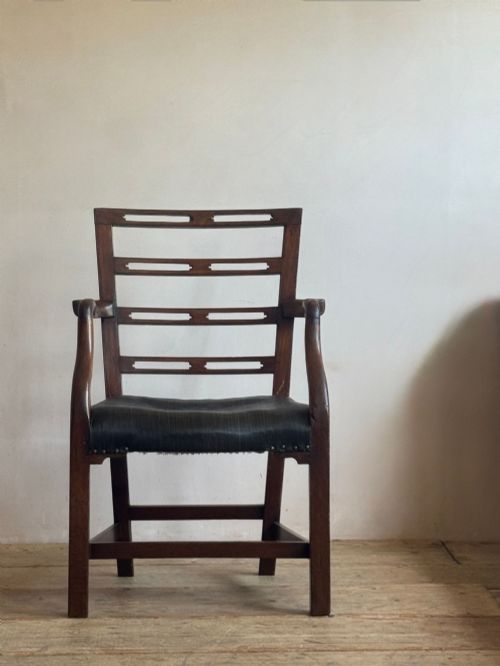
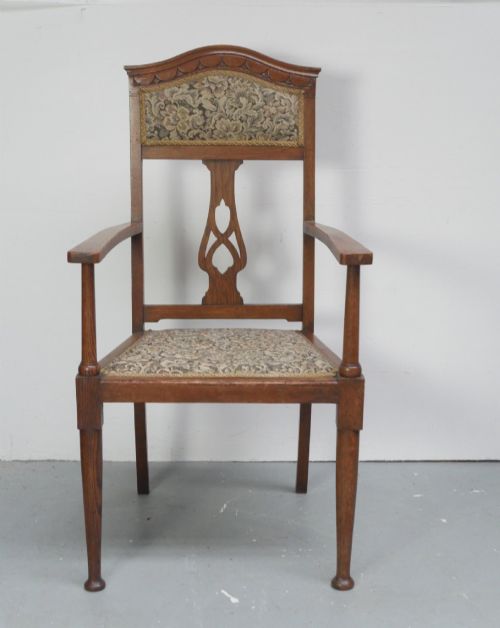
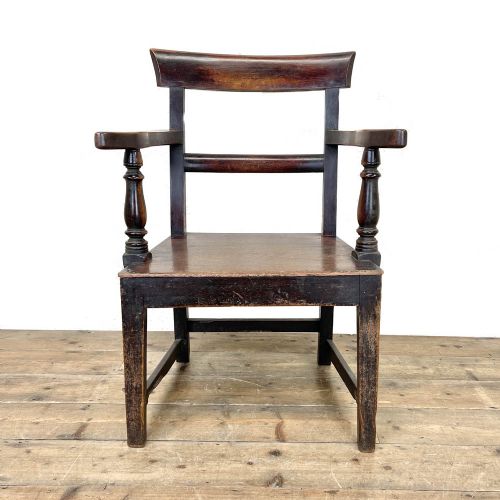
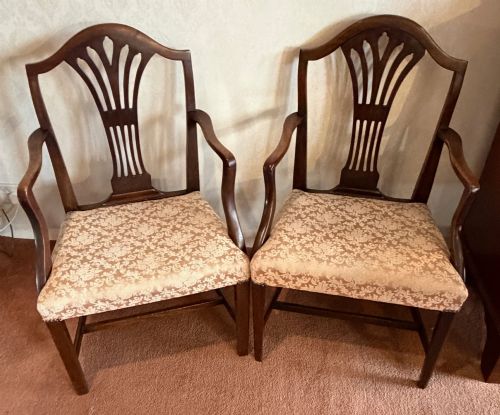


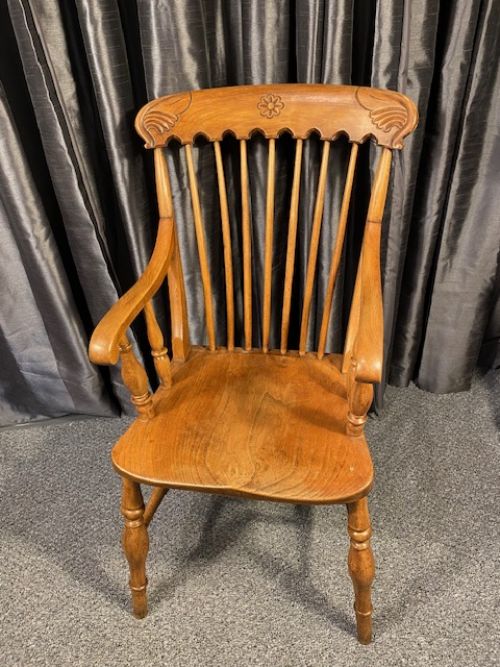


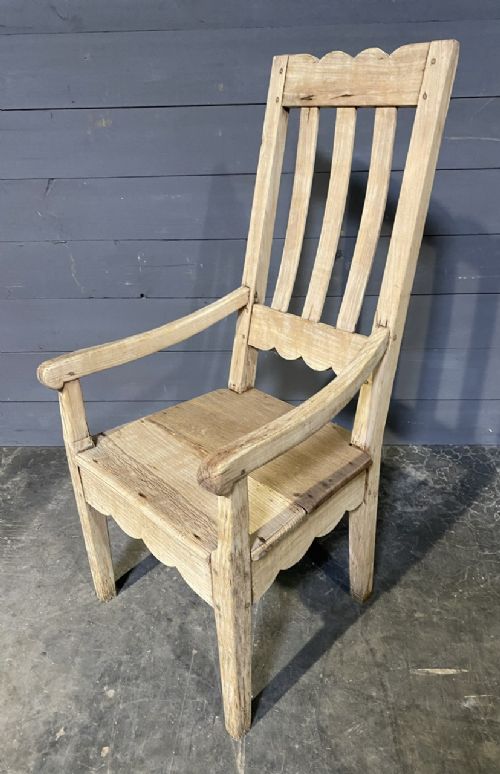
Timber Carver Armchair
A timber carver armchair offers sturdy arm support at the table or fireside, combining traditional carpentry with enduring domestic utility.
Timber Carver Armchair
A timber carver armchair is typically encountered as a dining carver or fireside chair, appearing across the Georgian, Victorian, and Edwardian eras. These seating pieces range from country ladder-backs and Windsor forms to refined mahogany dining chairs and occasional elbow chairs.
The materials span native and imported timbers, including oak, elm, mahogany, yew, ash, and beech, frequently paired with rush, fabric, or leather seats. Examples stretch from simple kitchen chairs and primitive comb-backs to formal Hepplewhite and George II styles.
Materials and construction
Makers utilised solid timbers such as elm, oak, and mahogany, often combining contrasting woods within a single frame, as seen in ash and elm country windsors. Turned spindles, curved splats, and solid bentwood elements demonstrate traditional joinery techniques suited to daily domestic strain.
Surface finishes rely on the natural grain of the wood, sometimes accented with brass fittings, carved details, or simple upholstered pads. Construction methods prioritize durability, employing pegging, mortise and tenon joints, and steam bending for curved components like elbow rests.
One listed set carries a remarkable political provenance linked directly to Winston Churchill at Harry Warren House.
Judging the work
The distinction between standard utility seating and superior examples rests on the selection of timber and the precision of the joinery. Figured mahogany or well-selected yew and elm command greater regard than basic beech or mixed utility woods.
Proportion and execution of detail separate ordinary workshop pieces from finer craftsmanship. Clean lines in Hepplewhite styles or well-turned components on Windsor frameworks indicate a higher level of maker skill.
The Timber Carver Armchair Glossary
- Carver chair
- An armchair designed primarily for the head of a dining table or as a companion seat by a fireside. These chairs feature supportive arms integrated into the upper frame.
- Windsor
- A traditional chair construction method involving turned legs and spindles wedged directly into a solid wooden seat. High-backed and comb-back variations appear frequently in country settings.
- Splats
- The vertical wooden strip placed centrally in the backrest of a chair. These components often feature shaped or pierced designs characteristic of specific periods like the Georgian era.
- Ladder-back
- A chair back constructed from a series of horizontal wooden rails stacked vertically between two upright posts. This style is common in country vernacular seating.
Timber Carver Armchair: Frequently Asked Questions
What is a carver chair?
A carver chair is simply an armchair designed with supportive elbow rests, historically placed at the head of a dining table. They offer a more substantial seat than standard side chairs.
These pieces function equally well as fireside or occasional seating in a room, combining practical utility with traditional cabinetmaking.
Are these chairs comfortable for daily use?
Most timber armchairs provide sturdy upright support, though comfort varies depending on seat depth and the inclusion of squab cushions or upholstery. Solid wood seats offer durability over plush padding.
Placing a cushion on a wooden seat adapts these historic pieces easily for modern sitting habits without altering the frame.
What woods were commonly used?
Cabinetmakers and country chair bodgers utilised whatever suitable timber was locally available or fashionable at the time. Oak, elm, ash, and beech dominate country vernacular seating.
More formal dining chairs frequently employ imported mahogany, walnut, or satinwood, reflecting the broader trade networks of the Georgian and Victorian periods.