

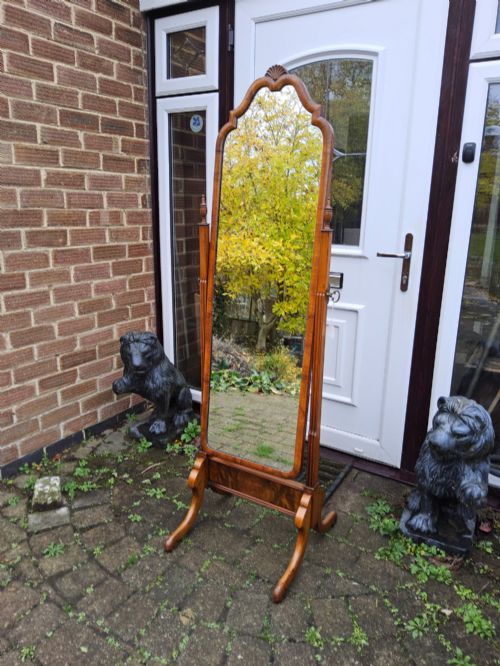
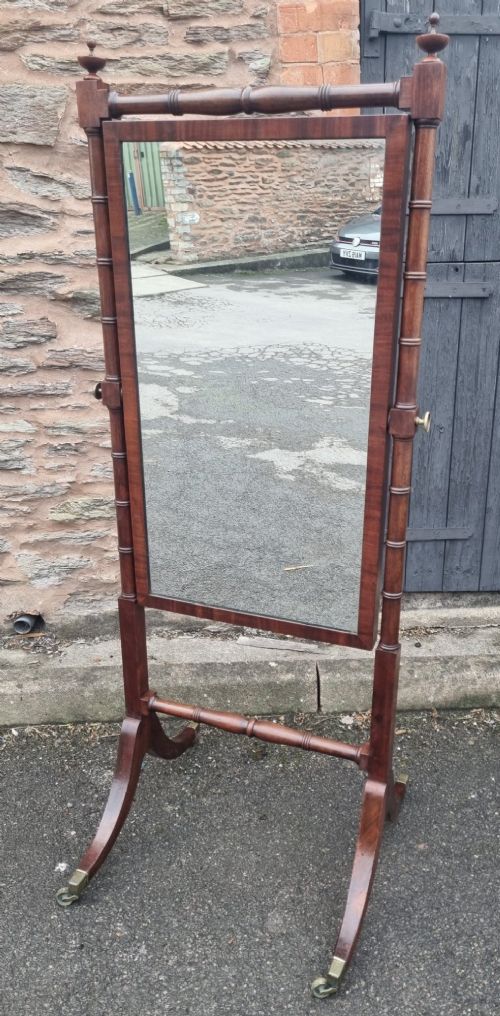
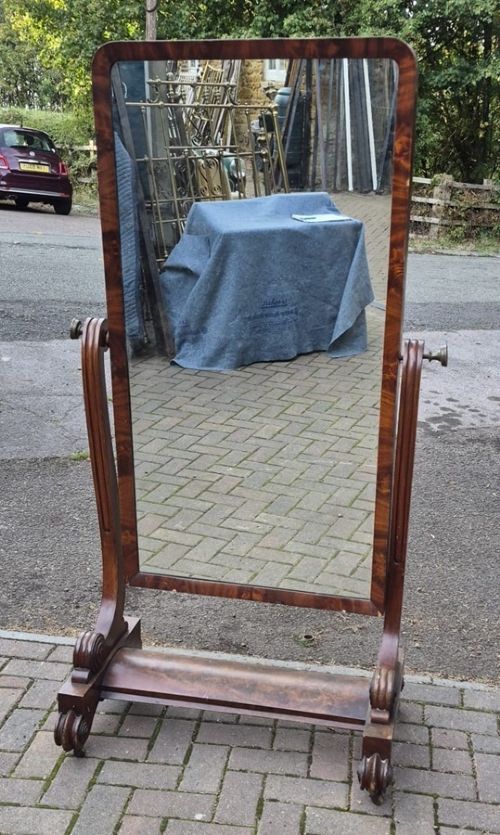

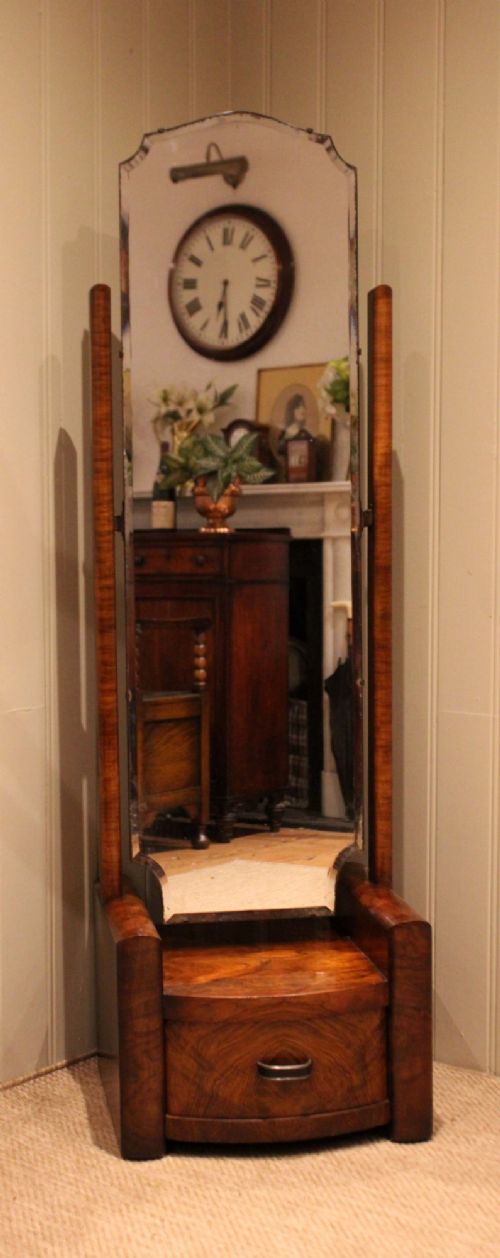
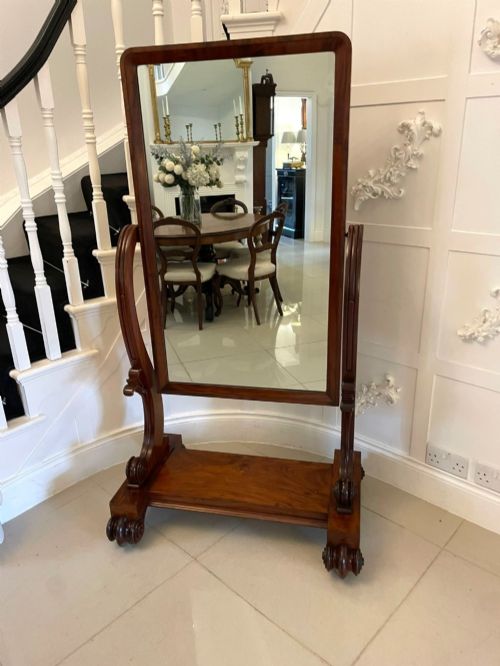
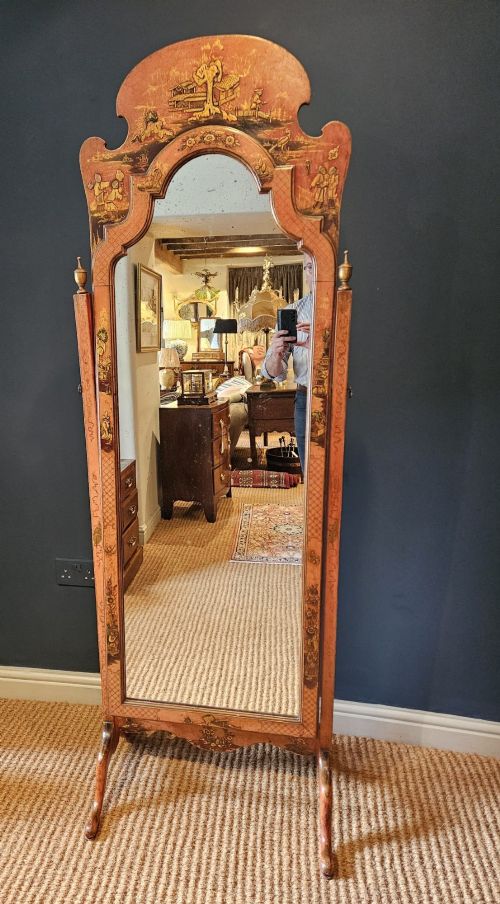
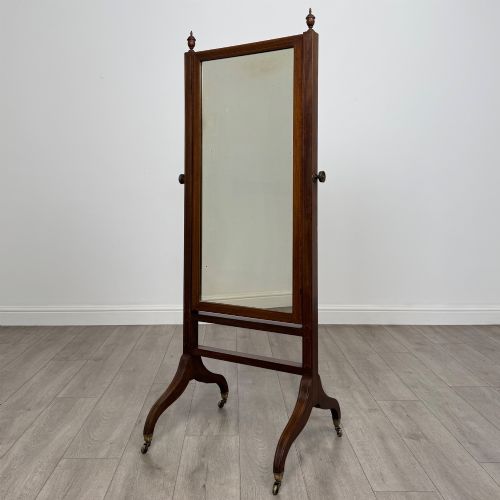
Tilting Cheval Mirror
A tilting cheval mirror brings a full-length adjustable reflection into a bedroom, combining practical daily dressing with elegant period presence.
Tilting Cheval Mirror
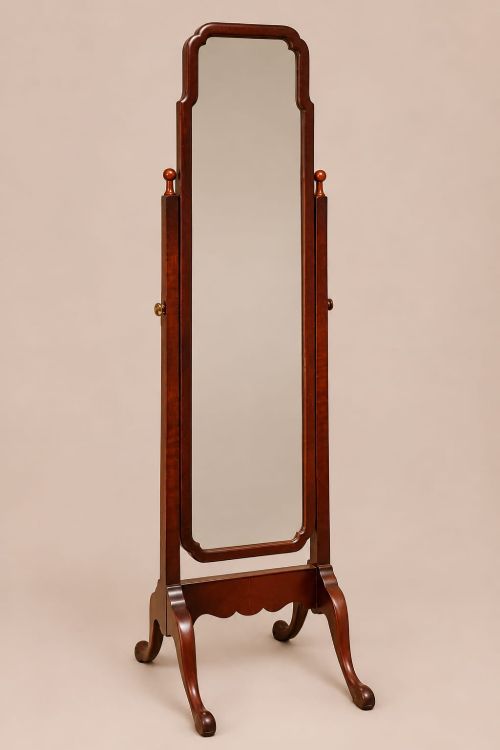
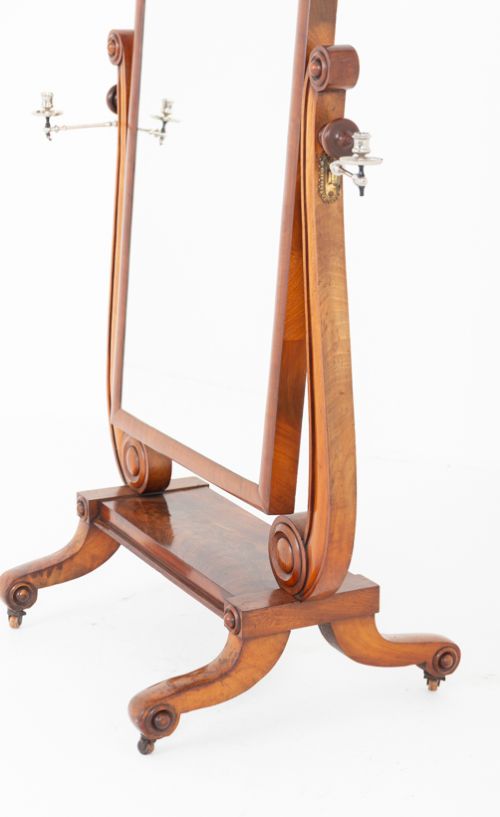
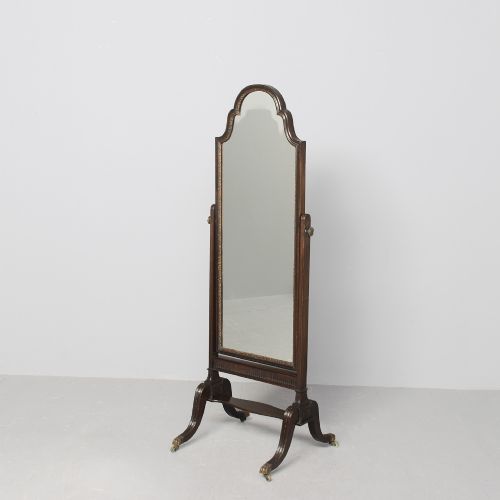
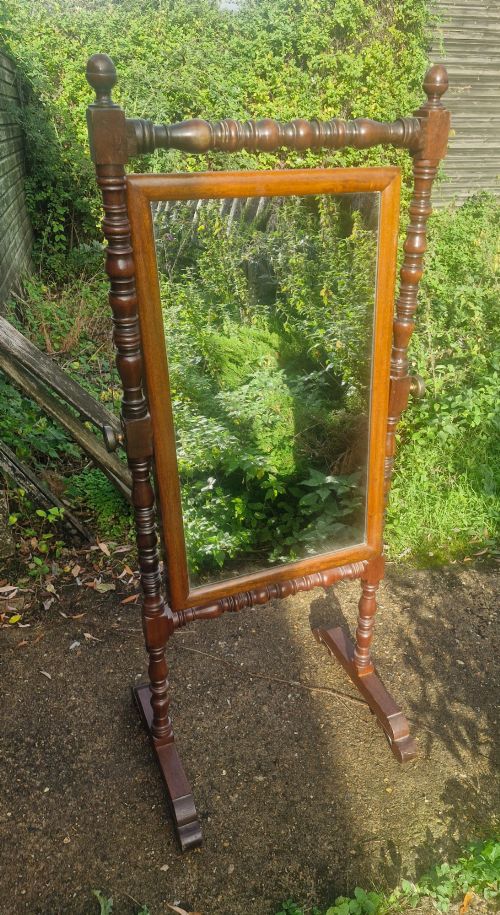
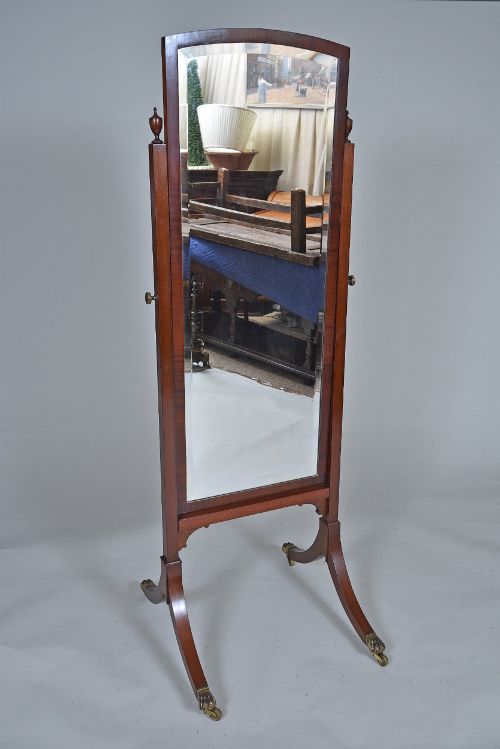
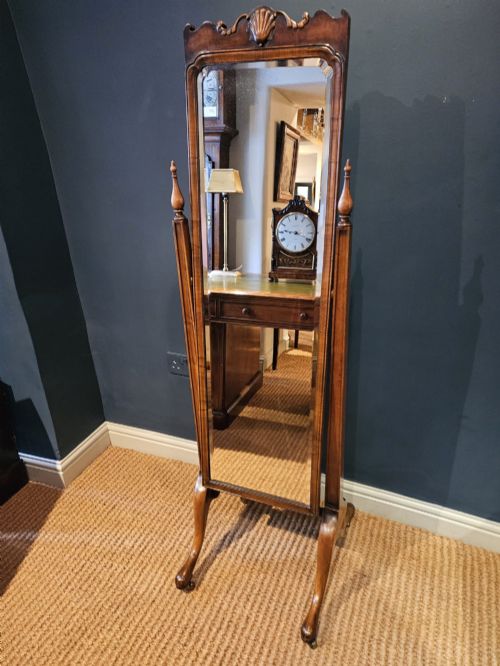
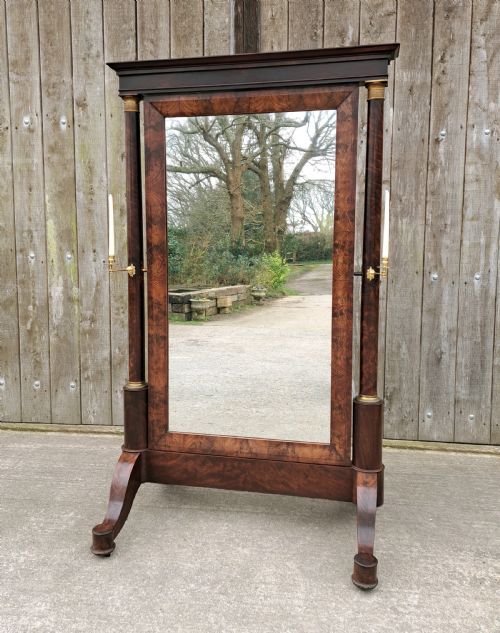
A tilting cheval mirror is a floor-standing swing glass mounted within a frame that pivots between upright supports. When you search for a tilting cheval mirror, you encounter full-length dressing glasses designed to angle the reflection without moving the entire heavy base. The pieces on this page span several eras, with nineteenth-century, Victorian, Edwardian, Regency, and William IV examples forming the core of the selection.
Most entries are tall floor-standing furnishings, though occasional table top variants appear. The primary forms include large cheval mirrors and dressing mirrors housed in swing frames. These objects originate from British, French, Italian, and American workshops, representing styles from Chinoiserie and French Empire to Queen Anne and Sheraton.
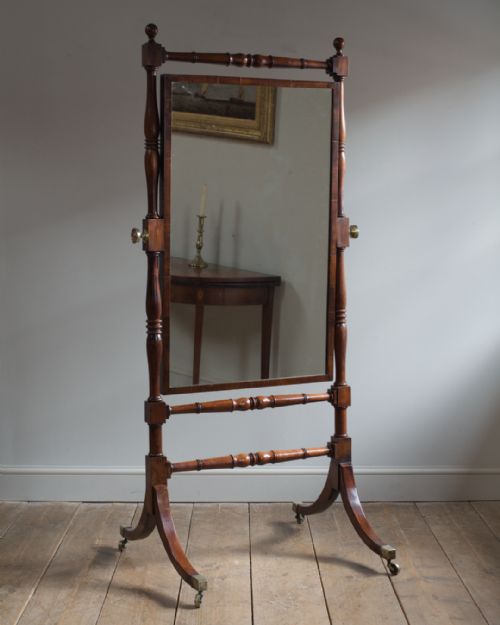
The dominant material across these listings is mahogany, often figured as flame mahogany or burr walnut, accompanied by oak, pitch pine, and lacquered wood. Brass mounts, sabots, and castors frequently complete the design, while glass plates provide the active reflection. Buyers generally seek these items to anchor a period dressing room or bedroom with functional antique woodwork.
What varies in quality
Quality in these mirrors rests upon the selection and figure of the timber, where rich flame mahogany or burr walnut distinguishes finer items from plain utility framing. The integrity of the pivoting mechanism dictates functional success, separating smooth, balanced tilting action from stiff or loose movement.
Proportion and scale define the aesthetic hierarchy, with large, well-balanced floor-standing frames commanding presence compared to heavier, stockier builds. Finer examples integrate cast brass sabots, detailed turned columns, and precise inlay work rather than relying on simple, unadorned joints.
Tilting Cheval Mirror Retail Price Guide 2026
Typical asking prices for tilting cheval mirror among the pieces listed under this phrase on Sellingantiques today, from the lower quarter to the upper quarter. They describe what is for sale here now, not the wider market.
One recorded mirror once belonged to an American officer named General Meigs, adding a personal military history to its wooden frame.
Waring and Gillow
The Tilting Cheval Mirror Glossary
- Cheval mirror
- A large floor-standing mirror mounted on a vertical frame that swings or tilts on pivots. The term derives from the French word for horse, referencing the four-legged support trestle.
- Tilt dressing glass
- A smaller or adjustable mirror designed to tilt on a frame, historically placed on a dressing table or floor for grooming. These allow the user to alter the viewing angle easily.
- Flame mahogany
- Mahogany timber cut to reveal a distinctive, flamy grain pattern resembling flickering fire. Cabinet makers prized this veneer for high-status furniture fronts and frames.
- Sabot
- A metal shoe or cap, usually cast in brass, fitted to the foot of a furniture leg. They protect the timber base and frequently incorporate integrated castors for mobility.
- Sabre leg
- A curved, outwardly sweeping leg with a rounded or rectangular section, typical of Regency furniture design. This form provides stable floor contact for swinging mirror frames.
Tilting Cheval Mirror: Frequently Asked Questions
How do you tilt the mirror?
Most frames use side pivot screws or brass knobs set into the upright supports. Tightening or loosening these fixtures allows the glass plate to angle smoothly to the desired position.
Older mechanisms rely on balanced weight and fitted pins rather than modern spring tensions, requiring both hands to adjust the angle evenly.
Where were they placed historically?
These mirrors stood primarily in bedrooms, dressing rooms, and boudoirs where occupants dressed for the day. Their full-length design provided a complete view of attire.
Because they required floor space and natural light to function well, they typically sat near windows or against primary bedroom walls.
Are all these mirrors full length?
The majority of cheval mirrors on this page are tall, floor-standing pieces designed to show a full-length reflection. However, the selection also includes occasional table top or dressing table variants.
Checking the proportions and listed dimensions helps distinguish between large floor models and smaller surface mirrors.
How do I identify a Regency period frame?
Regency pieces often feature clean architectural lines, sabre legs, brass sabots, and dark mahogany timber. The styling reflects classical Greek and Roman influences popular in the early nineteenth century.
Cabinet makers of this era favored restrained ornamentation, letting the natural grain and bold structural geometry define the piece.