


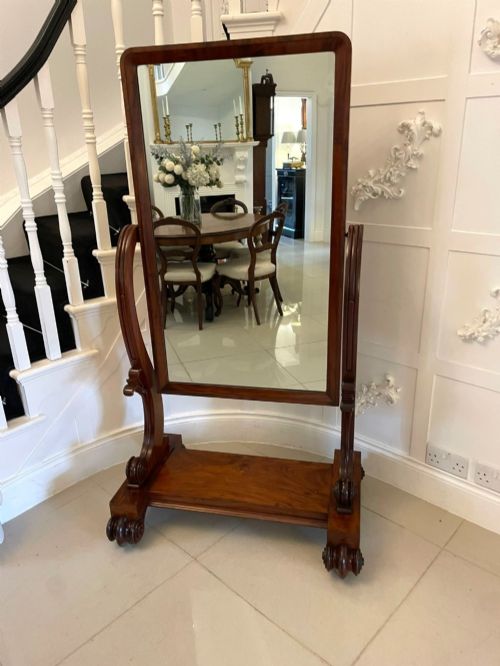
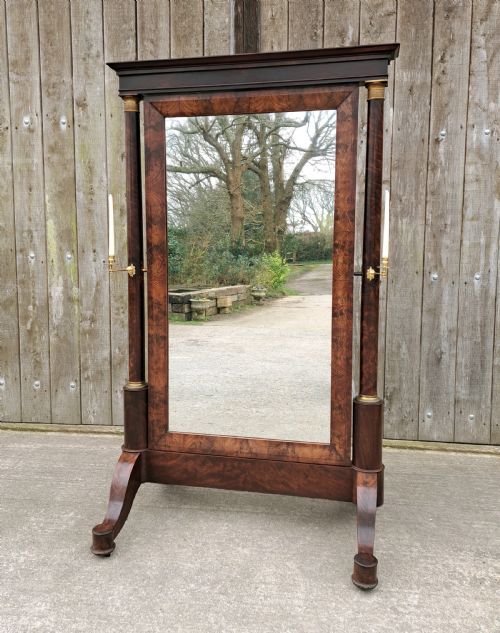
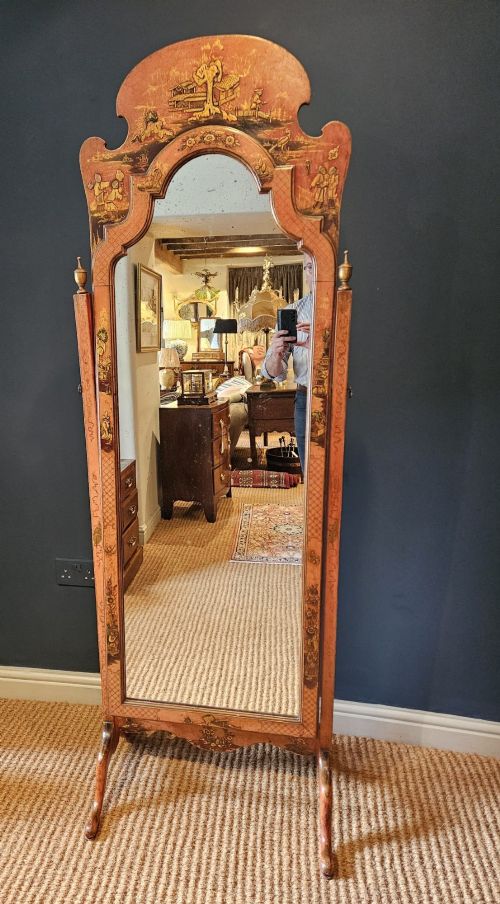
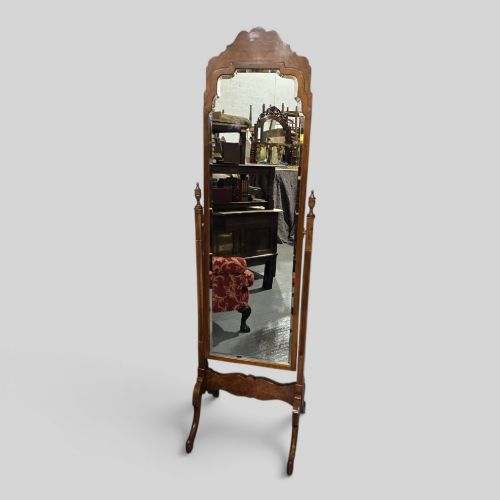
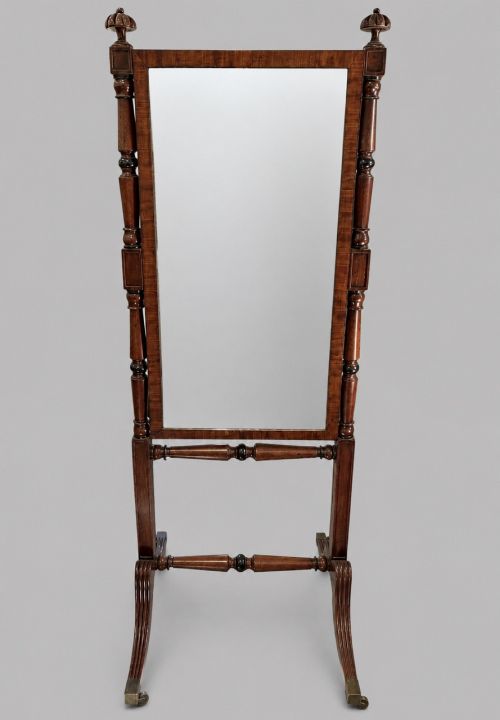
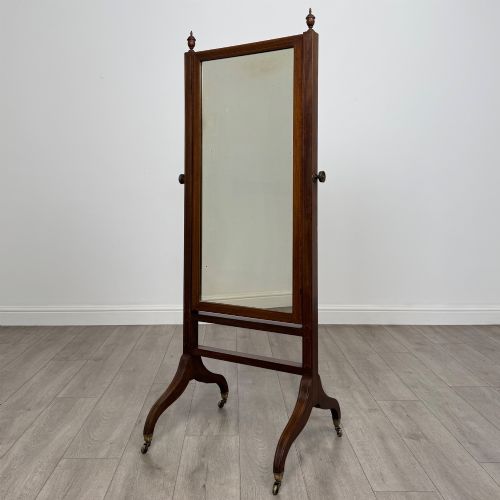
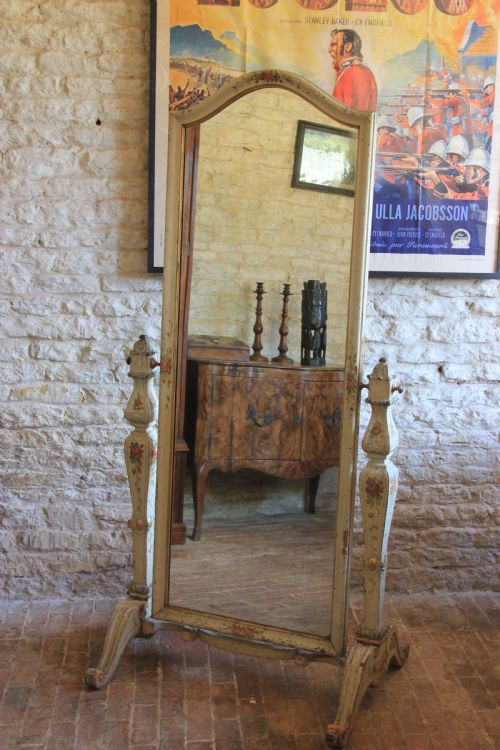
Tilt Mirror Floor Standing
A tilt mirror floor standing gives the full-length reflection you need while bringing rich timber frames and pivoting glass to a room.
Tilt Mirror Floor Standing
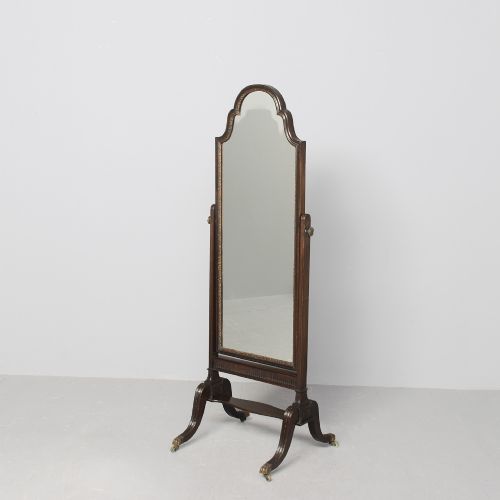
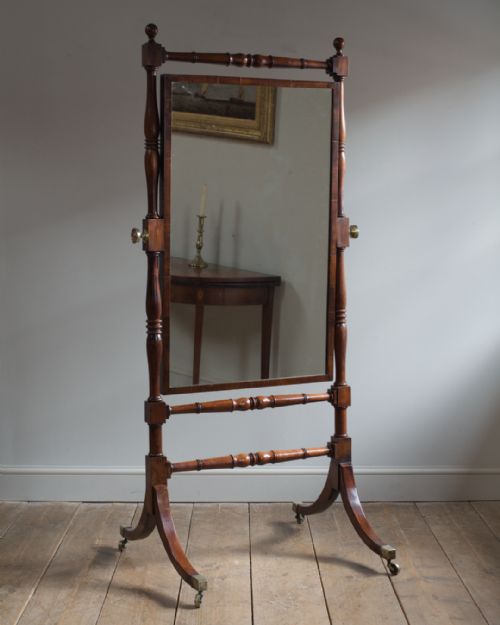
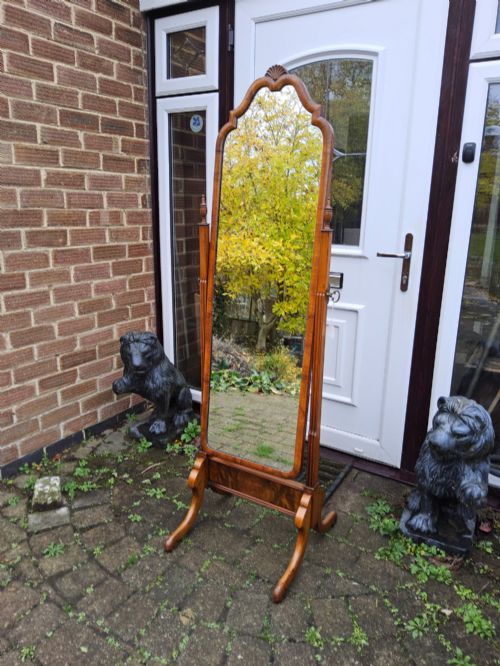
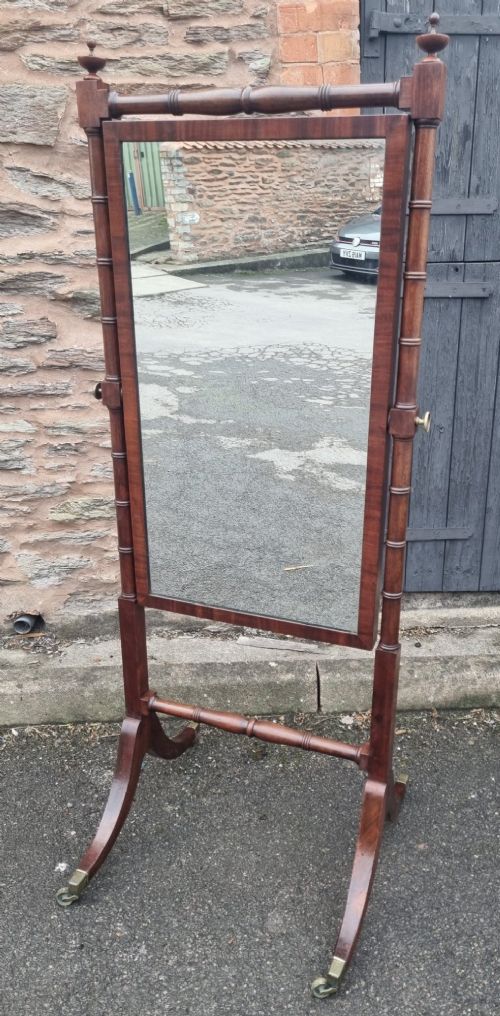
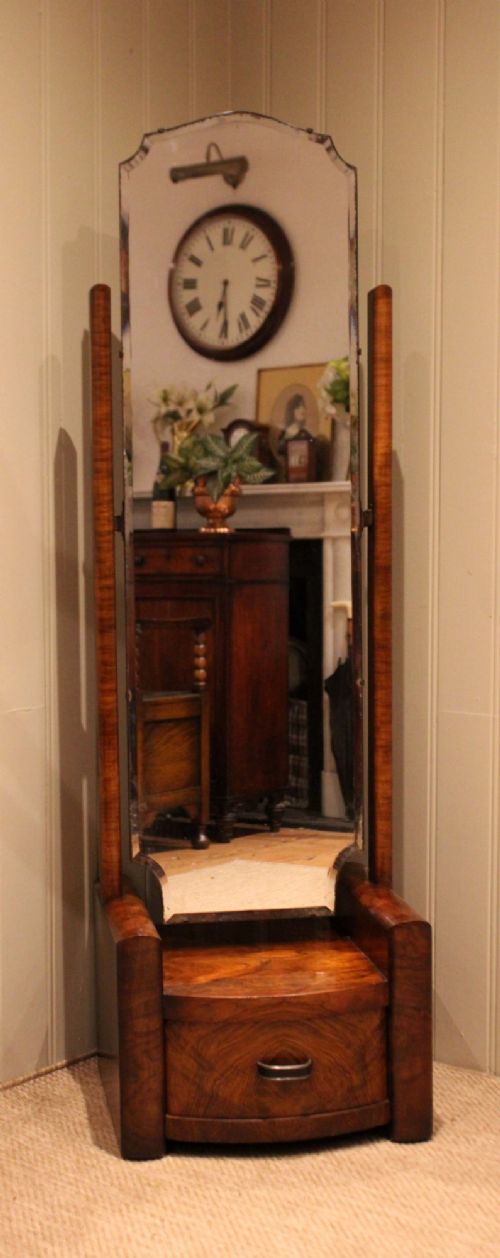
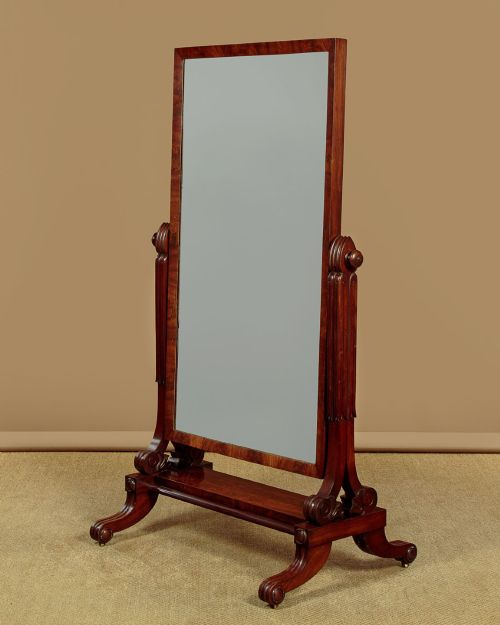
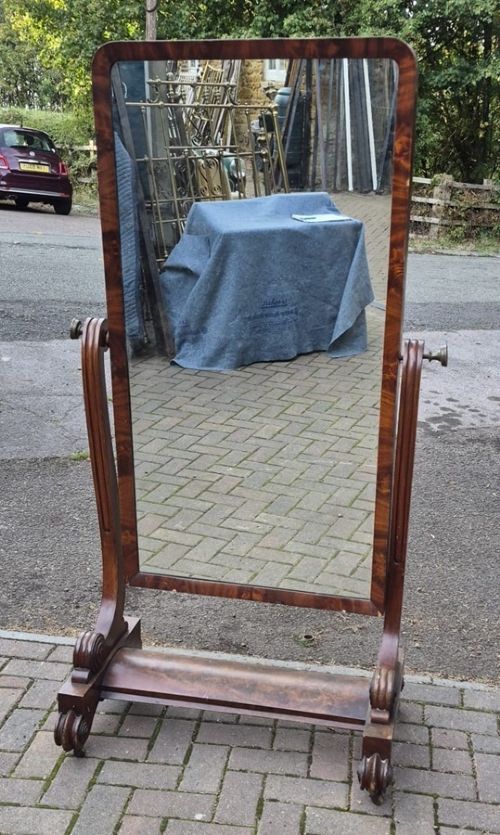
A tilt mirror floor standing, commonly known as a cheval mirror, provides a full-length reflection supported by a freestanding frame. The glass pivots within side uprights, allowing the user to angle the reflection as required for dressing.
Most examples found here date from the Georgian, Regency, and Victorian eras through to the Edwardian period and the 1920s. Mahogany is the predominant timber, though walnut, burr walnut, pitch pine, and lacquered wood also appear.
Forms range from classical Regency and William IV designs with sabre legs and brass castors to French Empire, Chinoiserie, and Queen Anne style variations. These pieces function as both practical dressing furniture and architectural focal points in a bedroom or dressing room.
Materials and construction methods
Cabinetmakers constructed the frames primarily using solid mahogany, walnut, and pine, often applying finely figured veneers such as burr walnut to the main surfaces. Timber selection determined the weight and stability of the upright standards.
The pivoting mechanism relies on brass screw pins or side pivots set into the frame uprights, allowing the mirror plate to tilt smoothly. Metal fittings such as brass castors, sabots, and candle sconces provide mobility and functional detail.
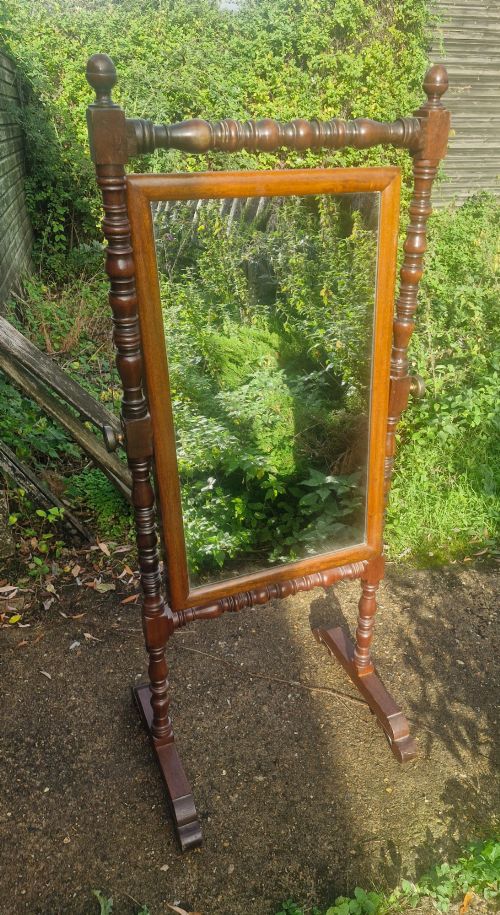
Mirror glass was silvered and set within rebated wooden frames, sometimes accompanied by gilt highlights or delicate inlaid decoration. Turned wooden supports and sturdy floor-standing bases ensured the tall frame remained balanced during adjustment.
Tilt Mirror Floor Standing Retail Price Guide 2026
Typical asking prices for tilt mirror floor standing among the pieces listed under this phrase on Sellingantiques today, from the lower quarter to the upper quarter. They describe what is for sale here now, not the wider market.
Listings feature 19th-century, Victorian, Regency, Edwardian, and Georgian periods, utilising mahogany, walnut, brass, and pitch pine.
Distinguishing quality in floor standing mirrors
The grade of timber and the complexity of the frame design separate standard production from superior craftsmanship. Finely figured mahogany veneers, intricate brass mountings, and sophisticated turnings indicate a higher standard of manufacture.
Stability relies heavily on the engineering of the base and the precision of the pivot mechanism. Well-balanced floor-standing frames hold their angle securely without slipping, supported by substantial legs and original castors.
The Tilt Mirror Floor Standing Glossary
- Cheval mirror
- A freestanding full-length mirror designed to stand on the floor and swing on a vertical axis. The term derives from the French word for horse, referencing the four-legged support frame.
- Tilt mirror
- A looking glass mounted on side pivots that allow the angle of the glass to be adjusted. This mechanism is central to dressing mirrors of the 19th century.
- Sabot
- A metal shoe or cap fitted to the foot of a furniture leg for protection and decoration. Brass sabots frequently appear on Regency and William IV examples.
- Burr walnut
- A highly figured wood veneer obtained from the growth excrescences of walnut trees. It creates intricate, swirling patterns across the frame surface.
Tilt Mirror Floor Standing: Frequently Asked Questions
How do I place a tilt mirror floor standing in a room?
Position the piece against a wall where natural light from a window can strike the glass at an angle, maximising illumination in the space. Ensure there is sufficient clearance in front of the frame for the mirror to tilt freely.
Because these frames are tall and heavy, place them on stable flooring where the base and castors rest evenly without rocking.
How do I tell a Regency tilt mirror from a Victorian one?
Regency frames often display classical architectural restraint, reeded columns, sabre legs, and delicate brass mounts inspired by antiquity. Victorian examples tend to be heavier in proportion, utilising rich mahogany or pitch pine with robust turned supports.
Looking at the timber thickness and the style of the base construction will usually reveal the period of manufacture.
Are these mirrors stable on modern floors?
Most floor-standing frames rely on a wide, sturdy base with four feet or castors designed to distribute the weight evenly. On thick carpets, check that the feet do not sink unevenly, which could strain the pivot joints.
Adjusting the side pivot screws can also help stabilize the swing of the glass plate within the frame.
What is the difference between a cheval mirror and a dressing glass?
A cheval mirror is a large, floor-standing piece designed to show the full figure from head to toe. A dressing glass is smaller and intended to sit on top of a dressing table or chest of drawers.
Both utilise pivoting frames, but their scale and placement in a room differ entirely.