





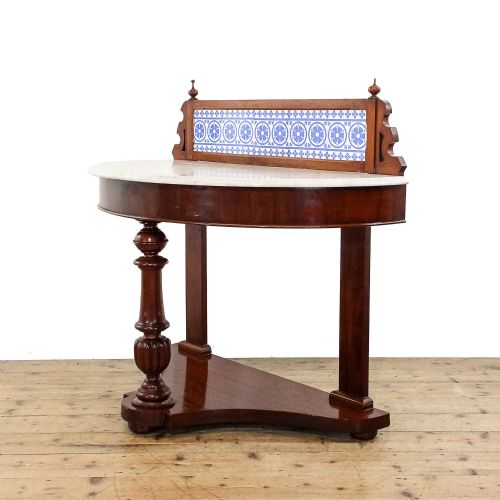
Tiled Splashback Table
A tiled splashback table combines practical washstand utility with decorative ceramic panels, offering functional charm for traditional interiors.
Tiled Splashback Table
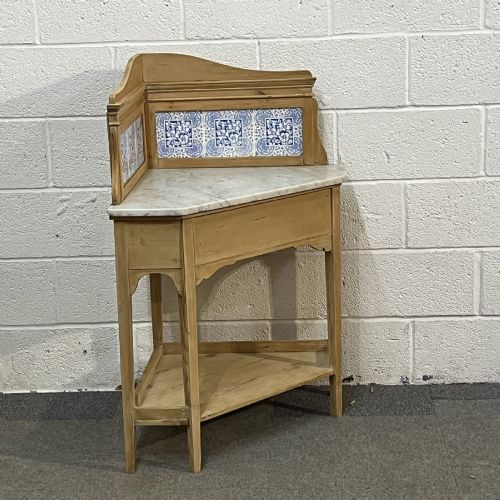
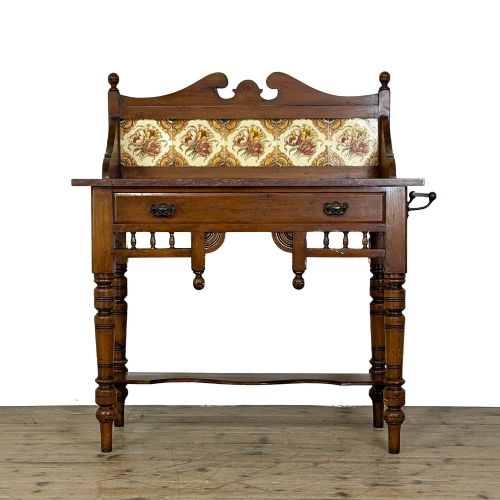
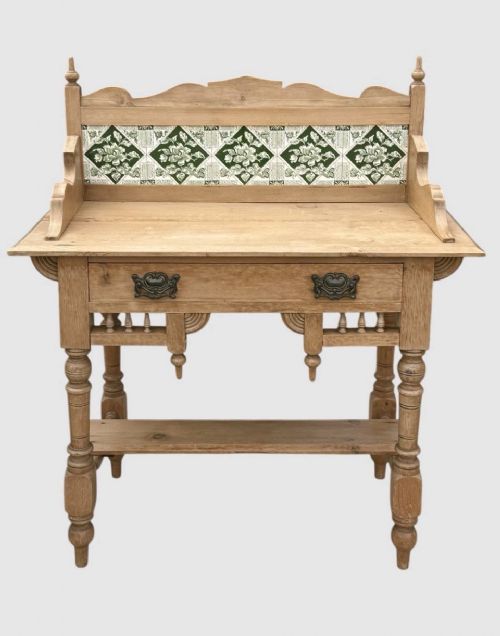
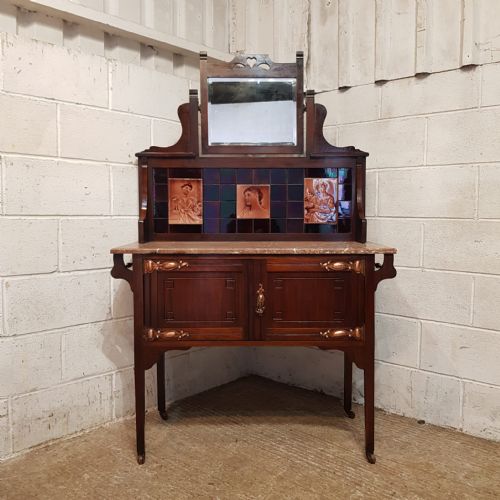
When you search for a tiled splashback table, you are looking at washstands and bedroom furniture suites featuring protective ceramic tile backs. These pieces originate from the Victorian and Edwardian periods, stretching from 1890 through to 1910.
The most common version you will meet on this page is the washstand, built in pine, mahogany, or oak. Many of these include a marble top alongside the tile gallery back to resist water splashing during use.
Makers of the era also incorporated styles such as Art Nouveau, Arts and Crafts, and the Aesthetic Movement into these bedroom units. They served a domestic purpose in bedrooms before plumbed bathrooms became standard in every home.
How they were made
Carpenters constructed the frames using timbers such as mahogany, walnut, pine, and oak, often shaping them to fit washstand and bedroom suite designs. Pine pieces frequently received painted finishes to suit domestic chambers.
Masons fitted heavy marble slabs to the upper surfaces to handle moisture, while ceramic tiles were set into the timber splashback frames to protect the wall behind the basin.
Tiled Splashback Table Retail Price Guide 2026
Typical asking prices for tiled splashback table among the pieces listed under this phrase on Sellingantiques today, from the lower quarter to the upper quarter. They describe what is for sale here now, not the wider market.
Some washstands feature a tile gallery back so pretty you might forgive them for lacking running water.
What varies in quality
Quality rests upon the selection of timber and the integration of the marble and ceramic elements within the frame. Finer examples display harmonious wood grain in mahogany or oak alongside undamaged decorative tiles.
The sophistication of the movement style also marks the distinction between standard utilitarian washstands and more ambitious Arts and Crafts or Art Nouveau designs.
The Tiled Splashback Table Glossary
- Washstand
- A piece of bedroom furniture designed to hold a basin, jug, and related washing equipment before indoor plumbing became universal.
- Tile Gallery Back
- A raised vertical timber frame at the rear of the unit inset with ceramic tiles to catch splashes.
- Arts and Crafts
- A design movement prioritising traditional craftsmanship and simple forms, visible in oak bedroom suites from around nineteen ten.
- Aesthetic Movement
- A late nineteenth-century style focusing on visual beauty, often seen on washstands dating from the eighteen eighties and nineties.
- Art Nouveau
- A style characterised by organic, flowing lines, appearing on mahogany wash stands from around nineteen hundred.
Tiled Splashback Table: Frequently Asked Questions
What is a tiled splashback table used for?
These pieces function primarily as washstands designed for bedroom use before modern plumbing was installed.
They provided a stable surface for a basin and jug while protecting the wall behind from water damage.
How do I date a tiled washstand?
Dating relies on stylistic clues such as Aesthetic Movement details, Art Nouveau curves, or Arts and Crafts construction methods.
Periods represented range from the Victorian era through the Edwardian period up to nineteen ten.
What woods were used for these tables?
Cabinetmakers utilised a variety of timbers depending on the grade of the bedroom suite.
Common woods include mahogany, oak, walnut, and pine, with some pine examples finished in paint.
Are marble tops original to the pieces?
Marble tops paired with tile gallery backs form a standard feature of Victorian and Edwardian washstands.
They provided a durable, waterproof surface designed specifically to withstand daily washing routines.