
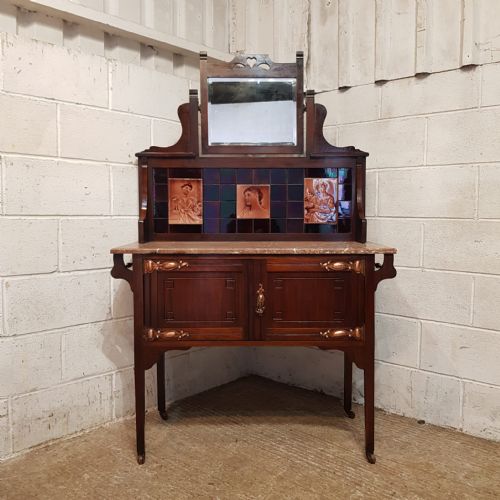
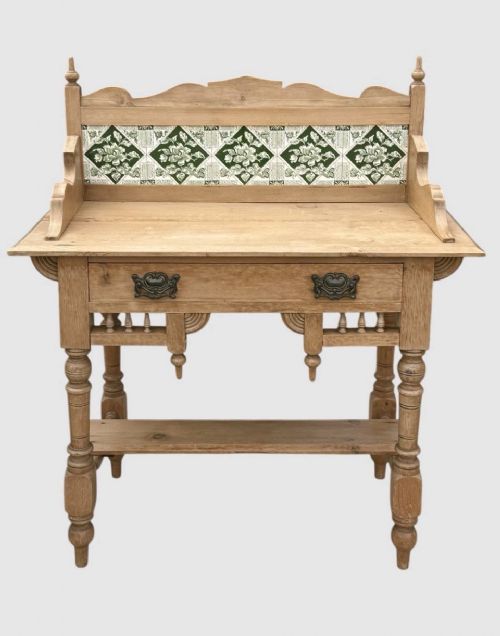


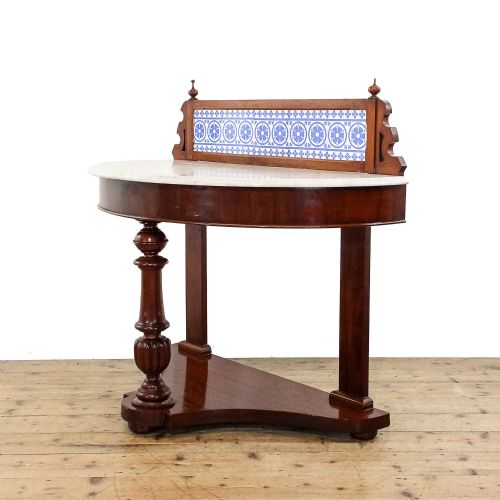
Tile Back Washstand
A tile back washstand is a sturdy bedroom wash station built to protect walls from splashes while adding functional charm to domestic spaces.
Tile Back Washstand
A tile back washstand combines a solid wooden base with a decorative ceramic tile splashback, designed for Victorian and Edwardian bedrooms before plumbed bathrooms became standard. These practical pieces range from simple painted pine frames to elaborate mahogany and walnut units fitted with marble tops.
Most examples found here date from the nineteenth century into the early twentieth century, spanning the Victorian, Edwardian, and Arts and Crafts periods. Buyers most frequently meet marble-topped variants featuring integrated tile galleries and storage drawers.
Makers utilised various timbers including mahogany, walnut, ash, and satin walnut alongside pine for painted versions. The inclusion of ceramic tiles provided a durable, wipe-clean surface behind basins long before modern splashbacks existed.
Construction and materials
Makers constructed these washstands using dense hardwoods like mahogany and walnut or softer timbers such as pine and ash. Tops were frequently finished in heavy marble to resist water damage from basins and ewers.
The decorative tile galleries incorporate glazed ceramic tiles, sometimes supplied by specialist potteries like Minton. Brass and glass hardware often completed the fixtures on drawers and towel rails.
Early morning ablutions required sturdy nerves: many a heavy ceramic ewer met its end slipping on an unyielding Victorian marble top.
Judging quality and craftsmanship
Superior examples distinguish themselves through the choice of primary timber and the grade of the marble top. Finely figured mahogany or satin walnut sits above simple painted pine.
The artistry of the ceramic tiles within the gallery marks the difference between standard production and exceptional design. Hand-painted or transfer-printed aesthetic and Art Nouveau tiles elevate the overall composition.
Goodall & Co.·Maple & Co·Minton
The Tile Back Washstand Glossary
- Tile gallery
- The raised vertical section at the back of the washstand holding decorative ceramic tiles. This structure prevents water from splashing onto wallpaper.
- Marble top
- A thick slab of stone fitted to the upper surface of the washstand. It provides a cool, waterproof platform for washbasins.
- Aesthetic movement
- A late nineteenth-century design style focusing on art for art's sake. Pieces from this period often display stylized floral motifs and Japanese-inspired details.
- Arts and Crafts
- A design movement emphasising handcraftsmanship and simple forms. Furniture in this style prioritizes honest construction and visible materials.
- Ewer
- A large jug used alongside a basin for washing before running indoor plumbing was common. It sat upon the washstand top.
Tile Back Washstand: Frequently Asked Questions
How were tile back washstands used?
These items served as personal washing stations in bedrooms before modern bathrooms existed. They held a basin and ewer on the marble surface for morning routines.
The lower cupboards and drawers stored washing accessories, chamber pots, and linens out of sight.
How do I date a washstand?
Dating relies on observing the primary wood, decorative style, and hardware construction. Victorian pieces often use mahogany or pine with heavy carving.
Edwardian and later examples tend to feature lighter woods like satin walnut or inlaid mahogany with simpler geometric lines.
Can I use one in a modern bathroom?
Many buyers adapt these stands as vanity units by plumbing a modern sink basin into the marble top. The sealed stone and glazed tiles handle moisture well.
Care should be taken to protect antique wooden frames from excessive standing water in contemporary settings.
What woods were commonly used?
Cabinetmakers selected materials based on the desired finish and budget of the household. Mahogany and walnut appeared in grander homes.
Pine and ash served painted or simpler domestic versions, often finished to mimic more expensive timbers or left natural.